















































Australia’s higher education regulator has won its first court penalty against a commercial cheating service, with the Federal Court fining United States study platform Chegg Inc. $500,000 plus $150,000 in costs over answers supplied to Monash University students.
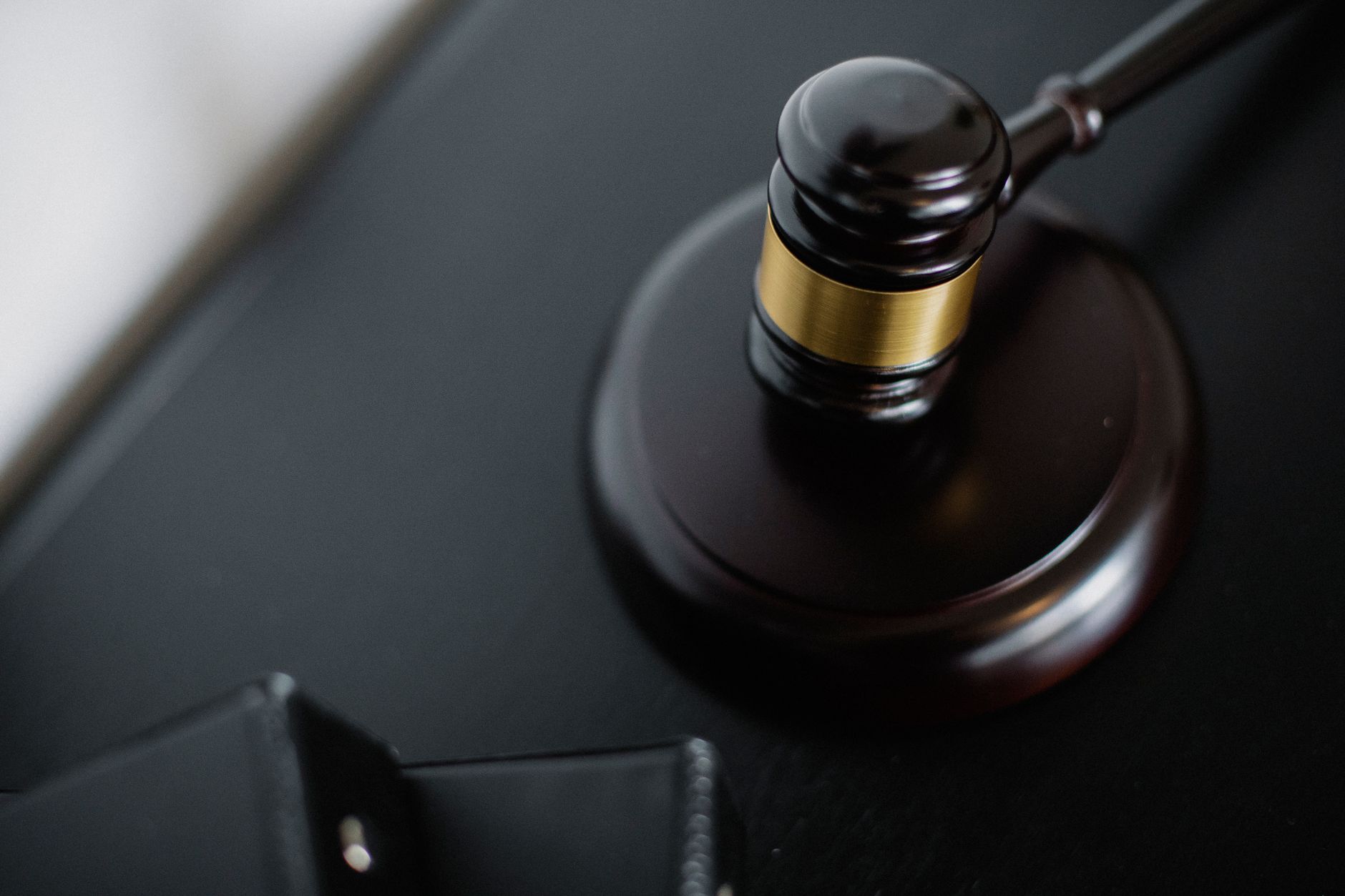
Justice Craig Lenehan handed down the decision on 27 March 2026 in Chief Executive Officer of the Tertiary Education Quality and Standards Agency v Chegg, Inc. [2026] FCA 330. The court found three contraventions of the laws that prohibit providing academic cheating services to students studying in Australia. The Tertiary Education Quality and Standards Agency (TEQSA) brought the action, which it filed in October 2024.
The result is an Australian first. It is the initial successful enforcement under 2020 amendments to the TEQSA Act 2011 that made it an offence to provide, or arrange for a third party to provide, an academic cheating service. Until now the regulator had leaned on guidance, website blocking and warnings. The Chegg judgment shows it is prepared to litigate, and to reach an offshore operator.
How the Expert Q&A service crossed the line
The case turned on Chegg’s “Expert Q&A” feature. As ACS Information Age reported, paying subscribers submitted questions and third-party experts supplied written answers, which were then posted online for the asker and other subscribers. In Australia the service ran on monthly subscriptions of up to $28.55.
Between roughly November 2021 and May 2022, three students uploaded Monash University assessment questions to the platform despite explicit instructions against outside help. Experts returned answers that the students then submitted as their own. Monash detected the breaches. In one instance, ACS Information Age noted, a student’s submission carried the same errors as the expert’s answer.
The court found the conduct breached section 114A(3) of the TEQSA Act on three occasions. The maximum exposure for those contraventions was about $1.665 million, so the $500,000 penalty sits well below the ceiling. Chegg was contacted for comment and did not respond, according to ACS Information Age.
A ruling that maps the law’s limits
The judgment matters as much for what it defines as for what it fines. As law firm Mills Oakley set out in its analysis, this is the first decision to examine in any depth what the Act means by an “academic cheating service.” Section 114A hinges on providing “work” that could reasonably be regarded as a substantial part of an assessment a student must complete personally.
Justice Lenehan read “work” as the intellectual labour or effort of a person, or the product of that effort. Because Chegg’s answers were prepared by human experts, they fell squarely within the definition. That reasoning secured the win. It also drew a boundary that the generative AI era may test.
Mills Oakley flags the gap directly: if “work” requires human intellectual effort, material generated entirely by automated means may fall outside section 114A. A tool that spits out an assessment answer with no human in the loop could, on this reading, sit beyond the reach of the provision the court has just enforced. The firm also warns that simply deleting the human-effort requirement could sweep in every AI provider, an outcome that would be unworkable in practice.
That tension is not academic. Chegg’s own business tells the story. ACS Information Age reported the company’s Australian subscriber base fell from about 120,000 users in 2022 to 33,000 by 2026, with local revenue dropping from roughly $12 million to $3 million. Globally its subscribers slid from 8.1 million to 2.87 million, a decline widely attributed to free generative AI tools. The commercial cheating service the court penalised is being displaced by exactly the technology the law does not clearly cover.
Why it matters for Australia
For Australian universities, the ruling changes the enforcement calculus. TEQSA has now shown it can win a penalty in the Federal Court against an overseas platform, not merely block a website or issue a warning. Chief Executive Dr Mary Russell said academic integrity is fundamental to the quality and reputation of the sector, and that the agency would act decisively on allegations of cheating services, as reported by ACS Information Age. That is a signal to every “homework help” operator marketing to students here.
It also arrives as the sector wrestles with a harder problem than paid experts. Contract cheating through a subscription platform leaves a trail; a chatbot session on a student’s own laptop often does not. The Times Higher Education coverage framed the case as a landmark for academic integrity, yet the win rests on the presence of human authorship that AI removes. Institutions cannot assume this precedent will map cleanly onto machine-generated answers.
The practical takeaway for Australian providers is twofold. Regulatory action against commercial services is now real and can cross borders, so referrals to TEQSA carry weight. At the same time, assessment design remains the front line, because the law’s clearest hook applies to human-supplied work, not automated output.
Whether the definition holds will likely fall to the Parliament rather than the bench. Any move to broaden “work” to capture AI-generated material would need to avoid criminalising the general-purpose tools students and staff already use every day. For now, TEQSA has its precedent, universities have a warning shot they can point to, and the sector has a fresh reminder that the next test case may involve no human expert at all.
Sources: TEQSA, ACS Information Age, Mills Oakley, Campus Review, Times Higher Education, Federal Court judgment [2026] FCA 330.