







































A Sydney company that builds three-dimensional software replicas of electricity grids has become one of Australia’s newest unicorns, in a deal that ties the country’s deep-tech ambitions directly to the power hunger of artificial intelligence.
Neara, founded in 2016 and trading as LineSoft Pty Ltd, has raised roughly A$90 million (about US$63 million) in a Series D round led by US growth investor Technology Crossover Ventures, or TCV. The round lifts the company’s valuation past A$1.1 billion, according to reporting by SiliconANGLE and confirmed in Neara’s own announcement. Existing backers Partners Group, EQT, Square Peg Capital and Skip Capital also took part, taking total funds raised to around A$180 million.
The milestone matters because Neara did not get here selling a consumer app or a chatbot. It sells unglamorous infrastructure software to power companies, and it is that category, grid modelling, that investors have suddenly decided is worth a great deal of money as AI data centres strain electricity networks worldwide.
What Neara actually does
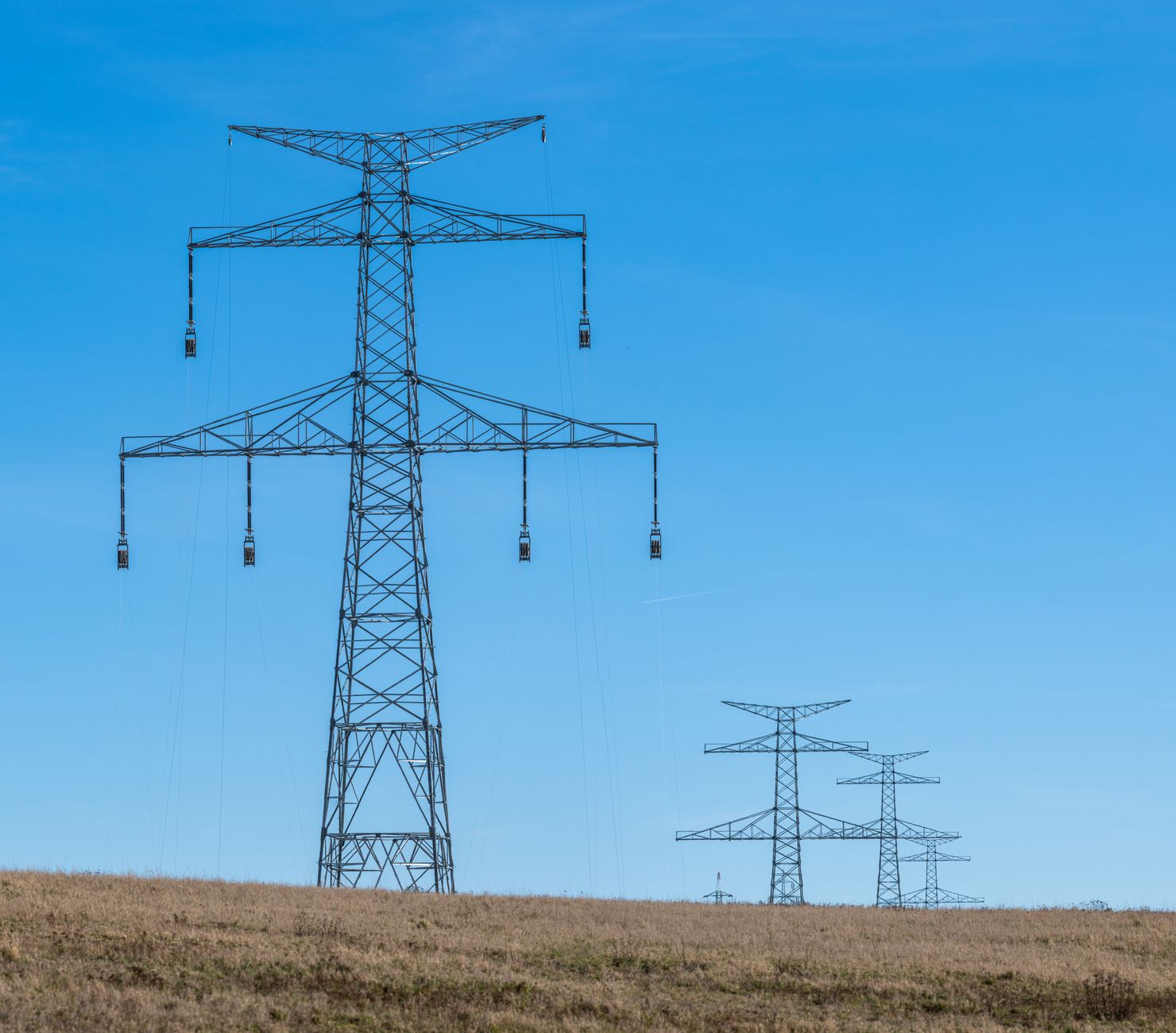
Neara builds what it calls physics-enabled digital twins: high-fidelity 3D models of poles, wires, transformers and the terrain around them. The platform combines sensor data with machine learning to simulate how a network behaves under real-world stress, from heat and wind to rising load.
The commercial pitch is that utilities can find capacity they did not know they had. Rather than building expensive new lines, operators can use the model to identify underutilised headroom in existing infrastructure, plan expansions and respond faster to outages. As pv magazine Australia reported, the company frames this as grounding decisions in physics rather than guesswork.
The scale is already substantial. Neara says its platform has modelled more than 15 million grid assets across over two million miles of infrastructure globally. In Australia, Startup Daily reported that the company works with close to 90 per cent of the country’s network utilities, a customer list that includes Essential Energy, Endeavour Energy, Ausgrid, AusNet, Powercor and SA Power Networks. Offshore, it counts Southern California Edison and CenterPoint Energy in the United States, ESB Networks in Ireland, Scottish Power in the United Kingdom and Hedno in Greece.
Why AI is driving the raise
The timing is not incidental. Co-founder and chief commercial officer Jack Curtis pointed to converging pressures on networks, telling reporters that grids everywhere are reaching their limits under AI, electrification and rising demand. Curtis also described a deeper structural problem, noting that systems built for a different era are now being pushed beyond their design assumptions, as quoted by pv magazine Australia.
That framing lands because the numbers behind AI compute are extraordinary. Data-centre operators including Google, Microsoft, Oracle, OpenAI and CoreWeave are racing to secure electricity, and in many markets the grid, not the chips, is the bottleneck. SiliconANGLE reported that surging data-centre demand helped accelerate Neara’s funding timeline.
Neara’s lead investor made the same argument in investment terms. TCV general partner Muz Ashraf said the infrastructure challenges facing the world, from climate resilience to energy access for AI compute, require fundamentally new approaches, according to pv magazine Australia. For a growth fund making its third investment in the company, that is a bet that grid software is a durable category rather than a cyclical one.
There is a second, quieter tailwind: renewables. The same modelling that helps a utility absorb a new data centre also helps it connect wind and solar without rebuilding the network. In a country pushing hard toward renewable generation while managing bushfire and vegetation risk on ageing lines, that dual use is a meaningful part of the domestic appeal.
Why it matters for Australia
Australia does not mint many unicorns, and it mints fewer still in hard infrastructure software rather than fintech or consumer tech. Neara’s founders, Daniel Danilatos, Karamvir Singh and Jack Curtis, built a company from Sydney that now sells into North America, Europe and beyond, and did so in a category where deep engineering knowledge is the moat.
That is the strategic point. The global build-out of AI is a demand shock to electricity systems everywhere, and the software that helps utilities cope is being written, in a significant part, in Australia. Local network operators are among Neara’s earliest and largest customers, which means the tools being refined on the Australian grid are being exported as the product matures.
The capital also stays partly onshore in spirit. Skip Capital, the fund co-founded by Kim Jackson, has backed Neara across multiple rounds since 2018, and Square Peg Capital is one of the country’s largest venture firms. A A$1.1 billion outcome validates a thesis that Australian investors placed years ago, at a time when the AI-and-energy link was far less obvious.
It is worth keeping the claims modest. A valuation is not revenue, and much of Neara’s growth story now depends on execution abroad, in markets with entrenched incumbents and slow-moving utility procurement. The company says the new money will fund machine-learning development and international expansion, which is where the harder tests lie.
What comes next
Neara’s challenge from here is to convert a strong Australian base and a fashionable thesis into recurring global revenue before the AI-infrastructure narrative cools. If it does, it strengthens the case that Australia’s deep-tech sector can lead a genuinely global market rather than service a domestic one.
The broader signal for the sector is clearer still. As data centres reshape electricity demand across the region, expect more capital, and more scrutiny, to flow toward the unglamorous software layer that keeps the lights on. Neara has just shown that layer can be worth a billion dollars.
Sources: SiliconANGLE, Startup Daily, pv magazine Australia, SmartCompany, Neara.