

















































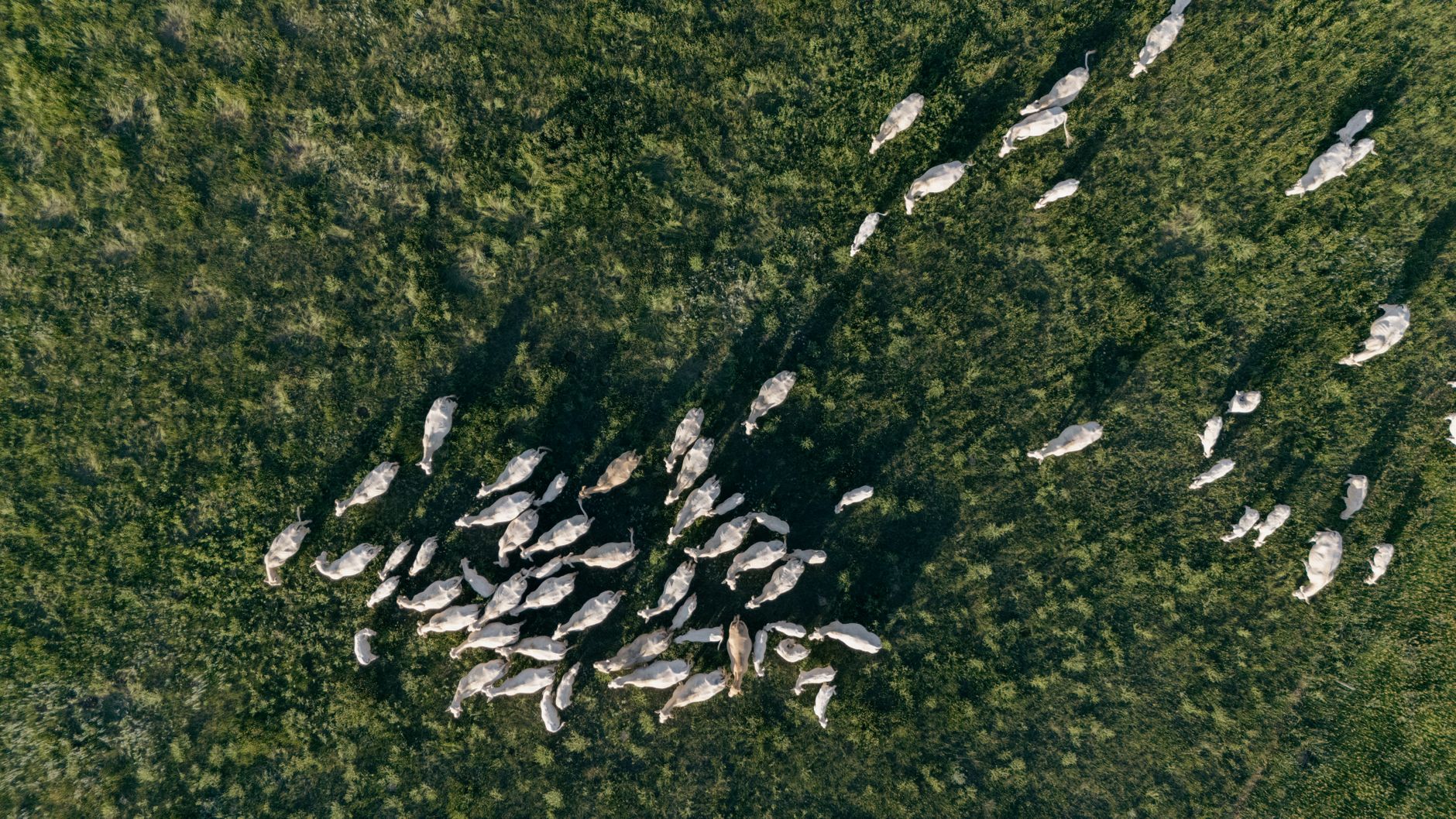
A 19-year-old from Bowen in North Queensland has convinced Y Combinator to bankroll a herd of robot stockmen. GrazeMate, founded by Sam Rogers, has raised US$1.2 million in pre-seed funding to build drones that muster cattle on their own, guided by reinforcement learning rather than a pilot on the sticks.
The round was led by Y Combinator, with participation from early-stage backers Antler and Australia’s NextGen Ventures, according to AgFunderNews, which first reported the raise. GrazeMate is part of Y Combinator’s Winter 2026 cohort.
The pitch is simple enough to fit on a phone screen. A farmer opens an app, sets a muster, and waits for a notification when the herd has been moved. No remote pilot, no low-flying helicopter, no team on motorbikes strung across a paddock at dawn.
From a family station to a YC cheque
Rogers grew up on the land. His father managed thousands of head of cattle using horses, motorbikes and helicopters, a labour-intensive routine that Rogers has spent his teens trying to automate. He formalised GrazeMate in 2025 and left study behind to commercialise the work.
Forbes Australia reports the drones are controlled entirely from a smartphone, and that the system reports back on pasture availability, herd weight estimates and the state of farm infrastructure. Rogers told the outlet that instead of piloting, the farmer sets the task and the system executes it, making decisions in real time based on how the herd moves.
The core of the product is a set of proprietary reinforcement-learning models that let off-the-shelf DJI drones respond to cattle behaviour on the fly. AgFunderNews reports the system watches head position and movement, and backs off when animals show stress signals such as raising their heads, an attempt to encode the kind of low-stress stockmanship that takes years to learn on the ground. Between mustering runs, the drones photograph water troughs and fence lines.
Rogers has framed the labour problem bluntly. Skilled station hands are hard to find and expensive, he told AgFunderNews, describing that shortage as the immediate problem GrazeMate is built to solve.
Queensland and NSW paddocks as the proving ground
The scale of the pilot is what sets this apart from a hobby project. Startup Daily, in reporting by Simon Thomsen, says GrazeMate is mustering thousands of cattle each week across pilot farms spanning about 700,000 hectares, or roughly 1.7 million acres, in Queensland and New South Wales. That is an area more than ten times the size of greater Sydney.
The commercial model leans on that footprint. Rather than sell hardware, GrazeMate leases the drones and charges a monthly software fee scaled to the size of the operation and the number of cattle. Rogers has told reporters the aim is to price it below what a station already spends on mustering alone, with large operations potentially saving hundreds of hours and hundreds of thousands of dollars a year.
A second generation of features is in beta. AgFunderNews reports these include estimating cattle weight and assessing dry-matter availability, the standing feed on the ground, turning each muster into a data-gathering pass over the herd and the paddock. With that commercial base established at home, Forbes Australia reports GrazeMate is now turning to the United States, with California among its first targets.
Why it matters for Australia
Australia runs one of the largest cattle herds in the world across some of the most remote country on the planet, and the industry has spent years wrestling with a chronic shortage of experienced station labour. A tool that lets one person move a mob from a phone speaks directly to that gap, and it is telling that the proving ground sits in Queensland and NSW paddocks rather than in a US feedlot.
There is a hardware-sovereignty question buried in here too. GrazeMate’s system is built on DJI airframes, and its own edge computing and models sit on top. The intellectual property, the reinforcement-learning stack and the data from 1.7 million acres of Australian country are being generated here, even as the venture capital and the next customers point overseas. Whether that value stays onshore is the sort of thing that decides who owns the next generation of agtech.
Regulation is the other Australian variable. Fully autonomous mustering means flying beyond visual line of sight, which the Civil Aviation Safety Authority treats as a complex operation requiring specific approvals on top of a Remote Operator’s Certificate. CASA has signalled it wants to hear from the agricultural sector on beyond-visual-line-of-sight uses including mustering, and the regulator has been consulting on how to open that airspace up. How quickly those rules move will shape how far GrazeMate, and any rival, can scale across the outback.
The raise also fits a broader pattern. Global venture capital has grown noticeably more comfortable funding AI that acts in the physical world rather than just answering questions on a screen, and livestock robotics built and tested on Australian stations is now part of that thesis. Cheaper edge computing, better drone batteries partly driven by defence spending, and easing autonomy rules have all lowered the barrier at once.
For now, the questions are practical ones. Can autonomous drones muster reliably in dust, heat and poor connectivity across million-acre runs, can they keep animal stress genuinely low at scale, and will CASA’s rulebook keep pace. GrazeMate has the capital and the paddocks to find out. The next few musters, watched from a phone, will tell whether the robot stockman is a novelty or the start of something the rest of the industry has to reckon with.
Sources: AgFunderNews, Forbes Australia, Startup Daily, Civil Aviation Safety Authority.


