



















































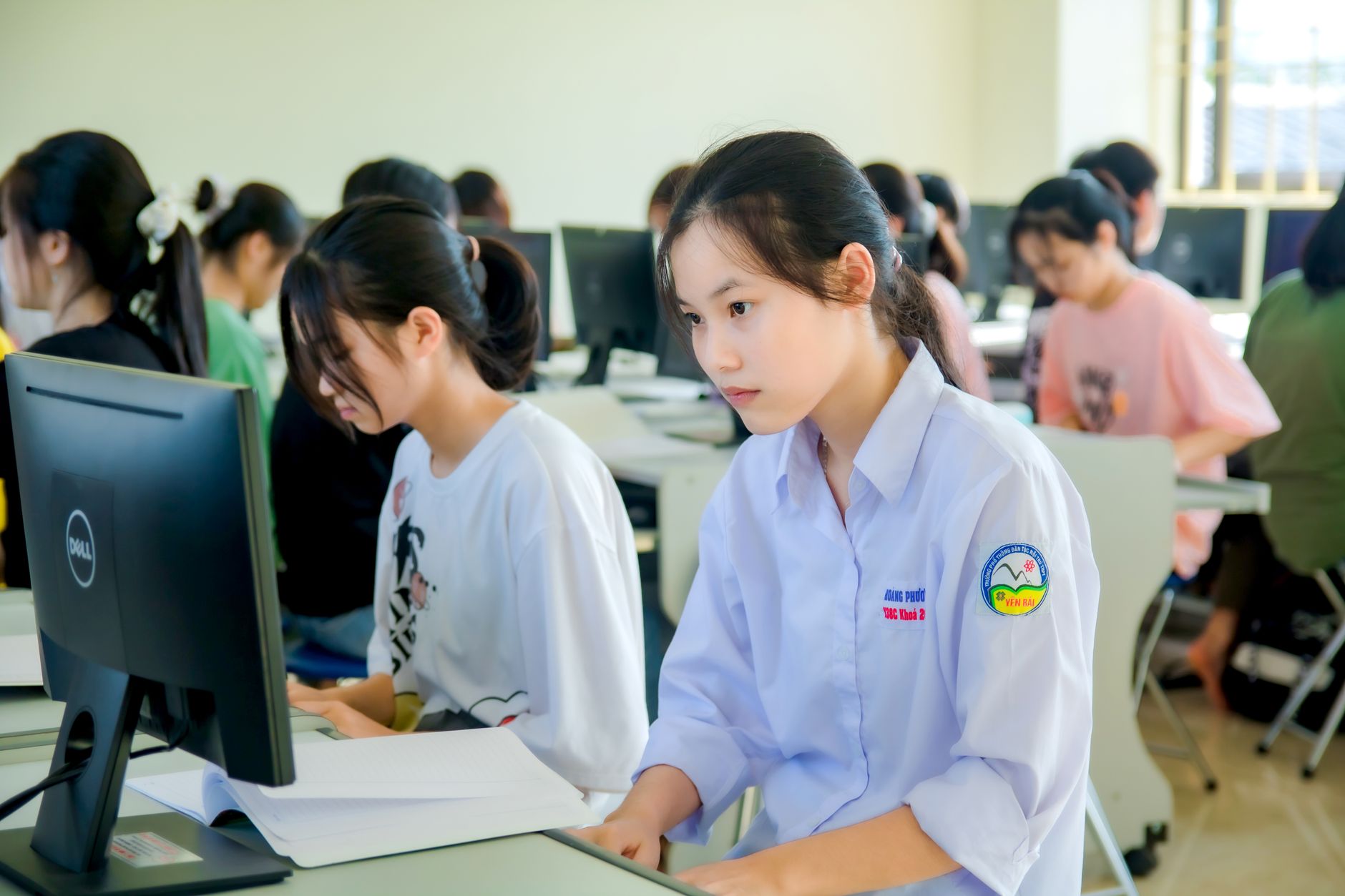
When a student types a question into Google, the answer that greets them at the top of the page is increasingly not a list of links but a block of text written by a machine. Google’s AI Overviews, the summaries that sit above the traditional search results, have become one of the most visible ways ordinary people now encounter artificial intelligence. In the United States, a growing number of school districts have decided they want no part of them, at least not for children, and are switching the feature off inside their classrooms.
The trend was unpacked in a recent analysis published by The Conversation, which laid out how educators across the US are using the administrative controls built into Google Workspace for Education to suppress AI answers on school-managed accounts and devices. The question it poses is one Australian schools, which lean heavily on the same Google ecosystem, will soon have to answer for themselves.
What is actually changing in American classrooms
The shift is less a formal policy than a quiet accumulation of local decisions. Because many US districts manage student logins, Chromebooks and browsers through Google’s education tools, administrators can toggle features on and off centrally. Some have chosen to turn off AI Overviews so that a child searching for help with a history essay or a science concept sees conventional search results rather than a confidently worded summary generated on the fly.
The reasoning tends to cluster around a few concerns. The first is accuracy. AI summaries are known to occasionally invent facts or stitch together misleading claims, and a plausible sounding paragraph at the top of the page carries an authority that a list of links does not. For a teenager still learning to tell a reliable source from a dodgy one, a wrong answer dressed up as a definitive one is a genuine problem. The second concern is the erosion of the research process itself. When the answer arrives pre-packaged, students skip the steps that teachers actually want them to practise, namely reading multiple sources, weighing them against one another and deciding what to trust.
There is also a quieter worry about dependence. Educators have spent the past two years watching students reach for generative tools to do the thinking for them, and some see switching off AI in search as one small way to keep the cognitive work where it belongs, with the learner.
The case for leaving AI switched on
Not everyone agrees that pulling the feature is the right call, and the counterargument is worth taking seriously. Artificial intelligence is not going to disappear from the tools these students will use at university and at work, so there is a strong argument that schools should be teaching young people to use it well rather than pretending it is not there. Banning a technology inside the school gate does little to prepare students for a world where it is everywhere outside the gate.
On this view, the more useful response is to build AI literacy directly into the curriculum: showing students how AI Overviews are generated, why they sometimes get things wrong, and how to cross-check a machine summary against the underlying sources. A blanket switch-off, critics argue, treats the symptom while leaving the deeper skill, critical evaluation of information, untaught. It also assumes schools can meaningfully wall off a technology that students carry in their pockets, which is a stretch.
Between those two positions sits a practical middle ground that many schools are feeling their way towards, one that distinguishes between younger primary students, for whom an AI summary may do more harm than good, and senior students who can be guided to interrogate it. The debate is less about whether AI belongs in education and more about when, and under whose supervision, it should appear.
Why this matters for Australia
Australia cannot treat this as a distant American curiosity, because our schools sit inside the very same platforms. Google Workspace for Education and the Chromebook are fixtures in classrooms from Perth to the far north, which means the same administrative switches that US districts are flicking are available to Australian education departments and individual schools right now. Whatever is decided here will be decided within the same handful of settings menus.
The policy backdrop is also live. Australian education ministers signed off on a national framework for generative AI in schools in late 2023, setting out principles around safety, transparency and teaching students to think critically about these tools. That framework leans towards thoughtful adoption rather than prohibition, which puts it somewhat at odds with the switch-it-off instinct now spreading through US districts. The American experience offers Australian regulators a real-world test of where the limits of that adoption-first posture lie.
There is a sovereignty dimension too. When a student’s first encounter with a research question is mediated by an AI model built and tuned overseas, questions about what that model includes, omits and emphasises become questions about how a generation of Australians forms its understanding of the world. That concern echoes the broader national conversation about digital sovereignty and local control over AI infrastructure, and it lands with particular weight when the users are children.
Practically, the decision will not be made uniformly. Catholic and independent schools, state systems and individual principals all hold different levers, which means Australia is likely to end up with a patchwork rather than a single national position, much as the US has. That makes clear guidance from education authorities more valuable, not less, because without it the choice defaults to whoever happens to be managing a school’s Google console.
What happens next
The most likely path for Australia is neither a wholesale ban nor an uncritical embrace, but a slow negotiation school by school and system by system. Expect state education departments to watch the US experiment closely before issuing anything firm, and expect the question of AI Overviews to fold into the larger review of how generative tools belong in assessment and the classroom. Google, for its part, will keep refining the controls it offers to education customers, which will shape how easy it is for schools to make a nuanced choice rather than an all-or-nothing one.
The deeper lesson from the American shift is that the important decision is not really about a search feature at all. It is about what we want young people to do with their own minds when an answer is always one tap away, and whether the habit of looking something up is worth protecting even when a machine is willing to do it for them. That is a question Australia will have to answer on its own terms, and soon.
Sources: The Conversation.


