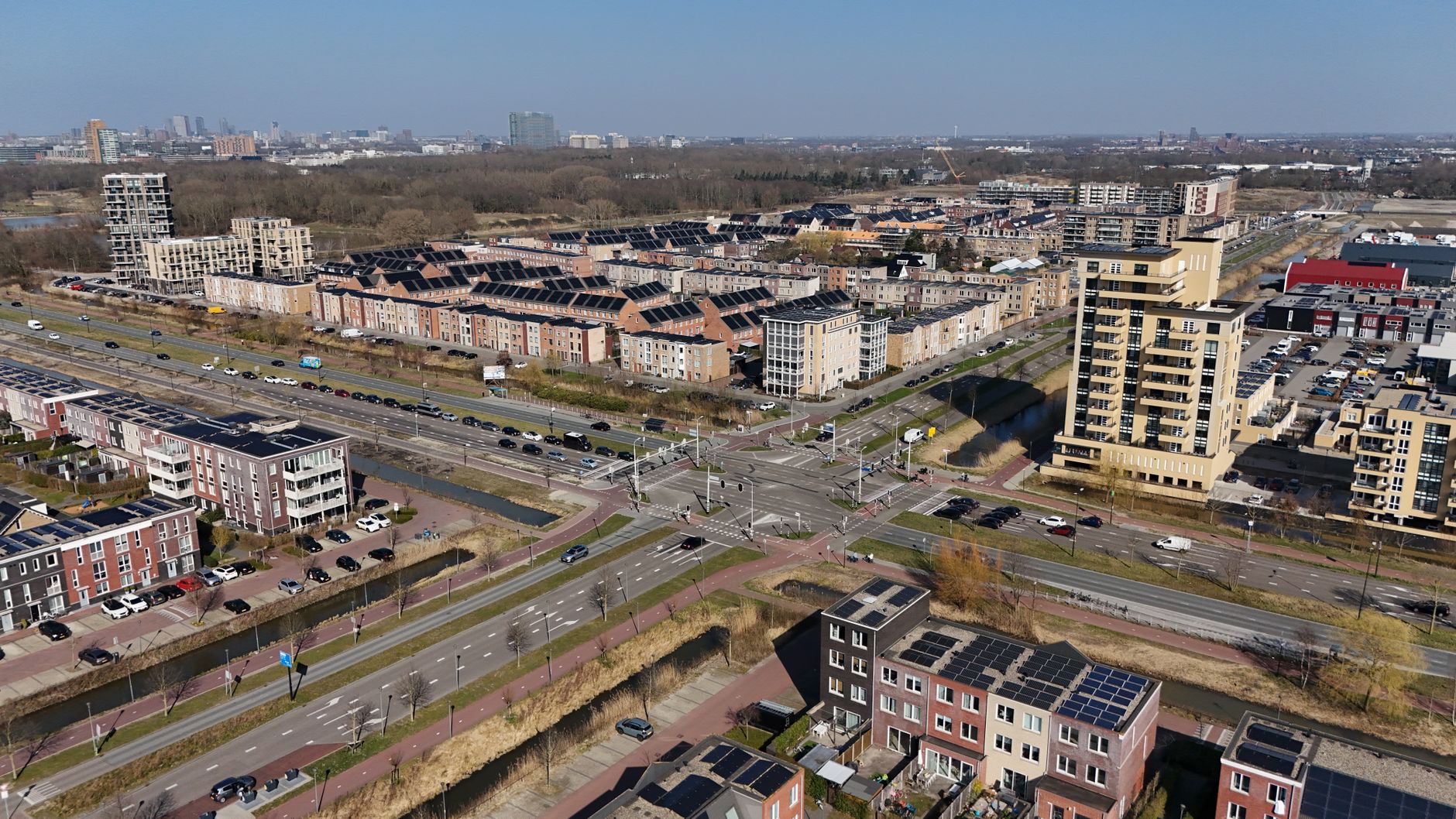
Australia loves rooftop solar more than almost any country on earth, yet one large group of households has been left standing at the edge of the boom. People who live in apartments, around a tenth of the population and rising fast in the big cities, have found it next to impossible to get panels on a roof they share with dozens of neighbours and a battery into a building that was never wired for it. A new trial getting under way in Sydney’s south is trying to crack that problem with software rather than more hardware.
According to PV Magazine Australia, researchers are installing an artificial intelligence powered energy system at an apartment complex in the city’s south as the centrepiece of a $1.2 million project. The goal is deceptively simple to state and fiendishly hard to deliver: let the households in a single building share the output of a common rooftop solar array and a shared battery, and have the system work out, minute by minute, who gets what and when.
Why apartments miss out
To understand why this matters, it helps to understand why apartment dwellers have been locked out so far. A free-standing house has one roof, one owner and one meter, so the economics of putting solar up are straightforward. An apartment block has a roof that belongs to everyone and no one, a body corporate that has to agree, and a tangle of individual meters that make it genuinely difficult to send a kilowatt generated on the roof down to a specific unit on the third floor. Many buildings also sit behind what is known as an embedded network, a single connection to the grid that is then carved up internally, which adds another layer of complication to any attempt at sharing clean power fairly.
The upshot is a two-speed energy transition. Owners of houses have slashed their bills and, increasingly, stored cheap daytime energy in home batteries, helped along by generous state and federal incentives. Renters and apartment owners have largely watched from the sidelines, paying full retail prices while the panels pile up on the suburbs around them. In a country where housing is becoming denser by design, with governments pushing apartments near transport to ease the supply crunch, that gap is only going to widen unless someone solves the sharing problem.
What the AI actually does
This is where the intelligence in the system earns its keep. Rather than treating a building as a single customer or forcing every unit into an identical slice, the software is designed to read the building’s energy in real time, how much the panels are producing, how full the battery is, what each apartment is drawing and what the grid is charging at that moment, and then dispatch the available solar and stored power accordingly. On a sunny afternoon that might mean topping up the shared battery and running common-area loads such as lifts and lighting for free. On a hot evening it might mean drawing the battery down to shave the expensive peak off everyone’s bill.
Done well, this kind of orchestration is where the value lives. The hardware for apartment solar is not especially exotic; the challenge has always been the fairness and the accounting, making sure every household sees a transparent benefit so that the body corporate signs off and the renters feel the difference. An algorithm that can balance those competing demands continuously, and prove it has done so, is the piece that has been missing.
Two ways to read it
Supporters of this approach argue that software-led sharing is the fastest route to bringing the roughly one in ten Australians in apartments into the solar economy without waiting for every building to be rebuilt. If the trial works, the same model could in principle be rolled out across the thousands of medium and high density blocks going up across Sydney, Melbourne and Brisbane, turning otherwise idle rooftops into neighbourhood power stations.
Others will watch the detail closely before celebrating. Trials of shared apartment energy have a habit of looking elegant in a single demonstration building and then stalling when they meet the realities of strata law, retailer contracts, split incentives between landlords and tenants, and the question of who pays to maintain the kit over a battery’s ten to fifteen year life. There is also the familiar caution that comes with putting an algorithm in charge of a household essential: residents will reasonably want to know how decisions are made, how their usage data is handled, and what happens on the day the software gets it wrong. A trial is the right place to surface those questions, but they are the questions that will decide whether the model scales.
The Australian stakes
For Australia the stakes are larger than one building in one suburb. Rooftop solar is now a load-bearing part of the national grid, so much so that the Australian Energy Market Operator spends real effort managing the flood of midday solar and the steep evening ramp when it fades. Batteries that soak up cheap daytime power and release it after dark are central to smoothing that curve, and the federal government‘s push to subsidise home batteries is built on exactly that logic. Apartments have been a blind spot in all of it. Bringing dense housing into the fold would not only cut bills for a group that has had little relief, it would add storage and flexibility precisely where the population is concentrating.
There is a social dimension too. Apartment living skews towards renters, younger people and lower income households, the very Australians feeling cost of living pressure most sharply and least able to spend thousands on their own system. A model that lets them share in cheap, clean, locally generated power, without owning the roof or the battery, turns the energy transition from something that mostly rewards property owners into something closer to a shared utility.
What’s next
The immediate task is to prove the technology works in a lived-in building rather than a laboratory, with real residents, real bills and real disagreements to referee. If the Sydney installation delivers measurable savings and the accounting holds up to scrutiny, the pressure will shift onto regulators and the strata sector to make replication straightforward, standardising the contracts, metering rules and consumer protections that would let a body corporate say yes without hiring a lawyer. The hardware for apartment solar has been ready for years. Whether a smart enough system can finally make the sharing fair is the question this $1.2 million bet is setting out to answer.
Sources: PV Magazine Australia