



















































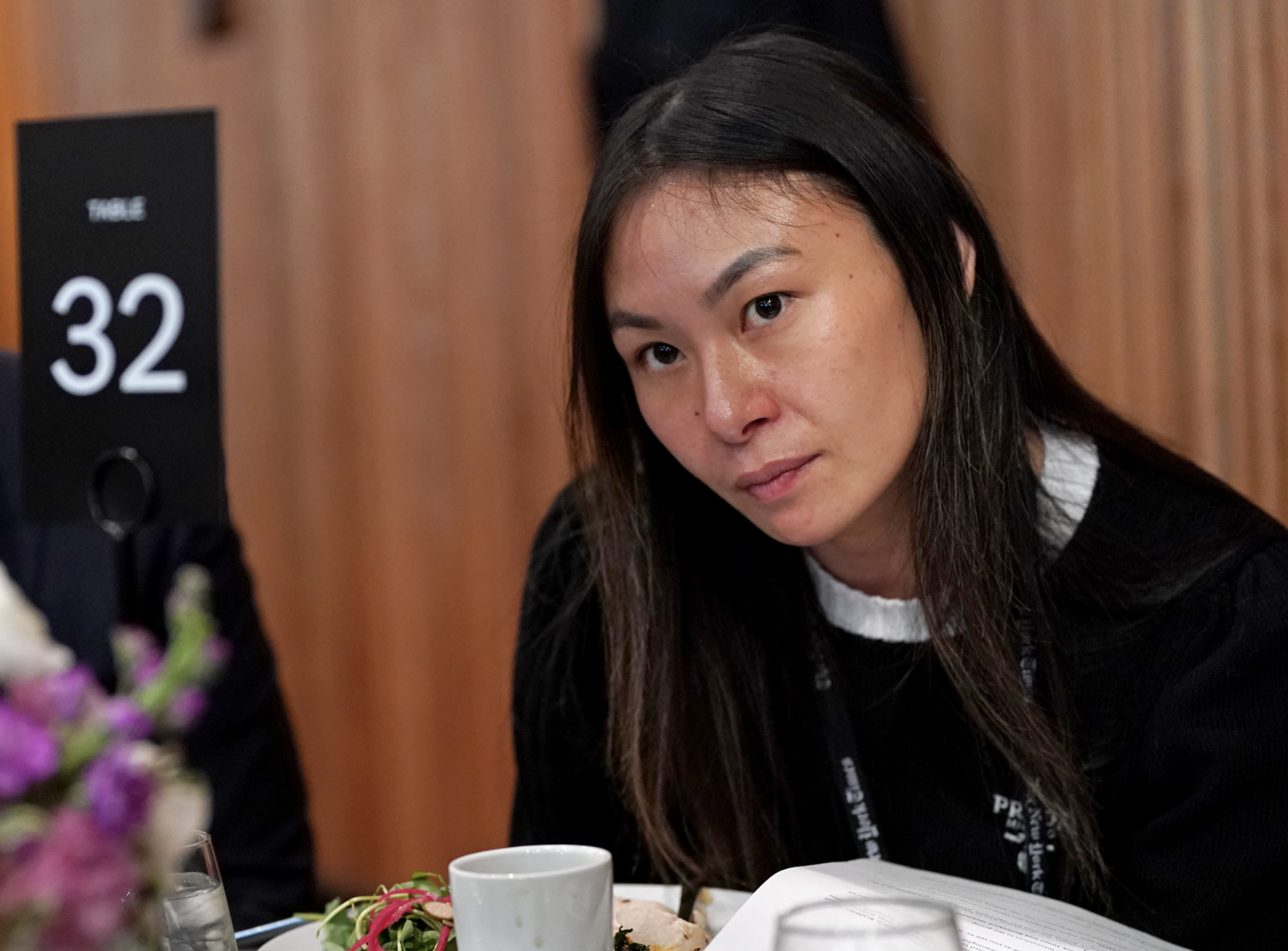
Few confessions capture the brutal arithmetic of artificial intelligence investing quite like the one making the rounds this week. Lucy Guo, who helped found the data-labelling giant Scale AI before building a second fortune of her own, has said she walked away from an early opportunity to put money into Anthropic, the company now behind the Claude family of models. Her own blunt summary of the decision, as reported by Business Insider, was that she “lost a billion”.
The remark is striking not because it is unusual for investors to miss out, but because of who is saying it and how candid she is being about why. According to the Business Insider report, Lucy Guo tied the decision to a period in her personal life, saying she had chosen to prioritise supporting an ex-partner’s lifestyle rather than chase the investment. The upshot, by her own reckoning, was leaving an enormous amount of money on the table as Anthropic went on to become one of the most valuable private companies in the world.
Who is Lucy Guo
Guo is not a bystander to the AI boom. She co-founded Scale AI alongside Alexandr Wang in 2016, building the company that supplied much of the human-labelled data used to train the current generation of large models. She left the business early, well before its valuation ballooned into the tens of billions, a departure that has become part of Silicon Valley folklore about the cost of exiting too soon. She has since built new ventures, including the creator-payments platform Passes, and has at times been described in American business media as one of the youngest self-made billionaires.
That track record is what gives the Anthropic admission its sting. This is not someone who failed to understand the technology or the market. She was at the centre of it. And yet, as she tells it, a personal decision taken at the wrong moment meant she sat out one of the defining bets of the decade. Anthropic, founded in 2021 by former OpenAI figures including Dario and Daniela Amodei, has raised staggering sums from the likes of Amazon and Google and has been discussed in recent funding rounds at valuations that would have turned an early cheque into a life-changing return many times over.
The two ways to read it
There are competing lessons buried in the anecdote, and both are worth sitting with. The first is the familiar venture-capital gospel that the biggest returns come from a tiny handful of outlier companies, and that missing even one of them can define a career. In a portfolio built on power laws, the companies you decline matter as much as the ones you back. By that logic, Guo’s story is a cautionary tale about discipline: the best investors treat every promising round as sacred, because you rarely know in advance which bet becomes the billion-dollar one.
The second reading is more sympathetic and arguably more honest. Investing decisions are made by people with messy lives, finite cash and competing priorities. Guo’s framing, that she chose to spend on a relationship rather than on a speculative AI startup, is a reminder that hindsight flatters every missed opportunity. At the time, Anthropic was an unproven bet in a field that had produced plenty of expensive failures. Plenty of sophisticated investors passed on companies that later soared, and for every Anthropic there are dozens of well-funded AI outfits that never returned a cent. The “lost a billion” line is a clean headline, but it quietly assumes a certainty that did not exist when the choice was made.
What it means for Australia
From an Australian vantage point, the story lands at an awkward and instructive moment. Anthropic has loomed large in local conversation lately, from debate over its founder Dario Amodei‘s warnings about AI’s “Oppenheimer moment” to reporting on AustralianSuper’s exposure to the company through a mooted multi-trillion-dollar valuation. Australian institutional money is already, directly or indirectly, riding on exactly the kind of upside Guo says she missed. That makes her confession less an overseas curiosity than a live question for anyone managing superannuation or venture capital here.
The uncomfortable truth is that Australia has very few shots at the sort of early-stage AI bet Guo is describing. Our venture market is smaller, more conservative and more concentrated than the American one, and the marquee AI companies are overwhelmingly based offshore. When a local fund or family office gets a chance to back a frontier model maker early, it is usually at the tail end of a round that Silicon Valley insiders have already picked over. Guo’s story underlines how much of the value in this cycle is being captured by a narrow group of people with the right networks at the right time, a group that rarely includes Australian capital at the ground floor.
There is a policy dimension too. Canberra has spent much of this year wrestling with how to position the country in the AI economy, from data-centre grid pressures to warnings about a regulation gap as Parliament rises. The subtext of Guo’s anecdote is that the financial rewards of this technology are accruing early and fast, often before governments or ordinary investors can get a look in. For a country trying to build genuine AI capability rather than simply consume imported models, the lesson is that waiting for certainty is itself a decision, and usually an expensive one.
What’s next
Guo’s remark is unlikely to change her own fortunes, which remain substantial, and Anthropic will keep raising and growing regardless of who did or did not back it years ago. What the story does is crystallise a mood that is spreading well beyond Silicon Valley: a creeping sense that the defining AI bets have already been placed, and that the window to get in cheaply has largely closed. Whether that is true, or simply the kind of narrative that always forms near the top of a boom, is the question Australian investors will be weighing as they decide how much of the next cycle to chase and how much to let pass.
For founders and funders watching from Sydney, Melbourne and beyond, the takeaway is less about one missed cheque and more about temperament. The people who win in this market are rarely the smartest in the room. More often they are the ones who were willing to commit before the outcome was obvious, and who could live with the discomfort of being early. Guo, with admirable honesty, has owned up to a moment when she chose otherwise.
Sources: Business Insider via GNews.



Comments 1