
















































Australia’s twin ambitions to decarbonise its grid and ride the global artificial intelligence wave are colliding with an old and stubborn problem: there are not enough skilled hands to build any of it. A new assessment of the trades pipeline warns the country is heading towards a shortfall of roughly 42,000 workers, a gap that threatens to push out timelines and inflate costs across the very projects politicians and investors are counting on to define the next decade.
The figure, flagged in reporting carried by News24, lands at an awkward moment. Governments at every level are leaning on a construction-heavy agenda, from transmission lines and wind farms to the enormous data centres now being announced almost monthly to house AI workloads. Every one of those projects draws on the same finite pool of electricians, fitters, riggers and construction tradespeople, and the maths is not working in the country’s favour.
Why the shortage is landing now
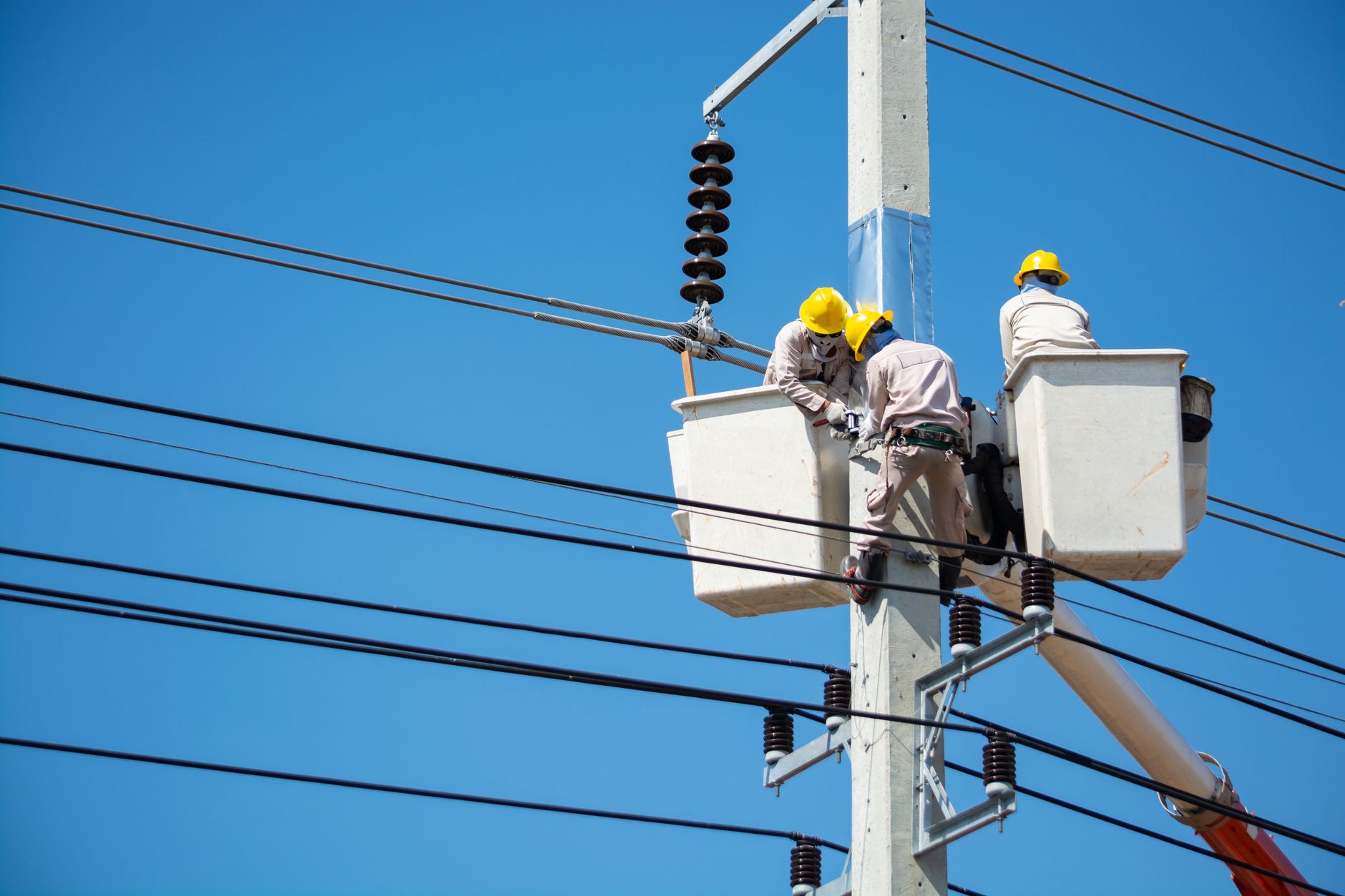
The pressure is the product of several forces arriving at once. The energy transition, already the largest infrastructure undertaking Australia has attempted in a generation, requires tens of thousands of workers to string new transmission, install rooftop and utility-scale solar, and connect batteries and wind. Layered on top of that is the AI build-out, which is proving far more physical than its software reputation suggests. Data centres are concrete, steel and copper before they are code, and they consume electricians and mechanical trades at a rate few forecasters fully priced in.
Demand for electrical trades in particular is being squeezed from two directions. The same workers who wire a substation can wire a hyperscale facility, and when a well-funded data-centre developer or an offshore-backed renewables project turns up in a regional town, local builders and councils find themselves outbid for labour. The result is wage inflation on projects that were already running on tight margins, and a quiet reshuffling of talent towards whoever is paying the most this quarter.
Apprenticeship completions, meanwhile, have not kept pace with the pipeline of work. Training a licensed electrician takes years, not months, and the trades have long struggled with completion rates and an ageing workforce. A gap of 42,000 is not something that can be closed by a single budget cycle or a marketing campaign aimed at school leavers, which is part of why the number has set off alarm bells across industry groups.
Two ways of reading the number
Industry bodies tend to frame the shortfall as a clarion call for a much larger investment in vocational training, faster migration pathways for qualified tradespeople, and incentives to keep apprentices from dropping out before they finish. On this view, the problem is fundamentally one of supply, and the fix is to flood the system with trainees and skilled migrants while there is political appetite to do so.
Others are more sceptical that supply-side tweaks alone can solve it. Economists who study labour markets point out that a shortage is as much about wages and conditions as it is about headcount, and that if data centres and energy projects can simply outbid everyone else, the broader construction sector and ordinary households will feel the pinch through higher prices and longer waits for everything from home rewiring to new housing. There is also a question of whether every announced project will actually be built. If some of the more speculative data-centre proposals quietly fall away, as a number of ambitious schemes already have, the shortage could prove less acute than the headline figure implies, though few are willing to bet the grid on that.
What it means for Australia
For Australia specifically, the stakes run deeper than any single project schedule. The federal government has staked a great deal on being a competitive destination for AI infrastructure and on hitting its emissions targets, and both goals rest on the same assumption: that the country can physically build what it has promised. A trades shortage is the kind of constraint that does not show up in investment announcements or ministerial media releases, but it is precisely the sort of bottleneck that turns an ambitious target into a missed one.
The housing crisis sharpens the dilemma. Australia is already struggling to build enough homes, and the trades needed for residential construction overlap heavily with those being drawn into energy and digital infrastructure. Every electrician pulled onto a data-centre site is one not available to connect a new housing estate, and governments will eventually have to confront the political reality that these priorities compete rather than complement each other. Regional communities, where many of the largest renewables and data-centre projects are sited, may feel this most acutely, enjoying a short-term jobs windfall while watching local trades costs climb.
There is a sovereignty dimension too. If Australia wants genuinely domestic AI and energy capacity rather than facilities owned and staffed from offshore, it needs a homegrown workforce capable of building and maintaining them. Importing skilled migrants can plug gaps in the near term, but a long-run strategy that depends on perpetually poaching talent from other countries is fragile, especially when those countries are chasing the same AI and energy build-out.
What happens next
The immediate question is whether the warning translates into policy. Expect renewed pressure on the vocational training system, calls to fast-track skilled migration in electrical and mechanical trades, and lobbying from both the renewables and data-centre sectors for priority access to labour and faster approvals. Governments will be tempted to treat the shortage as a training problem, because training is politically palatable and visible, but the harder conversation is about sequencing: deciding which projects the country can realistically staff, and in what order.
For now, the 42,000 figure serves as a useful reality check on the exuberance around AI and the energy transition. Both are being sold as engines of jobs and growth, and both genuinely are. The catch is that the jobs they create are the very ones Australia does not yet have enough people to fill, and no amount of capital or political will can wire a substation or pour a foundation faster than a trained workforce allows.
Sources: News24, via GNews.



