










































Australia does not often get to say its homegrown artificial intelligence has beaten the giants at their own game, which is why a new deal from one of the country’s best-known venture firms is worth pausing over. Sydney-based Airtree Ventures has backed an Australian AI startup whose robotics model, according to Forbes Australia, has outscored comparable systems from China’s Alibaba and France’s Mistral.
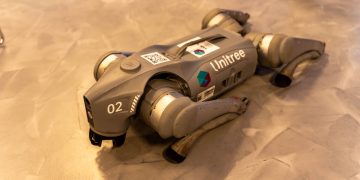
The context matters because robotics has become the next frontier in the AI race. After the past three years were dominated by chatbots and image generators, the attention of the world’s biggest labs has swung towards what the industry calls vision-language-action models, or VLAs. These are systems designed not just to describe the world in words but to translate what a machine sees into physical movement, so that a robot arm, a warehouse picker or a humanoid can reason about a task and then carry it out. Alibaba and Mistral have both pushed into this territory as part of a broader land grab, and the benchmarks used to rank these models have quietly become one of the most watched scoreboards in the field.
The news
According to Forbes Australia, Airtree has invested in the local startup on the strength of exactly that scoreboard, with the company’s robotics model posting results that edged ahead of the Alibaba and Mistral systems it was measured against. For an Australian team to top a leaderboard populated by two of the most heavily funded names in global AI is unusual, and it is the kind of signal that venture investors treat as a proxy for genuine technical depth rather than marketing polish.
Airtree is no minor player in this market. The firm has been an early backer of some of Australia’s most valuable technology companies, including design platform Canva, link-sharing tool Linktree and employment software maker Employment Hero, and it manages one of the larger pools of venture capital in the country. When a firm with that pedigree writes a cheque into deep tech rather than the software-as-a-service businesses that have long been the local sweet spot, it tends to prompt the rest of the ecosystem to look harder at the category.
Two ways to read it
The optimistic reading is straightforward. Australia has a long and sometimes painful history of producing world-class research that is commercialised somewhere else, and a locally built model beating the majors on a recognised benchmark suggests the talent and the ambition to keep that value onshore now exist in the same place. Supporters of the local scene will point out that robotics and physical AI play to genuine Australian strengths in mining, agriculture, logistics and defence, sectors where automating hard, repetitive or dangerous work has obvious commercial pull.
The more cautious reading is that a benchmark win, however impressive, is a starting line rather than a finish. Leaderboard scores are notorious for failing to survive contact with the real world, where lighting changes, objects move unpredictably and the cost of a mistake can be a damaged machine or an injured worker. There is also the uncomfortable arithmetic of capital. Alibaba and Mistral can spend on compute, data collection and talent at a scale no Australian startup can match, and in a field where model quality is tightly linked to the money poured into training, a single-point lead today can be erased by a better-resourced rival’s next release. Investors who lived through earlier hype cycles will want to see the model hold its edge over successive generations before calling it a durable advantage.
What it means for Australia
Beyond the individual deal, the story lands at a moment when sovereign AI capability has become a live policy conversation in Canberra. The federal government has spent much of the past year talking about setting the terms of Australia’s AI future rather than importing the technology wholesale, and local infrastructure players have been raising large sums to build out data centres and compute on home soil. A startup that can demonstrate frontier-level performance from an Australian base strengthens the argument that the country can be a maker of advanced AI, not merely a consumer of it.
There is also a talent dimension. The people capable of building a competitive robotics model are among the most sought-after engineers on the planet, and they are routinely drawn to San Francisco, London or Shanghai by salaries and compute budgets that local firms struggle to match. A well-funded, well-regarded Australian startup working on genuinely hard problems gives that cohort a reason to stay, or to come home, and every senior hire who does tends to seed the next wave of companies. Airtree’s involvement matters here too, because a credible local investor signals to overseas talent that the capital to scale a deep-tech business can be found without leaving the country.
For Australian industry, the practical promise is closer to the ground. If the model can be turned into reliable products, the first customers are likely to be the resources and agriculture companies that already run fleets of partially automated equipment and have been searching for software smart enough to handle the messy, unstructured parts of the job. Those sectors are large, profitable and export-facing, which makes them an attractive proving ground and a potential launch pad into overseas markets.
What’s next
The immediate questions are the ones investors always ask after a strong first showing. Can the team convert benchmark performance into deployed systems that paying customers trust, and can it keep pace as Alibaba, Mistral and the American labs push out new versions? The size and structure of Airtree’s investment, the startup’s plans for commercialisation and its ability to attract follow-on capital will all shape whether this becomes a genuine Australian success story or a promising footnote. For now, a local model sitting above two global heavyweights on a respected leaderboard is a reminder that the country’s AI ambitions are not confined to chatbots and enterprise software, and that the robotics race has at least one Australian runner worth watching.
Sources: Forbes Australia.