















































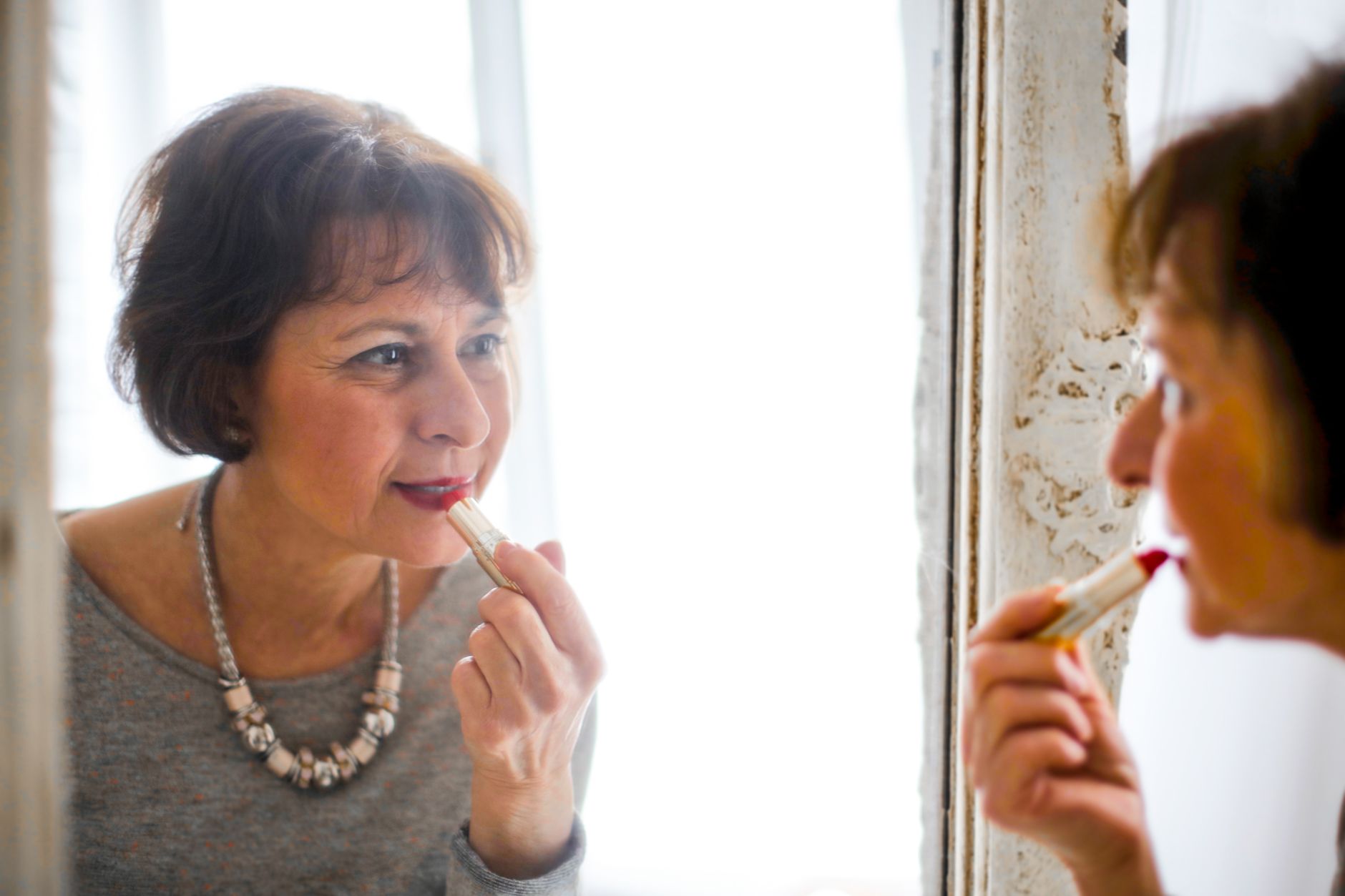
Ask a generative AI model to picture the “signs of ageing” and the results tend to arrive with a heavy editorial slant. Wrinkles are rendered as flaws, grey hair as something to be corrected, and the faces that come back are overwhelmingly tired, sad or diminished. That framing, built into the training data of the world’s most popular image tools, is now the target of a marketing campaign from a brand whose business has long traded on the very same anxieties.
Olay Australia has launched a campaign that deliberately turns the lens back on artificial intelligence, challenging the way image-generation models interpret ageing and arguing that the technology has inherited and amplified a narrow, negative picture of what getting older looks like. As Mumbrella reported, the campaign reframes “signs of ageing” as something closer to signs of a life lived, a provocation aimed squarely at the assumptions coded into today’s most widely used AI systems.
The news
The campaign sits at an unusual intersection of advertising and technology critique. Rather than simply promoting a product line, Olay Australia has made the behaviour of generative AI part of the message, highlighting how prompts built around ageing tend to return stereotyped, uniformly unflattering imagery. The point being made is that these tools do not invent their worldview out of nothing. They reflect, and then concentrate, the patterns they were trained on, including decades of advertising that has sold ageing as a problem to be fixed.
There is a degree of self-awareness in a skincare brand raising this issue, given the beauty industry’s long history of framing fine lines and wrinkles as blemishes. That tension is arguably what gives the campaign its charge. By positioning itself against AI’s bleak defaults, Olay is attempting to reposition the broader conversation about ageing while trading on its own category expertise. Whether audiences read that as genuine advocacy or clever brand strategy is part of what makes the campaign interesting.
Why AI sees ageing the way it does
The underlying technical issue is well documented. Large image-generation models learn from enormous volumes of pictures and captions scraped from the internet, and the associations they absorb are only as balanced as the source material. If the web overwhelmingly pairs older faces with words like “tired”, “frail” or “past it”, the model learns to reproduce that correlation on demand. Researchers in the field of algorithmic bias have repeatedly shown that these systems flatten diversity, defaulting to the most statistically common and often most stereotyped representation of any group.
Ageing is a particularly stark example because the cultural baggage is so heavy. Youth is coded as aspirational across advertising, film and social media, so the data that feeds AI is skewed before a single model is trained. The result is a feedback loop in which AI-generated images risk hardening existing prejudices rather than reflecting the full range of how people actually age. For a campaign built on challenging that loop, the technology provides an almost too-perfect villain.
Two ways to read it
Supporters of the approach would argue that putting AI bias in front of a mass consumer audience is valuable in itself. Debates about algorithmic fairness usually stay confined to academic papers, regulatory submissions and technology conferences. A skincare campaign running across national media reaches people who will never read a research study on training data, and it does so with a concrete, visual example they can understand instantly. On that reading, Olay is doing public-interest work while also selling moisturiser.
The more sceptical view is that a beauty brand critiquing unrealistic beauty standards is, at minimum, complicated. Critics of the broader “real beauty” genre of advertising have long pointed out that brands can profit from the appearance of social conscience without materially changing what they sell or how they sell it. There is also a risk that singling out AI lets the wider advertising and media ecosystem off the hook, when the imagery AI learned from was produced by exactly those industries over many years. The campaign invites applause for naming a problem that its own category helped create.
The Australian stakes
For Australia, the campaign lands at a moment when both AI governance and advertising standards are under active review. The federal government has been weighing mandatory guardrails for high-risk AI, and questions about how automated systems treat different groups, whether by age, gender, race or disability, are squarely within that conversation. A mainstream campaign that makes AI bias legible to ordinary consumers could nudge public expectations about what responsible AI use looks like, which in turn shapes the political appetite for regulation.
Australia also has an older population that is growing as a share of the whole, and a workforce in which age discrimination remains a persistent complaint to the Australian Human Rights Commission. As businesses rush to adopt generative AI for marketing, recruitment imagery and customer communications, the risk that these tools quietly entrench ageist assumptions is not hypothetical. Local marketers leaning on off-the-shelf image generators may be importing biases they never intended, and a high-profile domestic campaign calling that out gives the issue a distinctly Australian reference point.
There is a commercial dimension too. Australian agencies and brands are under pressure to use AI tools to cut production costs, and the Olay campaign is a reminder that cheaper output can carry reputational risk if the imagery reproduces tired stereotypes. For an industry already navigating consumer wariness about synthetic content, demonstrating that a human hand is guiding and interrogating AI output, rather than simply accepting its defaults, is becoming a point of difference.
What’s next
The campaign is unlikely to change how foundation models behave on its own, since that work sits with the companies building the underlying systems and with the data they choose to train on. What it can do is shift the conversation among Australian marketers about when and how to trust generative tools, and give consumers a sharper vocabulary for spotting bias when they encounter it.
The more lasting test will be whether the critique travels beyond a single campaign. If Olay’s intervention prompts other advertisers, regulators and AI developers to scrutinise the defaults their tools reach for, it will have achieved something beyond brand awareness. If it remains a one-off talking point, it will join a long list of campaigns that named a cultural problem without disturbing it. Either way, the episode is a useful signal that AI’s quiet assumptions are now fair game for mainstream Australian advertising, and that the tools shaping how we picture ourselves are finally being questioned in public.
Sources: Mumbrella.