

















































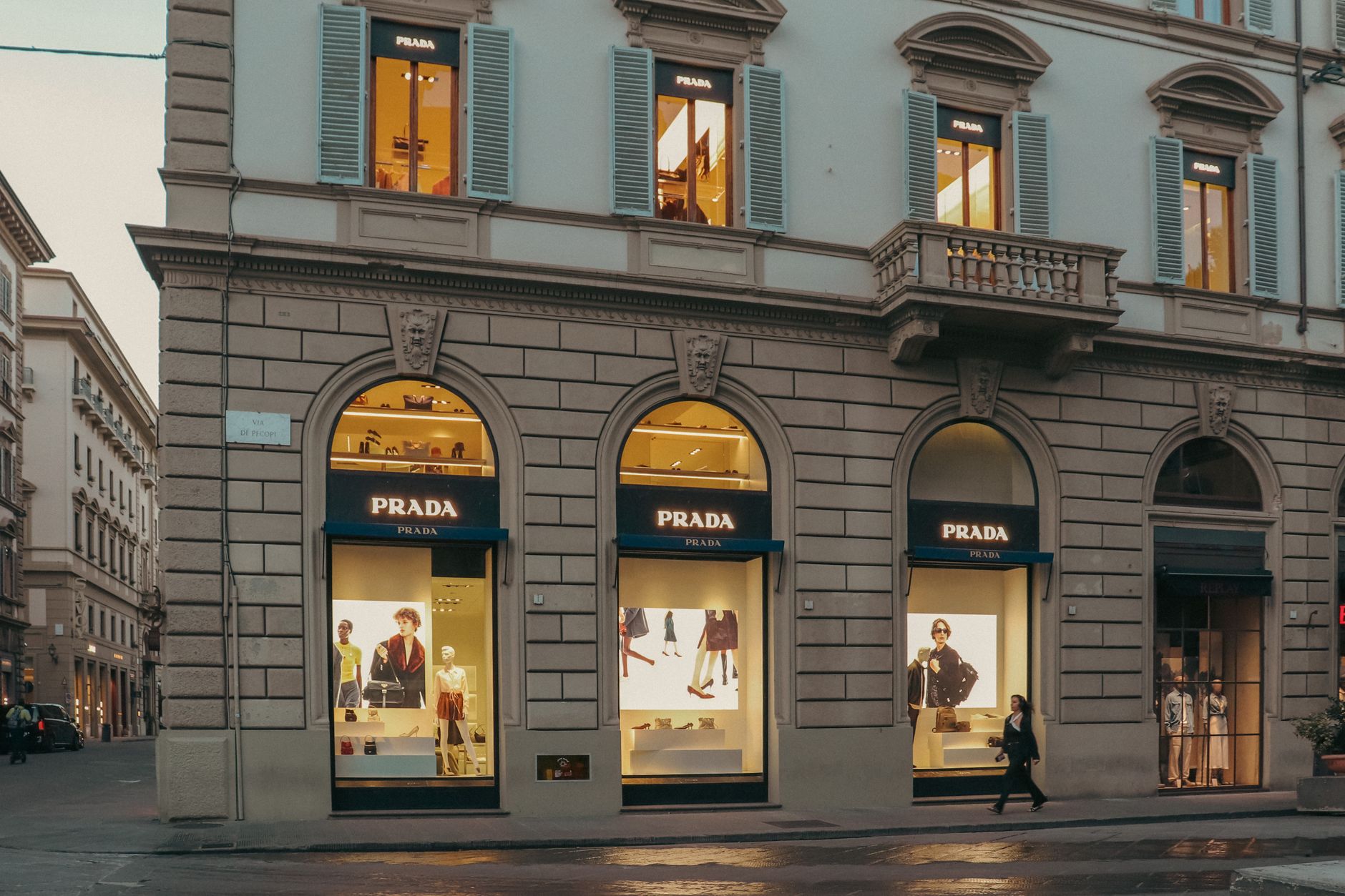
For most of the past two years the marketing conversation has run in one direction: towards automation. Generative tools now draft campaign copy, storyboard ads, mock up product shots and spin out dozens of social variations before a human has finished their first coffee. So it is telling that one of the most recognisable names in luxury has chosen this moment to move the other way, foregrounding the human hand rather than hiding it.
According to Inside Retail, Prada’s latest holiday campaign leans deliberately into human-made creative work, positioning craft, authorship and a visibly human sensibility as the point of difference. The timing is the story. As AI-generated marketing becomes more common and, in some cases, more obvious, a growing slice of consumers is beginning to notice the difference and, increasingly, to value it.
The context: a feed full of synthetic everything
The backdrop here is a creative industry that has absorbed generative AI faster than almost any other. Brands reached for the technology because the economics were irresistible. What once took a studio a week can now be roughed out in an afternoon, and the marginal cost of producing a tenth, hundredth or thousandth variation of an ad has collapsed towards zero. For performance marketing teams chasing cheaper impressions, that is close to a dream.
The catch is that when everyone has access to the same tools and the same visual shortcuts, output starts to converge. Scroll any feed in the lead-up to the festive season and the sameness is hard to miss: the slightly too-perfect skin, the uncanny product gloss, the compositions that feel assembled rather than made. The abundance that made AI attractive is now the thing eroding its impact, because a message that looks like everything else struggles to register at all.
Luxury sits in an awkward spot within that shift. The entire category trades on scarcity, provenance and the sense that a human master has laboured over something rare. A campaign that feels machine-extruded quietly undercuts the promise a luxury house is charging a premium to make. Reaching for the human touch, then, is not nostalgia so much as brand self-defence.
The news: craft as the differentiator
Prada’s festive work treats human creativity as an asset to be shown off rather than a cost to be engineered away. The wager is that in a market saturated with synthetic imagery, the fingerprints of real people, their taste, their imperfections, their point of view, become the thing that makes a campaign feel worth paying attention to. Inside Retail frames the move as a response to consumers actively craving that human presence, a hunger that has grown in direct proportion to the volume of AI content washing over them.
It is worth being precise about what this is and is not. Elevating the human touch does not mean swearing off technology. Most large brands, Prada included, still use digital tooling across production and distribution. The signal is about where the visible value sits. The creative concept, the authorship and the emotional intelligence are being kept firmly in human hands, and crucially, that fact is being made part of the pitch.
Two ways to read it
One camp views this as a durable correction. On that reading, the novelty of AI-generated advertising is wearing off, audiences are developing a sharper eye for the synthetic, and authenticity is re-emerging as a premium consumers will reward. Brands that can credibly claim human craft, and prove it, stand to stand out precisely because so many rivals have automated themselves into a beige middle.
The sceptical camp sees something narrower. Prada is a heritage luxury house with the margins to pay for artisanship and a brand story that practically demands it. For a supermarket, a telco or a fast-fashion retailer competing on price and volume, the maths points the other way, and AI’s cost advantages remain overwhelming. In that view, the human touch becomes a luxury signal in the literal sense, a marker of who can afford not to automate, rather than a trend the whole market will follow.
Both readings can be true at once. The likely outcome is not human versus machine but a sorting of the market, where some brands compete on the efficiency AI unlocks and others compete on the authenticity it cannot fake, with the positioning choice itself becoming part of the brand.
What it means for Australia
For Australian brands and agencies, the Prada move lands in a market already wrestling with exactly these questions. Local creatives have been among the more vocal globally about the risks of unchecked automation, from screen composers protesting the use of their work to train models through to recording-industry moves to keep AI-generated songs out of the charts. FluentSea has reported on campaigns to protect Australian artists from AI exploitation and on polling showing strong public support for creators in copyright fights, all of which points to an audience that is primed to care where creative work comes from.
There is a commercial read for Australian marketers too. The domestic advertising sector is small, relationship-driven and reputationally sensitive, which means a brand caught passing off cheap synthetic work as the real thing has further to fall here than in larger markets. At the same time, cost pressure is acute, and plenty of local teams are quietly leaning on generative tools to stretch thin budgets. The Prada example offers a middle path worth considering: use AI where it genuinely helps, but be honest about it, and reserve the human craft for the moments where it actually moves people.
For Australia’s homegrown AI sector, none of this reads as a rejection of the technology. It is a maturing of the market’s expectations. The brands and tools that will win trust are the ones that treat human creativity as a collaborator to be amplified rather than a line item to be cut, and that are transparent about where the line sits.
What’s next
The holiday trading period will be an early test. Festive campaigns are the most scrutinised and most expensive of the year, and they offer a natural experiment in whether audiences genuinely reward the human touch or simply say they do. Expect more brands, particularly in premium categories, to start naming the humans behind their work and to make authorship an explicit selling point.
The harder question for the year ahead is disclosure. As the gap between human-made and AI-made creative becomes a competitive battleground, pressure will grow for brands to be clear about which is which, whether through voluntary labelling or eventual regulation. If consumers really are craving the human touch, the brands that can prove it, rather than merely claim it, will be the ones that benefit.
Sources: Inside Retail