










































Australia’s push to build homegrown artificial intelligence infrastructure has run into an awkward reality check. Firmus, the data centre company behind an ambitious plan to stand up a large AI computing facility in Tasmania, has abandoned its attempt to list on the Australian Securities Exchange, and the fallout is now rippling through the billions of dollars in commitments that were meant to flow from that listing.
The scrapped float has done more than deny Firmus a public market debut. According to records filed with the corporate regulator and reporting by the ABC, the Australian Securities and Investments Commission is now examining the circumstances of the failed listing. The company, meanwhile, is left seeking alternative funding to keep its Tasmanian project moving, and the enormous orders for AI chips that underpinned the whole proposition are suddenly far less certain than they looked a few months ago.
How Firmus got here
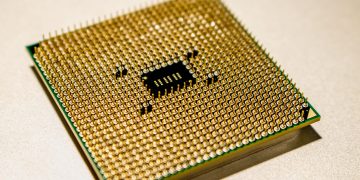
Firmus had positioned itself as one of the more credible local players in a field dominated by global hyperscalers. The pitch was straightforward and genuinely appealing: build energy-efficient AI data centres in Australia, lean on Tasmania’s abundant renewable power, and give domestic customers a sovereign alternative to shipping their most sensitive computing workloads offshore. The planned ASX listing was supposed to be the moment that vision got the capital it needed to buy the graphics processing units and specialised chips that make an AI factory run.
Those chips are not cheap, and they are not ordered casually. The commitments Firmus had lined up to purchase AI hardware ran into the billions, a scale of spending that only makes sense if the money to pay for it is locked in. When the float did not proceed, that chain of assumptions came under immediate pressure. Chip commitments depend on funding, funding depended on the listing, and the listing is now gone.
It is worth being precise about what has changed. The grand plans that accompanied the proposed float are no longer the live story. What matters now is a company without the public capital it expected, a regulator asking questions, and a set of supplier and customer relationships that each need to be renegotiated or reaffirmed in a new context.
Two readings of the same event
There are competing ways to interpret what has happened, and both deserve a hearing. The more cautious view is that the collapse of the listing is a warning sign about how far ahead of the funding the Australian AI build-out has run. Committing to billions in hardware before the capital is secured is a bet on markets staying friendly, and when that bet does not pay off, the exposure is substantial. ASIC’s interest in the aborted float only sharpens that reading, because regulatory scrutiny tends to slow things down and raise the cost of raising money elsewhere.
The more optimistic view comes partly from Firmus’s own camp and partly from its partners. A pulled listing is not the same as a failed business. Companies regularly delay or abandon floats when market conditions sour, then return to capital markets later or raise privately in the meantime. On that reading, the Tasmanian project is paused for recapitalisation rather than cancelled, and the underlying demand for sovereign AI compute in Australia has not gone anywhere.
Supporting that second interpretation is the stance of construction and materials group MAAS Group, which holds contracts tied to the Firmus build. MAAS Group has said its Firmus contracts remain on track, a signal that at least one major partner is not treating the scrapped float as a trigger to walk away. That reassurance matters, because the credibility of a data centre project often rests as much on whether its builders and suppliers stay committed as on whether its shares ever trade.
Why this matters for Australia
The Firmus episode lands at a sensitive moment for Australian technology policy. Governments at both the federal and state level have talked up the idea of sovereign AI capability, the notion that critical computing should be hosted onshore under Australian law rather than rented from data centres in other jurisdictions. Tasmania’s renewable energy advantage has featured prominently in that conversation, and Firmus was one of the clearest commercial expressions of it.
If a flagship local project can be knocked off course by a single failed listing, it raises uncomfortable questions about how Australia intends to finance infrastructure of this scale. The global players building AI data centres have balance sheets measured in the hundreds of billions of dollars. Australian challengers do not, which makes them far more dependent on capital markets behaving and on investors sharing their timeline. The gap between national ambition and available domestic capital is exactly the space in which the Firmus float has now stumbled.
There is also a jobs and regional development dimension. A large AI facility in Tasmania promises construction work, ongoing operational roles, and a reason for skilled workers to stay in the state. Those benefits were part of the political appeal, and they are precisely what is placed at risk when funding stalls. For communities counting on the project, the difference between a delay and a cancellation is not academic.
What happens next
The immediate test is whether Firmus can secure funding by another route. Private capital, a strategic investor, or a restructured deal with existing backers could all keep the Tasmanian factory alive without a public listing, and the company has made clear it is still pursuing the money it needs. How quickly that comes together will say a great deal about how investors really view the economics of Australian AI infrastructure.
The second thread to watch is ASIC. The regulator’s examination of the aborted float is at an early stage, and its findings could shape not only Firmus’s options but also the appetite of other local operators to attempt similar listings. A drawn-out review would add friction at a time when the company can least afford it.
Finally, the posture of partners like MAAS Group will be a useful barometer. For now their contracts are described as on track, and as long as the builders and suppliers hold firm, the project retains a pulse. The coming months will reveal whether that confidence is matched by the one thing Firmus still lacks, which is committed capital at the scale an AI factory demands.
Sources: abc.net.au