


















































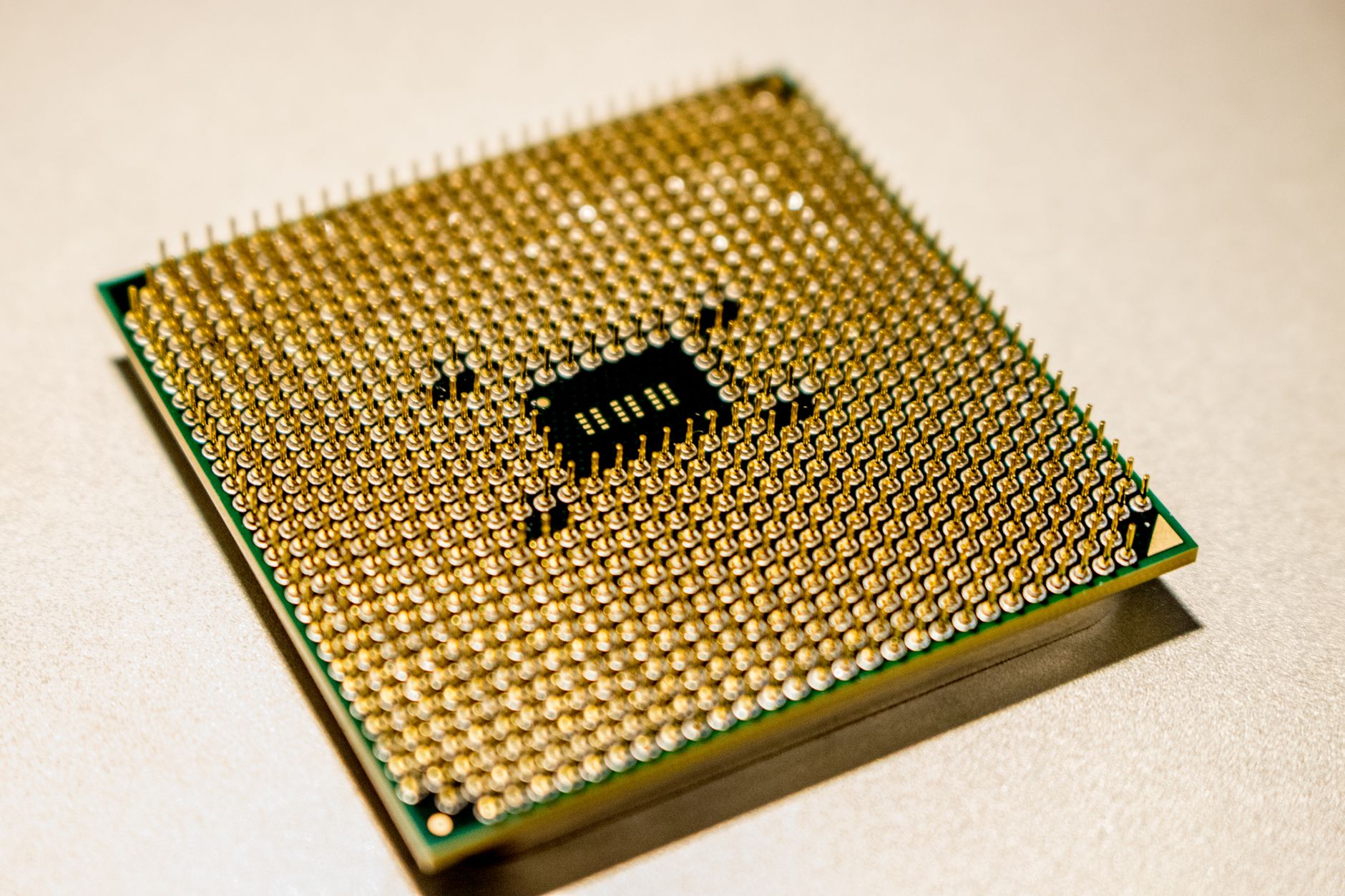
Australian investors have been handed another ticket to the global artificial intelligence boom, this time through a company trying to do the one thing almost no one has managed: loosen Nvidia’s grip on the chips that power AI. The Sydney-founded investment platform NonPublic has gathered about $118 million from local backers and placed it into Tenstorrent, a United States semiconductor company valued in the billions, as part of a funding round the platform puts at US$1.5 billion.
The deal, reported by Australian FinTech, continues a now-familiar pattern for NonPublic, which specialises in giving Australian wholesale investors exposure to late-stage American technology companies well before those firms reach public markets. For most people, buying into a private US chip designer is simply not an option. NonPublic exists to change that, pooling local money into a single vehicle that can write a cheque large enough to earn a place on a marquee cap table.
Why Tenstorrent matters
Tenstorrent is not just another AI startup riding the hype. The company is run by Jim Keller, one of the most celebrated microprocessor engineers of the past three decades, whose fingerprints are on silicon at Apple, AMD, Tesla and Intel. His reputation alone has made Tenstorrent one of the more closely watched challengers in a field where the incumbent, Nvidia, commands the overwhelming majority of the market for AI accelerators and enjoys the fat margins that go with near-monopoly status.
The company’s pitch rests on an open approach to hardware. Rather than locking customers into a proprietary software stack, Tenstorrent builds its chips around RISC-V, the open-standard instruction set that lets designers avoid the licensing tolls charged by the likes of Arm. The bet is that cloud providers, governments and large enterprises, nervous about depending on a single supplier and weary of waiting in Nvidia’s order queue, will pay for a credible alternative. Backers including Samsung, Hyundai and a consortium led by Jeff Bezos’s family office have already poured money in during earlier rounds, which is part of why the name carries weight with Australian investors looking for the next breakout.
The case for letting locals in
The appeal of a platform like NonPublic is straightforward. The biggest gains in the technology cycle increasingly accrue to investors who get in while a company is still private. Firms are staying off the public markets for far longer than they did a generation ago, so by the time an AI leader rings the opening bell, a great deal of the growth has already been captured by venture funds, sovereign wealth players and a narrow band of insiders. Everyday Australian investors, even wealthy ones, have historically been shut out of that window entirely.
Proponents argue that vehicles aggregating local capital democratise access to that upside, letting self-directed investors and family offices diversify beyond the ASX’s relatively thin technology bench. Australia produces world-class software companies, but it has almost nothing in the way of listed semiconductor exposure, and the local bourse offers little direct play on the AI hardware arms race. For an investor who believes the current boom has years left to run, a stake in a company like Tenstorrent is a way to participate in a part of the value chain that is otherwise invisible from Collins Street or Martin Place.
And the case for caution
The other side of the ledger is sobering. Private, pre-IPO investments are illiquid by nature, meaning backers can be locked in for years with no easy way to sell if their view changes or their circumstances shift. Valuations in the AI sector have climbed to levels that make even seasoned fund managers uneasy, and a headline figure like US$1.5 billion tells investors nothing about the terms, the preferences stacked above them or what might happen to the ordinary holder if a future round comes in lower. Challenging Nvidia is also brutally hard. The graveyard of well-funded chip startups is crowded, and even a designer as respected as Keller faces the formidable task of matching not just Nvidia’s silicon but its mature software ecosystem, which is where much of the company’s real moat lies.
There is a structural concern too. Feeder vehicles that bundle many small investors into a single line on a cap table can carry layers of fees and limited information rights, and the retail-adjacent enthusiasm for anything labelled AI has regulators around the world watching closely for mis-selling. None of that makes the Tenstorrent deal a poor one, but it underlines that access and wisdom are not the same thing.
What it means for Australia
For the Australian market, the significance runs deeper than one transaction. It is a reminder of where the serious money in AI is being made, and it is almost entirely offshore. Despite a flurry of local activity in data centres, sovereign compute and AI software, Australia has no domestic semiconductor industry to speak of, and the capital its investors are putting to work in the sector largely flows to California, Texas and East Asia. Deals like this one channel Australian savings into American innovation, generating returns that may come home but leaving the underlying intellectual property, jobs and strategic capability firmly abroad.
That tension sits awkwardly alongside Canberra’s growing rhetoric about AI sovereignty and the desire to build capability on home soil. It also raises questions for the Australian Securities and Investments Commission about how these cross-border private vehicles are marketed, given most are open only to wholesale investors who are presumed to understand the risks. As more platforms spring up promising ordinary-sounding access to extraordinary-sounding returns, the line between genuine opportunity and speculative froth will matter a great deal to the people writing the cheques.
What is next
The near-term question for NonPublic’s backers is whether Tenstorrent can convert its engineering pedigree and its war chest into real revenue, winning design wins against an entrenched rival and eventually reaching the public listing that would let investors realise their gains. The broader question is whether a wave of Australian capital flowing into private US AI companies represents smart diversification into the century’s defining technology, or a late-cycle rush into assets whose prices already assume everything goes right. Either way, the appetite is clearly there, and platforms built to feed it show no sign of slowing down.
Sources: Australian FinTech.



Comments 1