















































Monash University has switched on MAVERIC, a $60 million AI supercomputer built to let researchers train models on sensitive Australian clinical data without ever moving it offshore. The university unveiled the system on 11 June 2026 as what it calls Australia’s first higher-education AI supercomputer, and the first in the university sector wired specifically for secure health research.
The machine sits inside CDC Data Centres’ Brooklyn campus, roughly 10 kilometres west of Melbourne’s CBD, and was delivered with NVIDIA, Dell Technologies and CDC. According to iTnews, it runs on the NVIDIA GB200 NVL72 platform, one of the first deployments of its kind in Australia, pairing 36 Grace Arm processors with 72 Blackwell GPUs linked by NVLink at up to 130 terabytes per second of bandwidth. Dell supplied the integration through its IR7000 racks and PowerEdge XE9712 servers.
MAVERIC stands for Monash AdVanced Environment for Research and Intelligent Computing. The more important word is one that does not appear in the acronym: sovereign.
A trusted research environment, not just a big GPU cluster
What separates MAVERIC from a generic AI cluster is the security and governance wrapped around it. Monash has structured the system as a trusted research environment, a controlled setting where authorised researchers can work with sensitive, large-scale clinical datasets under strict access rules. The university says it has adopted the Five Safes framework, the widely used model for granting safe access to sensitive data across projects, people, settings, data and outputs.
That design choice matters because clinical data is exactly the sort of information organisations are reluctant, and often legally unable, to send to offshore cloud regions. By hosting the compute in a Melbourne data centre under Australian control, Monash is trying to close the gap between the volume of local health data and the infrastructure needed to learn from it safely.
The build also leans on newer data-centre engineering. CDC’s Brooklyn facility uses a closed-loop liquid cooling system that the partners say delivers up to 300 times greater water efficiency than traditional air cooling, with no consumptive water use. That is a meaningful detail as regulators and communities scrutinise the water and energy footprint of AI infrastructure.
“MAVERIC gives Australia world-leading sovereign capability and Monash researchers access to the computing power needed to tackle the most complex scientific and societal challenges facing the world today,” Vice-Chancellor Professor Sharon Pickering said in the university’s launch statement, carried by Mirage News.
What researchers are already running on it
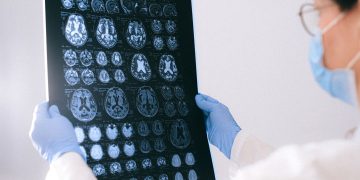
Monash says early projects are already live rather than theoretical. According to Healthcare IT News, which first reported the launch, the work spans cancer, infectious diseases, antimicrobial resistance and new medicine discovery. Other early workloads include the discovery of precision-medicine biomarkers for multiple sclerosis, AI models for mental-health support, and improved skin-cancer detection.
The most ambitious use case is a foundation model. Monash describes its Unified Phenotype Foundation Model as Australia’s first healthcare AI foundation model, a generalist system designed to integrate longitudinal data such as medical imaging, clinical notes and biological signals rather than treating each in a narrow, siloed tool. The aim is earlier diagnosis and the discovery of interpretable biomarkers for major disease burdens.
Foundation models of that kind are enormously compute-hungry to train, which is precisely why the infrastructure has been the bottleneck. Training on real, sensitive Australian clinical data at that scale has, until now, been difficult to do onshore inside a compliant environment.
The partners frame the launch in national terms. NVIDIA’s senior director for the ANZ region, Dennis Ang, said the deployment “marks a new era for Australian research,” per CDC’s announcement. CDC founder and chief executive Greg Boorer positioned it as an example of next-generation cooling helping transform digital infrastructure across the research and education sector. Assistant Minister for Science, Technology and the Digital Economy Dr Andrew Charlton MP tied it to national ambition, saying it would be “key to unlocking growth and productivity in Australia.”
Why it matters for Australia
Sovereign, secure compute has been the missing link for Australian clinical AI. The country generates vast quantities of health data through Medicare, hospital systems, pathology and imaging, but the practical options for training AI on that data have often meant either shrinking the ambition or shipping data to hyperscaler regions abroad, a non-starter for the most sensitive datasets.
MAVERIC hands the university sector a class of infrastructure that was, in effect, previously reserved for the global cloud giants. That has three downstream consequences worth watching.
First, it changes who can build. A Monash-hosted trusted research environment lowers the barrier for hospitals, medical research institutes and smaller teams to run serious AI projects without standing up their own accredited compute. Second, it keeps the intellectual property, and the data, onshore. A locally trained foundation model is an asset Australia owns, not one licensed back from an overseas vendor. Third, it feeds the pipeline. The biomedical AI research MAVERIC enables, from MS biomarkers to skin-cancer detection, is the raw material for the next wave of Australian medtech and the startups that commercialise it.
There are open questions. A single university supercomputer is not a national strategy, and access, funding sustainability and governance of who gets to train on which datasets will shape how broadly the benefits spread. The Five Safes framework is a strong starting point, but trusted research environments live or die on the strength of their access controls and audit trails in practice, not on paper.
The bigger signal is directional. With MAVERIC live, the argument that Australia lacks the compute to build its own health AI is weaker than it was a month ago. The next test is whether the foundation-model work produces clinically validated tools, and whether other institutions follow with sovereign infrastructure of their own rather than defaulting offshore. If they do, the launch in Brooklyn may be remembered less as a single machine and more as the point at which Australian health AI stopped waiting for someone else’s data centre.
Sources: Healthcare IT News, Mirage News (Monash University), iTnews, CDC Data Centres.