











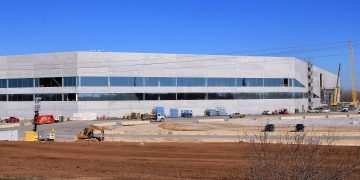











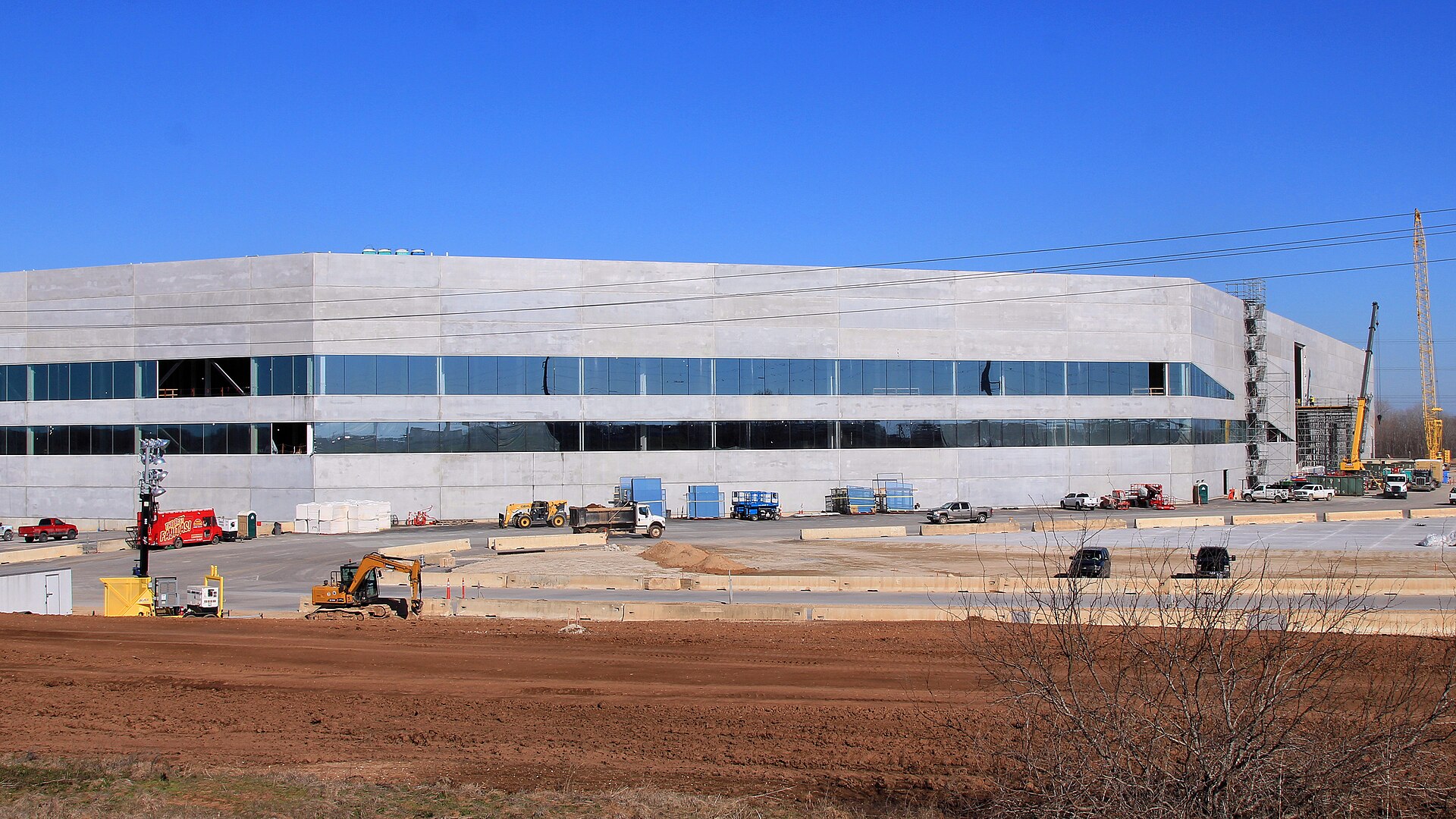
Elon Musk’s sprawling business empire is reportedly turning its attention to the one thing standing between his artificial intelligence ambitions and the silicon they run on: the chips themselves. According to the International Business Times Australia, SpaceX and Tesla have confirmed a Texas location for a vast semiconductor complex nicknamed “Terafab”, a facility said to involve Intel and Musk’s own AI outfit xAI as the industry scrambles to keep pace with soaring demand for AI accelerators.
The reported plan sits at the intersection of several trends that have defined the past two years of the AI boom. Compute has become the scarcest resource in technology, graphics processors are rationed like a wartime commodity, and the companies building the largest models have grown increasingly frustrated at their dependence on a handful of foundries in Taiwan, South Korea and the United States. A domestic mega-fab, if it materialises at the scale the name “Terafab” implies, would be an attempt to pull that supply chain closer to home and under tighter control.
What is being reported
The core of the story is straightforward even if the detail remains thin. Musk’s companies have identified a Texas site, already the heartland of his corporate footprint given Tesla’s Gigafactory near Austin and SpaceX’s Starbase operations further south, and are positioning it as the home for a chip manufacturing effort tied to Intel and xAI. The framing is one of vertical integration: Tesla needs silicon for its self-driving ambitions and its Dojo and Optimus programs, xAI needs it for training and running its Grok models, and both would rather not queue behind every other hyperscaler for capacity.
Intel’s involvement is the more intriguing thread. The American chipmaker has spent heavily trying to rebuild itself as a contract manufacturer capable of rivalling Taiwan’s TSMC, an effort that has burned through capital and patience in equal measure. A marquee customer with Musk’s appetite for volume would be a meaningful vote of confidence in Intel’s foundry strategy, and a partnership would give Musk’s ventures a domestic manufacturing partner rather than a purely offshore one. You can read the original report via the International Business Times Australia.
Two ways to read it
The optimistic reading is that this is exactly the kind of supply-side response the industry needs. For all the money pouring into data centres, the bottleneck has never really been buildings or electricity alone. It has been advanced packaging, high-bandwidth memory and leading-edge wafers, all of which come from a dangerously concentrated set of suppliers. A billionaire willing to spend at genuinely industrial scale, and to co-invest with an established manufacturer, could add capacity that the whole market benefits from, not just his own companies.
The sceptical reading is harder to dismiss. Building a leading-edge fab is one of the most difficult and expensive undertakings in modern industry, routinely running into tens of billions of dollars and many years before a single commercially useful wafer emerges. Musk has a long record of announcing audacious timelines that slip, and the semiconductor world is littered with grand fab announcements that quietly shrank or vanished once the capital calls arrived. Analysts will want to see committed spending, tooling orders from the likes of ASML, and a realistic path to yield before treating “Terafab” as anything more than a statement of intent. Until named executives put verified numbers and dates on the record, caution is warranted, and readers should treat the specifics as reported rather than confirmed.
Why this matters for Australia
Australia does not make advanced logic chips and, realistically, will not any time soon. What we do have is an economy increasingly wired into the AI build-out at both ends of the supply chain. On one side, the materials that feed semiconductor and data-centre construction, from silica and copper to the critical minerals used in advanced electronics, are Australian exports whose demand outlook brightens every time a project of this size is floated. FluentSea has already tracked how AI-driven demand has lifted ASX-listed miners and reshaped copper forecasts, and a fab of “Terafab” ambition would only sharpen that trend.
On the other side sits the question of access. Australian enterprises, universities and government agencies buy their compute from the same global pool that Musk is trying to secure for himself. Every large captive fab that comes online in the United States changes the calculus of who gets priority when chips are scarce. If the biggest American AI players increasingly manufacture or reserve their own silicon, the residual supply that flows to smaller markets like ours could tighten, or at least become more expensive, before new capacity eases the squeeze. That is a live concern for the local firms building AI factories and sovereign compute here, a theme running through recent Australian infrastructure investments from Firmus and its backers.
There is also a policy dimension. Canberra has spent the past year talking up sovereign capability and warning about the risks of leaning too heavily on offshore technology. A project like this is a reminder that the truly strategic layer of the AI stack, the fabrication of the chips, remains overwhelmingly beyond Australia’s borders and increasingly concentrated in the hands of a few very large players. That reality shapes how much genuine independence any national AI strategy can realistically claim.
What happens next
The immediate test is whether the announcement hardens into commitments. Watch for confirmation from Intel on its foundry role, for site permits and construction activity around the nominated Texas location, and for any indication of the process node and capacity being targeted. Watch, too, for the reaction from incumbent chipmakers, who will not welcome another heavyweight entering their space, and for whether other AI companies see Musk’s move as a template worth copying.
For Australian readers, the practical signals to track are closer to home: commodity demand tied to global fab construction, the pricing and availability of AI hardware for local data centres, and whether governments treat announcements like this as a spur to invest in the parts of the supply chain where Australia can actually compete. Whether or not “Terafab” is ever built at the scale its name suggests, the appetite behind it is real, and that appetite has consequences for a country that supplies the raw materials, hosts the data centres and depends on the chips.
Sources: International Business Times Australia.