

























Australia’s artificial intelligence consulting sector has spent the past two years chasing the same story: big companies flush with enthusiasm for the technology but short on the in-house expertise to turn it into anything that actually runs. V2 AI, one of the local advisory firms built around exactly that gap, has now decided the next chapter of that story is being written in the west.
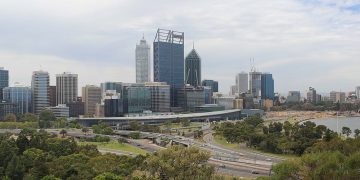
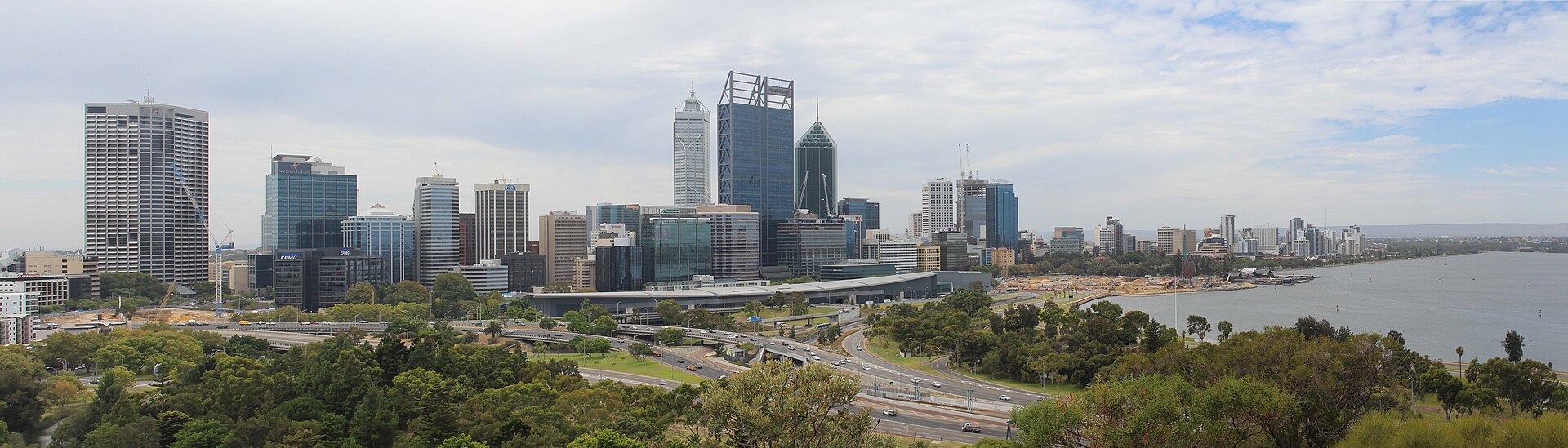
The firm has opened a new office in Perth, a move it frames as a formal expansion into Western Australia rather than a token presence. According to Consultancy.com.au, the new base is designed to put consultants on the ground close to the state’s resources, energy and industrial clients, the sort of organisations that increasingly want AI advice delivered in the same time zone and, ideally, in the same building.
Why the west, and why now
The logic behind the move is not hard to follow. Western Australia sits at the centre of the country’s mining and energy economy, and those industries have become some of the most active early adopters of machine learning and data analytics in the country. Iron ore majors and their contractors have poured money into predictive maintenance, autonomous haulage, geological modelling and supply-chain optimisation for the better part of a decade. The current wave of generative AI has simply widened the field, adding document-heavy back-office work, engineering knowledge management and safety reporting to the list of processes that companies want to automate or augment.
For a consultancy, that concentration of large, cashed-up clients in a single city is an obvious draw. Perth-based operations tend to prize local relationships and a physical presence, and firms that fly consultants in from the eastern states have long complained that distance and time zones cost them work. Setting up in the CBD is V2 AI’s answer to that, a signal to prospective clients that it intends to be a fixture rather than a fly-in visitor.
The expansion also fits a broader pattern in the professional services market. As demand for AI advice has surged, the field has crowded quickly, with the global strategy houses, the big four accounting firms, systems integrators and a swarm of specialist boutiques all pitching for the same enterprise budgets. Growing beyond a home base in Melbourne and Sydney into a third major market is one way a mid-sized firm can defend its position and reach clients the larger players may be servicing only remotely.
Two ways to read the bet
Supporters of this kind of expansion argue that Western Australian industry is finally ready to move AI out of the proof-of-concept phase and into production. On that view, the constraint is no longer curiosity or budget but capability: firms know roughly what they want the technology to do, yet lack the data engineers, machine learning specialists and change managers to deliver it. A consultancy that can supply that talent locally, and help nervous boards navigate governance and risk, is selling something genuinely scarce.
The more sceptical reading is that AI consulting is riding a hype cycle that will not stay this hot forever. Plenty of enterprise AI pilots never make it to scale, tripped up by messy data, unclear returns or the simple difficulty of embedding new tools into entrenched operational workflows. Global research has repeatedly found that a large share of corporate AI initiatives fail to deliver measurable value, and resources companies with safety-critical systems tend to be cautious adopters for good reason. Opening an office is a fixed cost, and it only pays off if that pipeline of production-ready projects actually materialises rather than stalling at the experiment stage.
Both readings can be true at once. The likeliest outcome is a market that keeps growing but also matures, rewarding advisers who can point to real deployments and measurable savings while quietly thinning out those still selling slide decks. A physical Perth presence gives V2 AI a better shot at being in the first camp, provided it can back the office with people who understand heavy industry rather than generic digital transformation.
The Australian stakes
For the country as a whole, the story is a small but telling data point in a bigger debate about where AI capability lives. Much of the national conversation has fixated on sovereign infrastructure, the data centres and compute capacity being built by the likes of Firmus and its partners, and on the question of whether Australia can retain talent rather than exporting it to Silicon Valley. The consulting layer sits underneath all of that. Even the best infrastructure is useless if mining, agriculture and energy firms cannot find people to help them apply it, and the shortage of applied AI skills is one of the more persistent complaints from Australian industry.
Perth’s inclusion matters because the AI economy has so far been lopsided towards the eastern seaboard. Sydney and Melbourne host the bulk of the startups, the venture capital and the head offices, while the west has supplied much of the raw material and industrial demand without capturing an equivalent share of the technical jobs. Every consultancy, vendor or research team that plants staff in Perth chips away at that imbalance and gives Western Australian graduates a reason to build careers at home. It also keeps more of the value from the resources sector’s AI spending inside the state rather than billing it back east.
There is a policy dimension too. Governments in both Canberra and Western Australia have talked up AI as a productivity lever for the resources industry, and a deeper local advisory market makes those ambitions more achievable. Adoption tends to follow the availability of trusted help, and firms are far more likely to commit to serious projects when they can see a supplier with skin in the local game.
What’s next
The test for V2 AI will be whether the Perth office converts proximity into signed work over the next 12 to 18 months. That means winning marquee clients in mining and energy, hiring local talent rather than relying on secondments from the east, and showing that its projects reach production rather than stopping at the pilot. Rivals will be watching closely, and a successful launch could prompt others to follow with their own western outposts, accelerating the build-out of an AI services cluster in a city better known for rigs than models.
For now, the move is a modest but confident wager that Western Australia’s appetite for artificial intelligence is real and durable. If the resources sector delivers the demand, Perth may find itself with a good deal more AI expertise on the ground than it had a year ago.
Sources: Consultancy.com.au.