










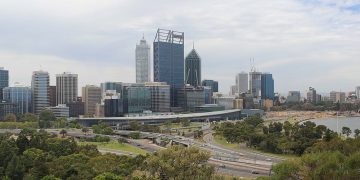
















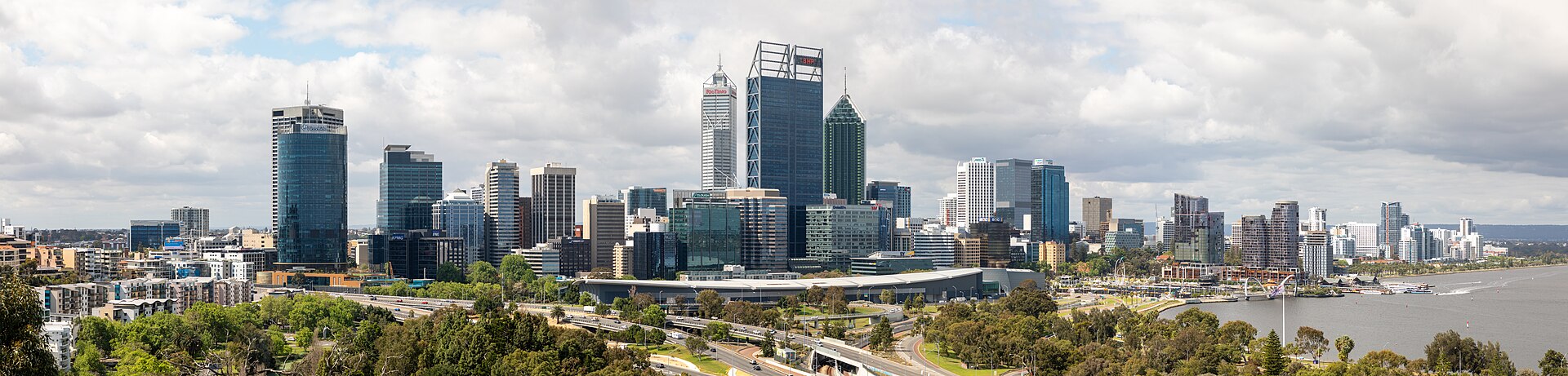
Australian artificial intelligence consultancy V2 AI has moved into Perth, marking the launch with four senior leadership appointments and a clear message that the country’s AI advisory market is no longer content to run out of the eastern capitals alone. The expansion, first reported by IT Brief Australia, adds Western Australia to a footprint that has until now been weighted heavily towards Melbourne and Sydney, and it lands at a moment when the state’s biggest industries are actively hunting for people who can turn AI hype into working systems.
Why Perth, and why now
The logic behind a Perth office is not hard to trace. Western Australia sits at the centre of the country’s resources economy, and the miners, energy producers and industrial operators that dominate the local business landscape have spent the past two years moving AI from the whiteboard to the pit face. Autonomous haulage, predictive maintenance, remote operations centres and computer vision on processing lines are no longer novelties in the Pilbara and the Goldfields, they are becoming part of how the sector expects to compete. That shift has created a steady pull for consultants who understand both the technology and the messy operational reality of heavy industry.
For a firm like V2 AI, opening close to that demand rather than flying consultants in from the east coast is a competitive move as much as a logistical one. Proximity matters when the work involves sitting alongside operations teams, sifting through decades of sensor and maintenance data, and building the trust needed before a large employer will let a model near a safety-critical process. A local office also signals commitment to clients who have grown wary of vendors that treat Perth as a fly-in, fly-out afterthought.
The bet on senior talent
The decision to anchor the launch with four senior hires, rather than a junior delivery team backed by remote oversight, is telling. In consulting, seniority is the product. Clients in resources and government are buying judgement, the ability to say which AI projects are worth funding and which are expensive distractions, and that credibility tends to come from people who have carried profit-and-loss responsibility or run large delivery programs themselves. Loading the Perth team with senior leaders from the outset suggests V2 AI wants to be pitching at the executive level from day one, not building slowly from the bottom.
It also reflects a wider truth about the Australian AI market: the scarce resource is not models or compute, it is people who can bridge the gap between what the technology can do and what a business actually needs. That scarcity is especially acute in Perth, where the tech talent pool is smaller than in Sydney or Melbourne and competition from the miners themselves, many of which are building in-house data and AI teams, is fierce. Recruiting four senior figures into a single market is a statement that the firm believes the demand justifies the wage bill.
Two ways to read the move
Supporters of this kind of expansion argue it is exactly what the Australian market has been missing. For too long, they say, serious AI advisory capability has been concentrated in the eastern states and the global consulting giants, leaving Western Australian firms to choose between expensive multinational engagements and buying tools they cannot properly implement. A home-grown consultancy putting senior people on the ground in Perth gives local businesses a middle path, and keeps more of the value, and the intellectual property, inside the country.
The more sceptical view is that Australia has seen waves of AI consulting enthusiasm before, and that the gap between a signed advisory contract and a production system delivering measurable return remains wide. Recent local reporting has repeatedly pointed to the difficulty enterprises face in getting past pilots, a theme FluentSea has covered in its work on enterprise return on investment. On that reading, four senior salaries in a comparatively small market is a real risk if the resources cycle softens or if clients decide to build capability internally rather than pay for outside advice. Consultancies live and die on utilisation, and Perth is not a forgiving market to carry idle senior staff in.
What it means for Australia
Beyond V2 AI’s own commercial calculus, the move is a small but useful signal about where the Australian AI economy is heading. The narrative around domestic AI has been dominated by Sydney and Melbourne, by capital raises, university spinouts and the occasional ASX listing. A consultancy choosing to invest in senior Perth capability is a reminder that some of the most valuable AI adoption in the country is happening in industrial settings far from those hubs, in mine sites, ports, energy grids and processing plants where efficiency gains translate quickly into hard dollars.
Perth has been quietly building an AI story of its own. FluentSea has reported on locally grown players such as iCetana’s video analytics work on critical infrastructure, and the broader lift AI demand has given Australian miners on the ASX. A national consultancy staffing up in the city adds another layer to that ecosystem, and if it succeeds it could make it easier for the next wave of Western Australian firms to find the expertise they need without looking east or overseas. For a state that has long worried about brain drain to the bigger capitals, senior AI jobs landing in Perth are welcome on their own terms.
There is a policy dimension too. As governments at both state and federal level try to work out how to build sovereign AI capability, the growth of domestic advisory firms outside the two largest cities is the kind of organic capacity-building that strategy documents tend to call for but struggle to engineer directly. It happens because the demand is real.
What is next
The immediate test will be conversion: whether V2 AI can turn a Perth presence and four senior names into signed work with the resources and government clients that dominate the local market. Watch for early engagements with miners and energy operators, for whether the firm expands the team beyond its senior core into delivery staff, and for how quickly rivals, both the global consultancies and other local outfits, respond by strengthening their own Western Australian benches. If the bet pays off, expect it to be copied. If it does not, it will stand as a cautionary tale about the distance between AI ambition and AI economics in Australia’s smaller markets.
Sources: IT Brief Australia.