

















































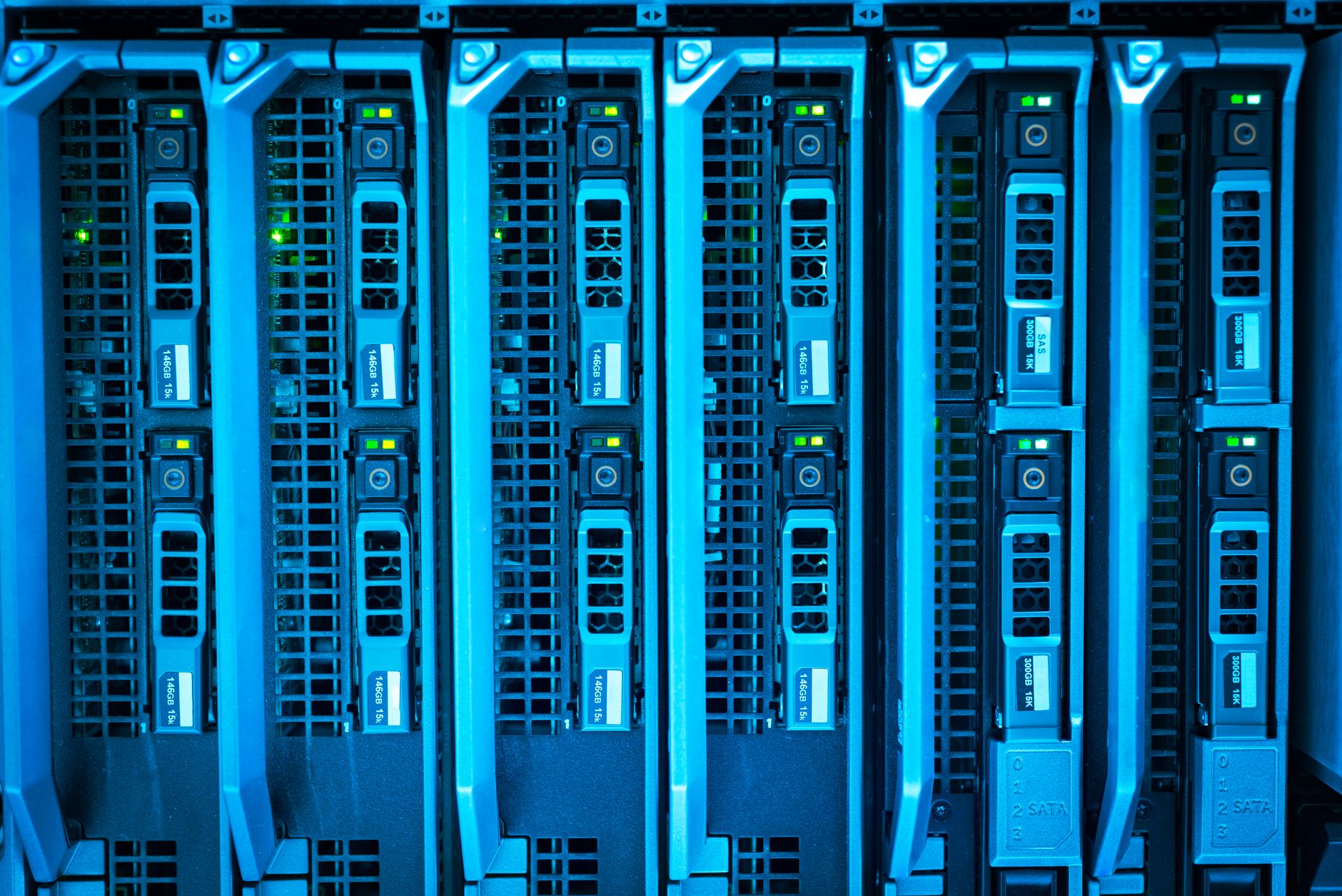
The Australian sharemarket has delivered a blunt welcome to the latest company hoping to ride the artificial intelligence boom. SCX, an AI infrastructure group that made its case to investors on the back of low power consumption and air-cooled chips, dropped around 30 per cent on its first day of trading on the Australian Securities Exchange, a debut that will unsettle other AI hopefuls eyeing a public listing.
The slide is striking precisely because SCX arrived with a pitch tuned to the moment. As the global scramble for computing capacity collides with mounting anxiety about the energy and water that data centres devour, a company promising to do more with less power should, in theory, have found a receptive audience. Instead, buyers stepped back, and the stock closed well below its issue price. Founder David Keane has argued the group’s modest power requirements and air-cooled hardware will hand it an edge over rivals whose kit runs hotter and thirstier, a point he pressed in coverage by the Australian Financial Review.
The news
A 30 per cent fall on day one is the kind of number that lingers. Initial public offerings are engineered to leave a little value on the table so early investors enjoy a modest pop, and a debut that goes the other way suggests the offer was priced for a market that had already moved on by the time the shares changed hands. For SCX, the drop wipes out a chunk of the paper wealth created on listing and leaves the company carrying a valuation the market is plainly reluctant to endorse.
Keane’s central argument rests on efficiency. Where much of the AI hardware conversation has fixated on ever more powerful graphics processing units packed into liquid-cooled racks, SCX is positioning itself at the other end of the spectrum, betting that air-cooled systems with a lighter energy footprint can win work from customers who cannot, or will not, build the enormous power and cooling infrastructure that the largest AI factories demand. It is a genuine point of difference in a field crowded with companies chasing raw compute. Whether it is a durable commercial advantage, or simply a nice line for a prospectus, is the question investors appear to be asking.
Two ways to read it
The optimistic case is that the market has misjudged the timing rather than the idea. Energy is fast becoming the binding constraint on AI expansion. Grid connections are scarce, electricity prices are volatile, and communities are increasingly wary of hyperscale facilities landing in their backyards. A company that can offer meaningful compute without a matching spike in power draw is solving a problem that will only get sharper. On that view, a soft debut is a buying opportunity, and the share price says more about a jittery market than about the business.
The sceptical case is harder to dismiss. Efficiency claims are easy to make and difficult to verify, and air cooling has real physical limits when it comes to the densest AI workloads. Investors who have watched a parade of AI-branded floats promise the world may simply be applying a discount to the whole category. There is also a broader mood at work. After a long run of exuberance, capital is starting to ask pointed questions about which AI businesses actually generate cash and which are riding a narrative. A 30 per cent haircut suggests SCX landed on the wrong side of that new scepticism, at least for now.
The Australian stakes
SCX’s stumble matters well beyond its own register of shareholders. Australia is trying to position itself as a serious home for AI infrastructure, and the local pipeline of listings and raisings has been busy. Firmus has attracted billions in backing for its AI factory ambitions, and the ASX has become a testing ground for healthcare, radiology and enterprise AI plays alike. A prominent debut going backwards sends a signal to every founder and financier weighing a float: the era of listing on a story and a slide deck is closing, and the market wants evidence of demand, margins and a defensible position.
The energy angle sharpens the local relevance. Australia’s data centre build-out is running headlong into questions about electricity supply, emissions and water use, and policymakers have started to grapple with how to reconcile AI ambition with grid reality and climate commitments. A company whose entire proposition is doing AI with less power is, in a sense, a test of whether the market rewards restraint. If efficiency cannot command a premium even when it is the headline feature, that is a sobering data point for the many Australian operators betting that greener, leaner infrastructure will be a selling point rather than a nice-to-have.
There is also a confidence dimension. The federal government has talked up AI sovereignty and the need to build capability at home rather than renting it from offshore hyperscalers. That vision leans on a healthy local capital market willing to fund infrastructure. Debuts that disappoint make the next raise harder and can push ambitious founders toward private capital or overseas listings, which cuts against the sovereignty story Canberra has been telling.
What’s next
The immediate task for SCX and its founder is to convert the efficiency pitch into contracts. Investors will want to see named customers, signed capacity and revenue that validates the claim that air-cooled, low-power infrastructure has real demand behind it. A recovery in the share price will depend far more on commercial traction than on any refinement of the marketing. Trading in the days ahead will show whether the debut drop was an overshoot that value-hunters correct, or the market settling on a level it is comfortable with.
For the wider sector, SCX becomes a reference point. Other AI infrastructure businesses preparing to tap public markets will study the reception closely, and some may choose to wait, trim their valuations or stay private until sentiment steadies. The appetite for AI is not in doubt. What SCX’s rocky first day suggests is that appetite alone no longer guarantees a warm welcome, and that the discipline returning to markets globally has arrived on the ASX too.
Sources: Australian Financial Review



Comments 1