












































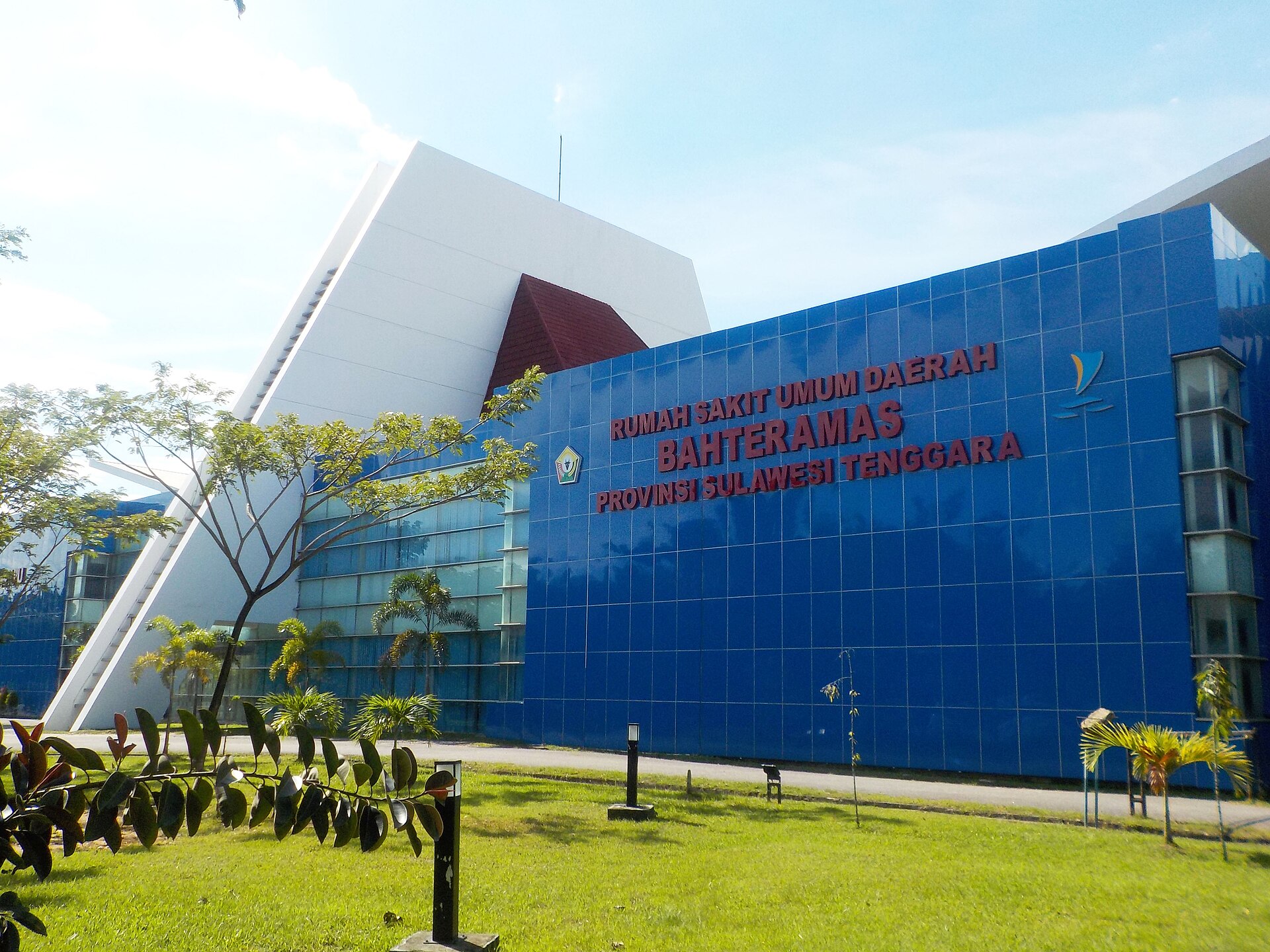
One of Australia’s fastest-growing health technology companies is now being put to work in an Indonesian hospital, in a quiet but telling example of how home-grown artificial intelligence is finding customers well beyond the local market. A hospital in Bali has begun exploring the use of AI clinical documentation supplied by Heidi, the Melbourne-based medical scribe company that has spent the past two years becoming a familiar name in Australian general practice. The development was reported by IT Brief Australia, and it points to a maturing export story for the local sector.
What ambient AI documentation actually does
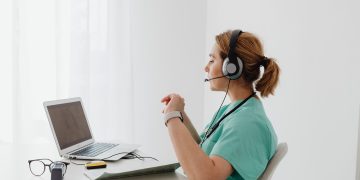
The product category Heidi sits in is often called ambient clinical documentation or, more colloquially, an AI scribe. The idea is straightforward even if the engineering is not. During a consultation, the software listens to the conversation between a clinician and a patient, then drafts the clinical note, referral letter or summary that the doctor would otherwise type up afterwards. The clinician reviews and edits the output before it goes into the record, so the AI is assisting rather than deciding anything. The promise is time: less of a doctor’s day spent staring at a keyboard, and more of it spent looking at the person in front of them.
That pitch has landed hard in Australia, where administrative burden and burnout are chronic complaints across general practice and hospital medicine. Heidi has grown quickly on the back of it, and it is far from alone. Local competitors and adjacent players have been building out similar tools, and FluentSea has covered a run of them this month, from HotDoc’s document assistant for Australian clinics to AI scribe pilots at Canberra Health Services and a transcription trial at an Adelaide children’s hospital. The Bali deployment takes that same basic technology and tests whether it holds up in a different health system, a different regulatory setting and, in many consultations, a different language.
The news: an Australian tool in an Indonesian ward
According to the IT Brief Australia account, the Bali hospital is exploring Heidi’s documentation tools rather than rolling them out wholesale, which is the sensible way these things usually begin. Hospitals tend to run ambient AI through a bounded pilot first, measuring whether the notes are accurate, whether clinicians actually trust them, and whether the time savings are real once you account for the editing and checking that still has to happen. Only after that do they commit to anything broader.
For Heidi, the significance is less about this single hospital and more about the direction of travel. A company that built its reputation on Australian primary care is now being trialled in an acute setting overseas. Southeast Asia is a logical next market for Australian medtech: it is close, it is growing fast, and its hospitals are under the same pressure to do more with constrained clinical workforces. Indonesia in particular has a large and young population and a health system actively modernising its digital infrastructure, which makes it fertile ground for tools that promise efficiency without requiring a doctor on every task.
Two ways to read it
The optimistic case is that this is exactly the kind of outcome Australia’s innovation boosters have been hoping for. A locally built AI product, trained and hardened on Australian clinical workflows, is now good enough to be wanted abroad. That is a software export with high margins and the potential to scale across an entire region, and it is the sort of success that the sector likes to hold up when arguing that Australia can build globally competitive AI rather than merely consuming it from the United States.
The more cautious reading is that clinical documentation is a genuinely hard thing to get right, and the stakes rise in a hospital. Ambient AI tools have been shown, in various international studies, to occasionally fabricate or misstate details, a problem the field politely calls hallucination. In a busy ward, with accents, medical jargon, background noise and sometimes multiple languages in play, the accuracy challenge only grows. Clinician oversight is meant to catch errors, but oversight only works if the humans using the tool stay genuinely attentive rather than rubber-stamping a draft that looks plausible. Any hospital adopting this technology, in Bali or Brisbane, carries the responsibility of making sure the note reflects what actually happened in the room.
There is also a data question that follows these tools wherever they go. Consultations are among the most sensitive conversations a person ever has, and ambient AI necessarily captures them. Where that audio and text is processed, how long it is retained, and who can access it are not footnotes but central governance issues, and they look different under Indonesian law than they do under Australian privacy rules.
What it means for Australia
For the Australian industry, the Bali trial is a useful data point in a debate that has been running all year about whether the country can build sovereign AI capability with real commercial legs. Much of the local conversation has focused on infrastructure, data centres and the enormous sums flowing into compute. Heidi is a reminder that the other half of sovereignty is applications: software that solves a concrete problem, earns clinicians’ trust, and can be sold into markets that Australian companies understand better than Silicon Valley does.
Regional proximity is an advantage that is easy to underrate. An Australian firm selling into Southeast Asia is operating in its own time zone, within a few hours’ flight, and with longstanding trade and health links to draw on. If Heidi and companies like it can establish themselves across the region before larger American rivals turn their attention there, the economic upside for the local sector is meaningful, and so is the soft-power benefit of Australian health technology becoming part of the furniture in neighbouring hospitals.
It also raises the stakes for domestic governance. If Australian-built AI scribes are going to be exported as trusted medical tools, the standards they are held to at home effectively become a selling point abroad. Clear rules about accuracy, clinician accountability and patient consent make the product easier to sell, not harder, because buyers in other jurisdictions can point to the Australian benchmark as evidence of quality.
What’s next
The immediate questions are the practical ones. How does the Bali pilot measure success, and what does the hospital decide once the trial period ends? Does Heidi treat this as a one-off reference customer or as the opening move in a broader Southeast Asian push? And will the company publish anything about accuracy and clinician satisfaction in an acute, multilingual setting, which is a meaningfully tougher test than the Australian GP rooms where it cut its teeth. For a sector keen to prove it can build and export serious AI, those answers will be worth watching.
Sources: IT Brief Australia.