
























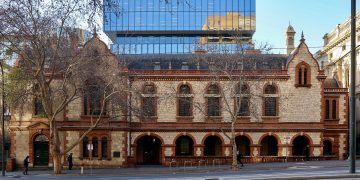
























A regional university in northern New South Wales has become the first Australian education provider to place advertising inside ChatGPT, giving the country an early, concrete look at how OpenAI’s new advertising business will work in practice.
The University of New England (UNE), based in Armidale, launched its local trial on 17 April 2026, according to SmartCompany. The pilot tests whether ads that surface inside a chatbot conversation can drive new student enrolments at a moment when institutions are competing hard for both domestic and international students.
Rather than banning generative AI on campus, UNE is buying space inside it. The university is running the pilot through global agency dentsu, using its media arm Carat, with Sydney digital agency WiredCo also involved. It is a notable move for an institution that has built its identity on distance education for more than 70 years.
How the ads actually work
The ads are not banner-style interruptions. According to AdNews, they appear within a ChatGPT conversation when a user’s prompt signals relevant intent, and the creative has to be purpose-built for the conversational environment rather than lifted from existing search copy.
That distinction matters. A prospective student asking ChatGPT how to study while working, or how to finish a degree remotely, is expressing intent in far richer language than a two-word Google query. UNE is betting that meeting people inside that exchange is more persuasive than a link in a results page.
OpenAI has confined the test to its lower tiers. Search summaries of OpenAI’s own guidance indicate ads appear only for logged-in adult users on the free and entry-level ‘Go’ plans, while paid Plus, Pro, Business, Enterprise and Education tiers stay ad-free. OpenAI says ads are clearly labelled as sponsored, do not influence the answers ChatGPT gives, and that conversations are kept private from advertisers.
The company is moving deliberately. OpenAI’s Benji Shomair, who leads the effort, said the company is “rolling this test out slowly” while it measures areas including trust metrics, dismissal rates and relevance, per the account in SmartCompany. In other words, OpenAI is watching how often users swipe the ads away as closely as it watches who clicks.
Why UNE, and why now
UNE’s marketing head Michaela Lobb framed the pilot as an attempt to understand, in real time, what drives engagement, intent and action, according to SmartCompany. Speaking to AdNews, she positioned the trial as a deliberate first-mover play, saying UNE is “not waiting for the market to catch up.”
The timing is not incidental. Australian universities are contending with tighter international student visa settings that are pushing some prospective students to weigh study destinations beyond Australia. That has sharpened competition for every enrolment, and it has made cost-efficient, high-intent marketing channels more attractive to institutions with regional footprints and national ambitions.
WiredCo chief executive Ange Hamilton captured the strategic logic bluntly, telling SmartCompany that ChatGPT is “rapidly” becoming a consumer recommendation engine. If prospective students increasingly ask an AI assistant to shortlist courses and universities, then the institutions absent from that conversation risk being left off the list entirely.
There is a commercial calculation too. Search summaries of industry reporting put ChatGPT ad rates well above typical search advertising, with CPMs cited in the range of roughly US$15 to US$60 per thousand impressions depending on competition, against a 2025 Google Ads average nearer US$11. For a regional university, being early is partly about learning the format before the auction gets crowded and the prices harden.
Why it matters for Australia
This is an Australia-first test of a channel that could reshape how local organisations reach people at the exact moment they are researching a decision. Australia was among the first markets outside the United States to get ChatGPT ads, alongside New Zealand and Canada, with OpenAI pointing to fast-growing local usage as a reason for early inclusion.
For the education sector specifically, the stakes are unusually high. International education is one of Australia’s largest export earners, and enrolment marketing has long leaned on search, agents and rankings. A shift toward AI assistants as a discovery layer would change where marketing budgets flow and which institutions capture attention. A regional university getting there first is a small signal that the advantage may not automatically sit with the largest, best-funded brands.
It also raises questions Australian regulators and consumers have not fully worked through. When an ad appears inside a conversation that a student treats as neutral advice, the line between recommendation and paid placement gets harder to see, even with a sponsored label. Trust, disclosure and the handling of prompt data are live issues, and UNE’s pilot will be watched as much for what it reveals about those tensions as for its enrolment numbers.
For now, the trial is small, slow and closely measured on both sides. But the direction of travel is clear: as more Australians ask ChatGPT what to study, where to bank or which product to buy, the question of who gets to advertise inside that answer is moving from theory to live campaign. UNE has simply raised its hand first.
Sources: SmartCompany, AdNews, Mi3, OpenAI.