



















































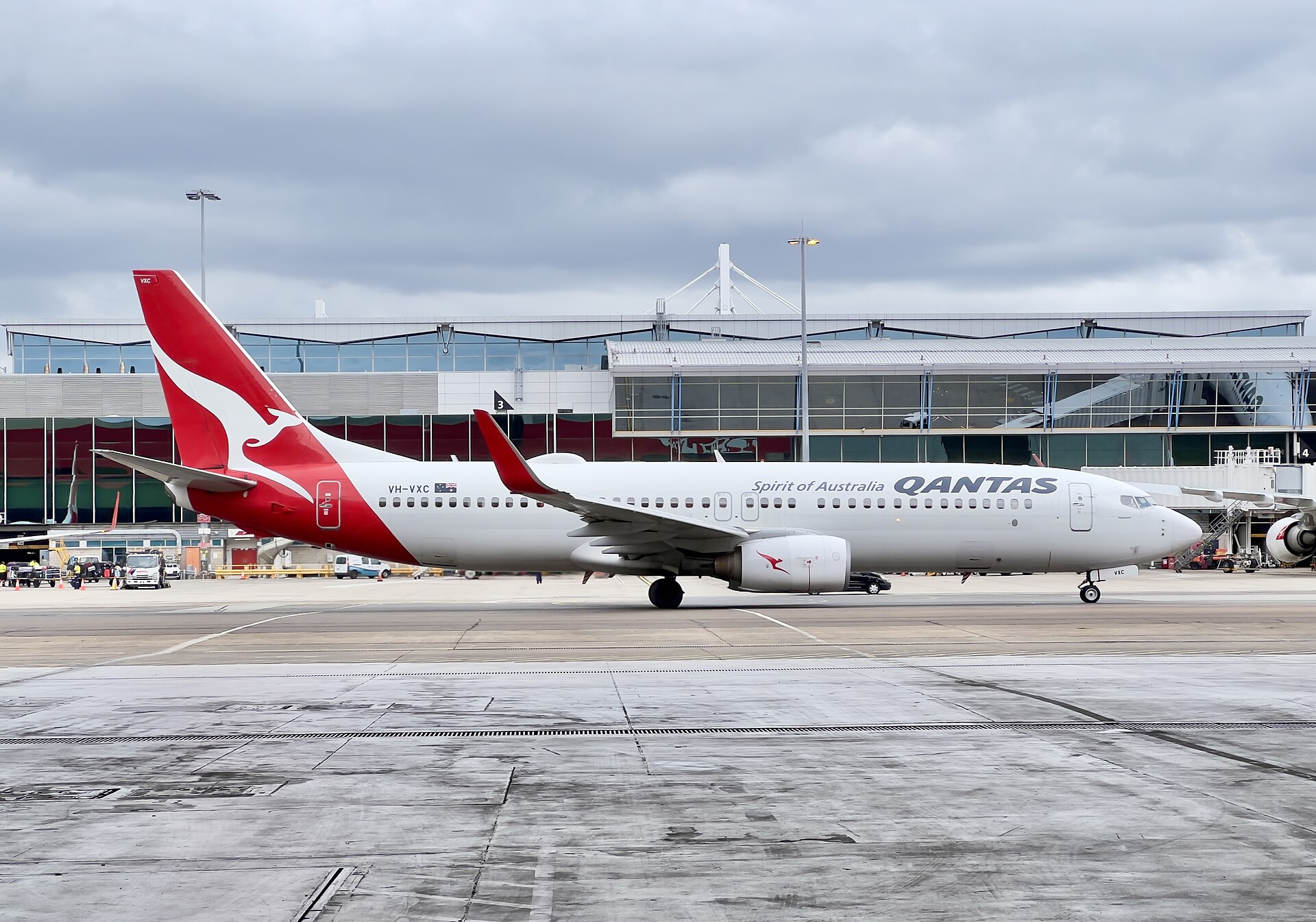
For most of the past decade, the debate about automation in Australia fixated on the factory floor, the warehouse and the checkout. The worry was always about hands, not heads. That framing is now being turned on its head, and one of the country’s most scrutinised companies has become the case study for how it happens.
A pointed Chanticleer column in The Australian Financial Review argues that Qantas has effectively published the playbook for how artificial intelligence will erode white-collar employment. The method is deceptively simple and, the column warns, is already spreading through boardrooms. First a company moves back-office and administrative functions offshore, where labour is cheaper and headcount easier to reduce without the political heat of large domestic redundancies. Then, once those roles sit in a lower-cost centre, AI tools are layered in to automate the work entirely. The offshoring softens the ground. The automation finishes the job.
Why the two-step matters
The significance of the sequence is that it changes who feels the loss and when. When a role is cut in Sydney or Melbourne, it shows up in domestic job figures, in union campaigns and in local headlines. When the same role has already been shifted to Manila or Bangalore, its later disappearance barely registers in Australia at all. The automation wave can roll through quietly because the jobs it removes are no longer counted as Australian jobs. That is the uncomfortable insight at the heart of the argument: the white-collar reckoning may be well underway before most Australian workers notice it in their own offices.
Qantas is a loaded example to hang this on. The airline has spent years in court and in the court of public opinion over its treatment of workers, most notably the High Court’s confirmation that it unlawfully outsourced around 1,700 ground handling roles during the pandemic. That history gives the offshore-then-automate thesis a sharp edge, because it casts the airline as an organisation that has repeatedly looked for ways to move work out of its direct, domestic employment base. Whether or not AI was ever the stated motive, the pattern reads as a template others can follow.
Two ways to read it
There are, broadly, two schools of thought on what is unfolding. The first treats it as an inevitable and even rational response to competitive pressure. On this view, every large company faces the same maths. Routine processing, scheduling, reconciliation and customer administration are exactly the tasks that large language models and agentic tools now handle at a fraction of the cost. If a business does not automate these functions, a rival will, and the company that hesitates simply carries a heavier cost base into a thinner-margin future. Offshoring, in this telling, is not villainy but a staging post on the way to a leaner operating model.
The second school is far less sanguine. It holds that the quiet, sequenced nature of the change is precisely the problem, because it strips out the friction that normally forces a public reckoning. When redundancies are offshore and incremental, there is no single moment of mass layoff to debate, no obvious trigger for retraining programs, and little pressure on government to respond. Critics in this camp argue that treating the hollowing-out of administrative, finance, legal support and customer service roles as a series of small operational decisions lets the cumulative national impact go unexamined until it is too late to shape.
Both readings can be true at once. The commercial logic can be sound and the social consequences can still be severe, and that tension is exactly what makes the Qantas example so useful as a warning.
The Australian stakes
For Australia specifically, the exposure is unusually concentrated. The economy leans heavily on services, and a large share of the workforce sits in the kind of desk-based, process-driven roles that this two-step targets first. Banking, insurance, telecommunications, government services and professional firms all run enormous back-office operations, and many have already moved slabs of that work to offshore hubs over the past fifteen years. The infrastructure for stage one is, in other words, already built. Stage two, the automation layer, is now cheap enough and capable enough to bolt on.
That has consequences well beyond the individuals who lose roles. Entry-level administrative and analyst positions have long been the rungs people use to climb into more senior, better-paid work. If those rungs are removed, either offshore or by software, the career ladder for younger Australians gets harder to reach, and the graduate pipeline that feeds professional services starts to narrow. It also raises a revenue question for government, because white-collar salaries are a significant source of income tax, and work performed by an offshore team or an AI agent does not pay PAYG in Australia.
There is a sovereignty dimension too. When critical administrative and data-handling functions sit offshore and are then automated by foreign-owned platforms, Australia cedes a degree of control over where its corporate and customer data lives and how it is processed. That sits awkwardly against the growing national push for data sovereignty and local capability, a theme running through much of the current policy conversation.
What happens next
The near-term question is how transparent companies will be about the transition. If the argument holds, the political and regulatory system may be slow to react precisely because the job losses are structured to be invisible. That puts the onus on a handful of actors. Unions will likely press for disclosure about how many roles are being automated rather than simply relocated, and for consultation rights that follow the work even when it moves offshore. Regulators and the federal government, already weighing how to respond to AI in the workplace, face pressure to decide whether existing redundancy, consultation and retraining frameworks are fit for a world where the decisive cuts happen one quiet process at a time.
For workers, the practical takeaway is less comforting and more urgent. The roles most insulated are those that combine judgement, relationships and accountability in ways that are hard to script, and the roles most exposed are those that can be written down as a repeatable procedure. The Qantas example does not prove that every office job is about to vanish. What it suggests is that the change has already started, that it is designed to be hard to see, and that the time to argue about how Australia manages it is now, not after the fact.
Update, 10 November 2026: Qantas confirms 850 job cuts and India shift
The thesis now has a date attached to it. Qantas has confirmed that it will cut around 850 Australian jobs and move a slab of the affected work to India as part of an overhaul the airline has explicitly tied to artificial intelligence, according to reporting in The Guardian. The playbook the article described in the abstract has, within days, surfaced as a concrete corporate announcement.
What makes the move so striking is how precisely it tracks the two-step. These are domestic white-collar roles being removed and partially relocated offshore in the same breath that the company names automation as the driver, collapsing the usual gap between the offshoring stage and the AI stage into a single decision. The sequence that was supposed to roll through quietly has, in this instance, been stated out loud.
The number also sharpens the national stakes. At 850 roles, this is large enough to register in the job figures and to draw union and political scrutiny, which is exactly the friction the original argument warned would be absent when losses are structured to be invisible. Qantas, by putting a headline figure and an AI rationale on the record, has handed critics the transparency they were demanding, even if it was not offered in that spirit.
For every other services-heavy employer watching, the significance is that the template is no longer hypothetical. A listed company with Australia’s most scrutinised industrial-relations history has shown that the offshore-then-automate path can be walked publicly and survived, and that will shape how boardrooms weigh the reputational cost of following it.
Update, 10 November 2026: Qantas confirms 850 job cuts as AI takes hold
The playbook described above has now been put on the record. Qantas has confirmed it will cut around 850 jobs as it leans harder into artificial intelligence, with a slab of the affected back-office work shifting to India.
What is striking is how neatly the move tracks the two-step this article set out. The offshore relocation to a lower-cost hub and the automation layer are not being presented as separate decisions but as a single reorganisation, which is precisely the structure that lets the cumulative loss slip past the usual public reckoning. The jobs leaving Australian offices are counted and visible; the work that eventually dissolves into software on the other side of the Indian Ocean is not.
It also turns a column’s warning into a live industrial question. With a concrete figure now attached, unions and the political system have a specific number to contest rather than an abstract trend, and the pressure for disclosure about how many of these roles are being automated out of existence rather than simply moved will only sharpen. For a company already carrying the legacy of its unlawful ground-handling outsourcing, the optics of pairing AI efficiency with offshore relocation are unlikely to go unchallenged.
Sources: The Australian Financial Review (Chanticleer). · GNews · AU corporates AI · GNews · AU corporates AI



Comments 1