



















































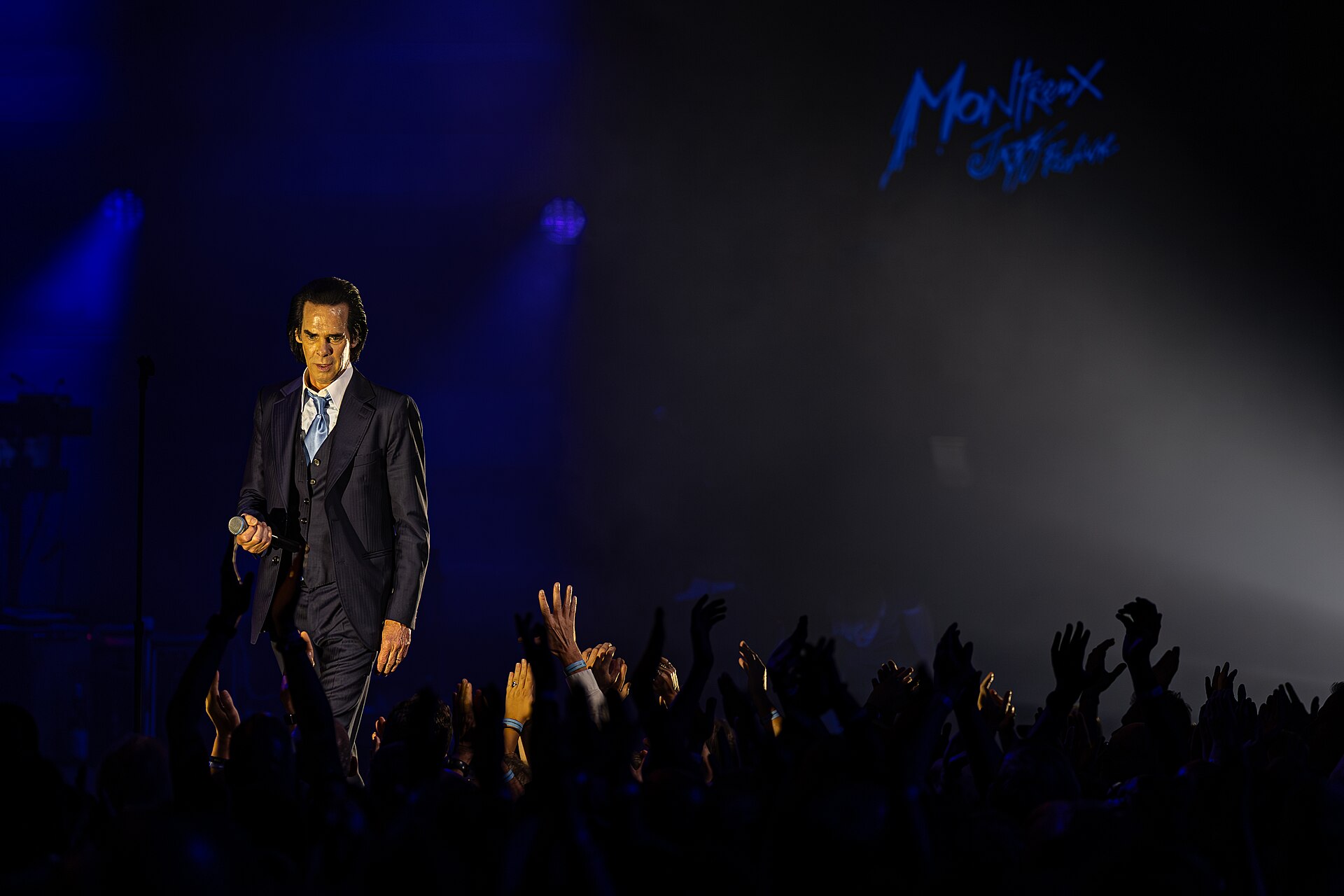
Few Australian artists have been as consistently scathing about artificial intelligence as Nick Cave, and the Warracknabeal-born songwriter has returned to the subject with characteristic force. In remarks reported this week, Nick Cave described an AI music tool as a soul-destroying humiliation, a phrase that has quickly travelled through a music industry already on edge about what generative systems mean for the people who write and perform songs for a living.
The comment is not a one-off. Cave has spent the past few years turning his Red Hand Files newsletter into something of a running argument against the idea that machines can make meaningful art. He has previously dismissed AI-generated lyrics written in his own style as a grotesque mockery, and he has framed songwriting as an act of struggle that a statistical model, by definition, cannot replicate. The latest outburst extends that line of thinking from lyrics to the newer wave of tools that can conjure fully produced tracks, complete with vocals and instrumentation, from a short text prompt.
Why this keeps flaring up
The timing matters. A clutch of consumer AI music generators has moved from novelty to genuine commercial threat over the past eighteen months, letting anyone type a few words and receive a finished song in seconds. Streaming platforms have been flooded with the output, and the major labels have launched legal action in several jurisdictions over how these systems were trained. The central accusation is familiar across every creative field touched by generative AI: that the models were built by ingesting enormous quantities of copyrighted work without permission or payment, then repackaged to compete with the very artists whose catalogues taught them.
Cave’s objection runs deeper than the licensing fight, though. His argument is essentially spiritual rather than legal. For him, the problem is not only that a machine might borrow his phrasing without a cheque, but that the entire premise of automated songwriting hollows out the thing that makes music worth making. A song, in his telling, carries the weight of the human experience behind it, and a tool that skips the experience and delivers only the product is offering a counterfeit. That is a harder case to settle in a courtroom, but it resonates with a lot of working musicians who feel their craft is being reduced to a prompt.
The other side of the argument
Not everyone shares the gloom, and it would be dishonest to pretend the technology has no defenders. The companies building these tools, along with a growing cohort of bedroom producers, argue that AI music generators are simply the next instrument, no more inherently corrosive than the drum machine, the sampler or Auto-Tune, each of which drew its own round of outrage before becoming ordinary. In this view, lowering the barrier to making music is a democratising force that lets people without formal training or expensive studio time express themselves. Some artists have embraced the tools openly, treating them as collaborators for sketching ideas or generating backing textures rather than as replacements for human performance.
There is also a pragmatic counter to Cave’s purism. Advertising agencies, game studios and content creators need cheap, royalty-free music at volume, and AI generators fill that gap at a fraction of the cost of commissioning a composer. For that market, the question of whether the result moves the soul is beside the point, because the brief was never art in the first place. The tension, then, is less about whether AI music exists and more about whether it is honestly labelled, fairly trained and prevented from crowding out human artists on the platforms where listeners actually spend their money.
What it means for Australia
Cave may live and work largely overseas, but he remains one of Australia’s most internationally recognised cultural exports, and his intervention lands in a local debate that has grown sharper this year. Australian music bodies have been pressing the federal government to clarify how copyright law applies when a model is trained on local recordings, and the creative sector has warned that generative tools could siphon tens of millions of dollars away from working artists if left unchecked. The country’s songwriters, session players and small labels operate on thin margins at the best of times, and a flood of synthetic tracks competing for the same streaming royalties represents a real economic threat rather than an abstract one.
The policy picture is still unsettled. Canberra has been weighing how far to go in regulating AI, including whether to mandate transparency about training data and whether creators should have a clear right to opt out of having their work used. For Australian musicians watching a figure of Cave’s stature put the issue in such blunt moral terms, the hope is that it keeps the human cost of automation near the top of the agenda rather than treating it as a footnote to the broader productivity story. Industry groups here have already argued that any national AI framework needs to protect the value of creative work, not just the efficiency of the firms deploying the technology.
What happens next
The practical questions will be answered less by op-eds and more by the courts and the platforms. The outcome of the major labels’ litigation against AI music firms will shape whether these tools can continue training on commercial catalogues, and how they do business if they cannot. Streaming services, meanwhile, are under pressure to detect and label AI-generated uploads, a task that is technically difficult and commercially awkward given how much content they host. In Australia, the next milestone is likely to be concrete movement on copyright and AI policy, which would give local artists a firmer footing than the current uncertainty allows.
Cave is unlikely to be persuaded by any of it. His position has hardened rather than softened over successive essays, and he shows no sign of reaching an accommodation with a technology he regards as fundamentally at odds with why people make music. Whether that makes him a prophet or a holdout depends on where you sit, but his willingness to say it so plainly ensures the debate stays loud, and that suits an argument that is really about what we are prepared to lose.
Sources: Adelaide Now.



Comments 2