



















































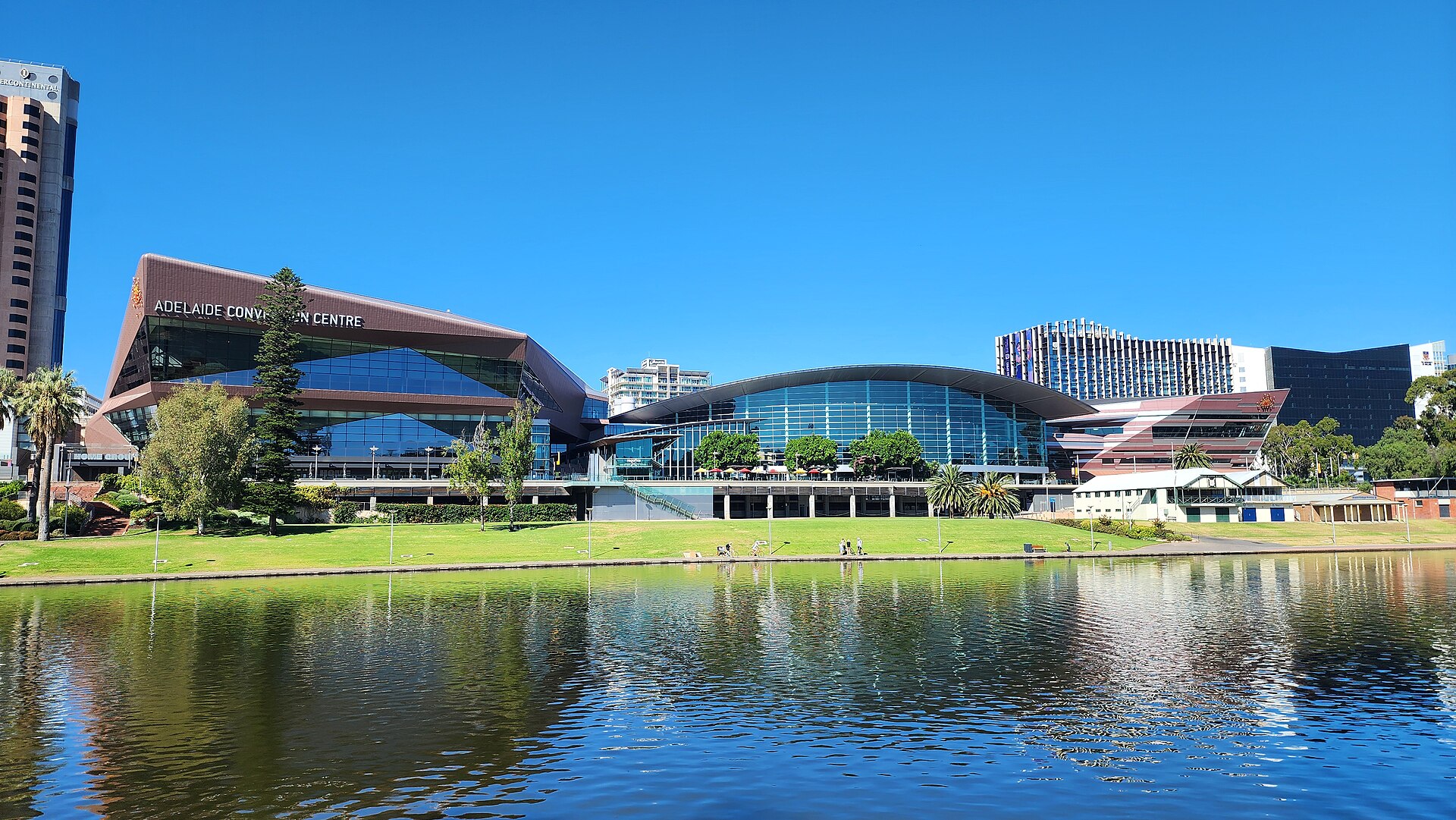
The scarcest commodity in technology right now is not talent or capital but compute, the raw processing power that trains and runs artificial intelligence. That shortage has created a strange new breed of company, and one of them traces its roots back to Adelaide.
According to Business News Australia, the South Australian venture Nebula Data has expanded from a local idea into a globally distributed GPU farm, assembling and renting out fleets of high-end graphics processing units to companies desperate for the horsepower that modern AI demands. In an industry dominated by hyperscalers with tens of billions of dollars to spend, the rise of a nimble operator out of Adelaide is a reminder that the compute gold rush is not confined to Silicon Valley.
Why compute became the bottleneck
To understand the opportunity Nebula Data is chasing, it helps to understand the squeeze. Training and serving large language models requires enormous banks of GPUs, chips originally designed for video games that turned out to be ideally suited to the parallel maths behind neural networks. Nvidia, which designs the most sought-after of these chips, has struggled to make them fast enough to satisfy demand, and waiting lists for its top-tier hardware have stretched for months at a time.
That has opened a gap in the market. Not every business building an AI product can afford to sign a long-term contract with a major cloud provider, and not every workload needs the full suite of services the hyperscalers bundle around their silicon. A company that can source GPUs, rack them in data centres, and rent them out by the hour or the month fills a role somewhere between a landlord and a utility. Nebula Data is one of a growing cohort of so-called neoclouds competing for that slice of the market, and its founder has pushed the business well beyond South Australian borders in the search for both chips and customers.
The appeal for clients is straightforward. They get access to expensive hardware without the capital outlay of buying it outright, and they can scale up or down as their models and budgets allow. For the operator, the economics hinge on keeping those GPUs busy, because an idle chip earns nothing while still depreciating and drawing power.
The optimists and the sceptics
Supporters of the neocloud model argue it democratises access to AI. By lowering the barrier to serious compute, these firms let startups, researchers and smaller enterprises experiment with technology that would otherwise sit behind the walls of the largest tech companies. The spread of GPU farms across more jurisdictions also adds resilience, reducing the degree to which the entire AI economy depends on a handful of American data centre campuses.
The sceptics are less sure the maths holds. Running a GPU farm is a capital-intensive, low-margin business that lives or dies on utilisation rates and the price of electricity. If demand for AI compute softens, or if the hyperscalers flood the market with their own capacity, the independents could be left holding warehouses of hardware that loses value with every new chip generation. There is also a question of concentration risk at the supplier end: when almost everyone is buying from the same chipmaker, a company’s growth is hostage to one firm’s production schedule and pricing.
Energy is the other persistent worry. Data centres packed with GPUs are voracious consumers of power, and the AI build-out has already begun to strain electricity grids in parts of the United States and Europe. Any operator expanding globally has to navigate the politics and economics of where that power comes from, and increasingly has to answer for the emissions that come with it.
The Australian stakes
Nebula Data’s Adelaide origins give this global story a distinctly local edge. South Australia has spent years positioning itself as a hub for defence, space and advanced technology, and a homegrown compute company competing on the world stage fits that narrative neatly. It also underlines a broader opportunity for Australia, which has abundant land, a stable political system and, increasingly, a pitch to host AI infrastructure for the Asia-Pacific region.
The challenge is that Australia is a relative newcomer to the data centre arms race, and the country’s own AI compute capacity remains modest next to the sums being committed overseas. Recent coverage on FluentSea has tracked the mounting pressure that AI data centres are placing on Australian energy demand, along with efforts to power compute at remote sites where grid access is thin. A company like Nebula Data sits squarely inside that tension, needing cheap, reliable power to make its sums work while the national conversation about where that power comes from grows louder.
There is a sovereignty angle too. Policymakers and businesses have become more alert to the risks of routing sensitive data and critical AI workloads through foreign-owned infrastructure, a concern that has already shaped debate in sectors such as legal services and finance. An Australian-founded operator, even one that has gone global, offers at least a partial answer to those who would prefer the country’s AI backbone not sit entirely offshore.
What happens next
The near-term test for Nebula Data and its peers is whether the current hunger for compute proves durable or whether it cools as the first wave of AI enthusiasm meets commercial reality. Enterprise buyers are already asking harder questions about returns on their AI spending, and a pullback in experimentation would be felt quickly by anyone whose business depends on keeping GPUs rented and running.
For now, demand continues to outstrip supply, and that imbalance is the wind in the sails of operators like this one. Whether an Adelaide-born GPU farm can hold its ground against far better-capitalised rivals will say a great deal about how much room there is for independents in an industry increasingly shaped by the biggest players. If it succeeds, it will stand as proof that the infrastructure underpinning the AI age can be built from unexpected places, including a city better known for festivals and wine than for silicon.
Sources: Business News Australia


