



















































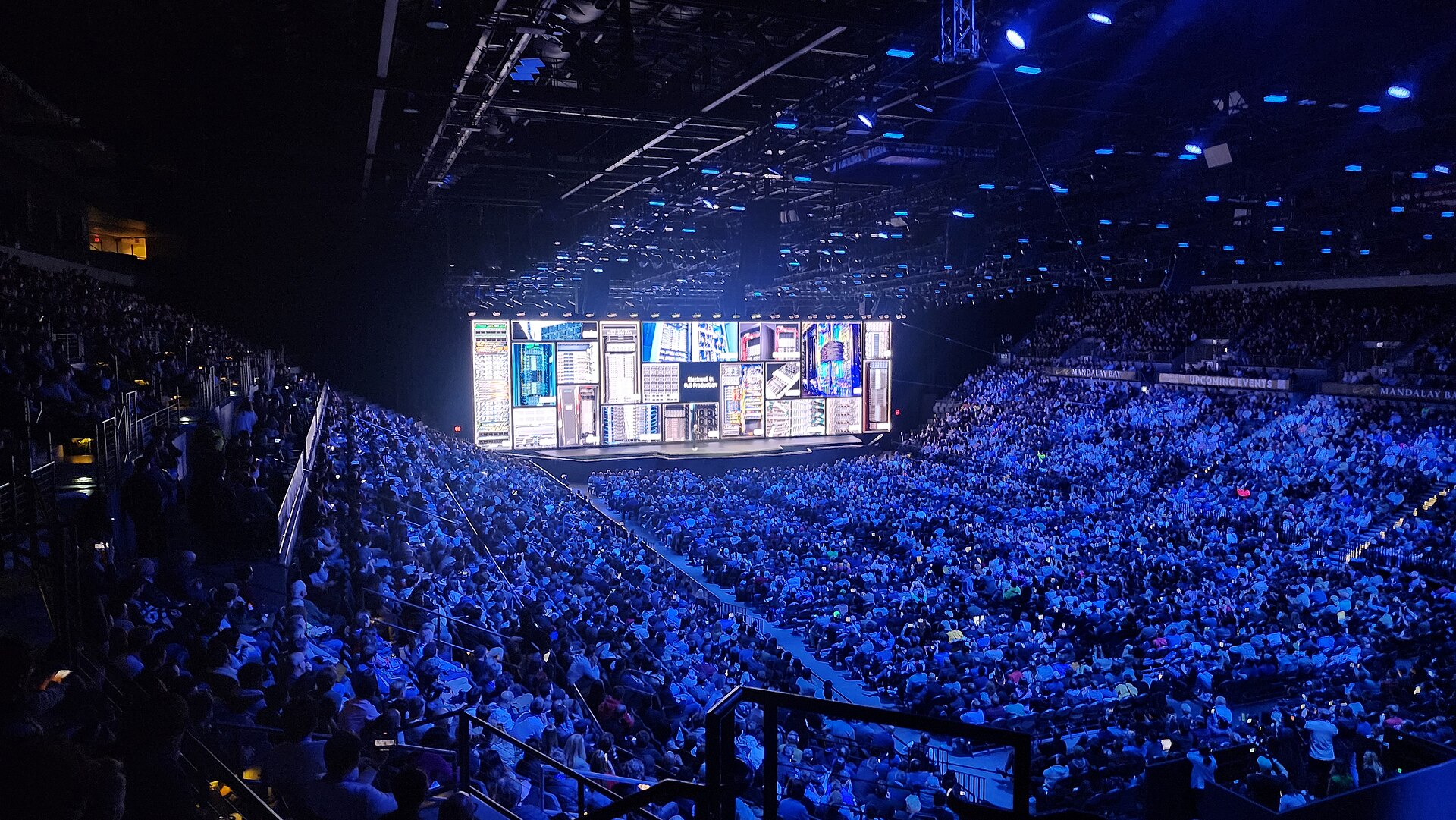
For most of its life, Nvidia was a company that gamers knew and almost nobody else did. It made the graphics cards that rendered explosions and racing tracks on home computers, a profitable but unglamorous corner of Silicon Valley. Then the artificial intelligence boom arrived, and the parallel-processing chips Nvidia had spent two decades refining turned out to be precisely the hardware that modern machine learning needed. The company that once sold to teenagers is now the most valuable business on earth, and the man who founded it, Jensen Huang, has become one of the defining industrialists of the decade.
A profile published by The Australian traces the long arc of that story, from a chip firm founded in 1993 to the supplier whose silicon underpins almost every large AI system in use today. It is a useful reminder that the current boom did not spring from software alone. The breakthroughs that produced ChatGPT and its rivals were made possible by a specific kind of processor, built at a scale and price that only became viable after years of unglamorous engineering.
The bet that paid off
The pivotal decision at Nvidia was recognising that the graphics processing unit, designed to handle thousands of small calculations at once, was also ideally suited to training neural networks. Where a traditional computer chip works through tasks in sequence, a GPU attacks them in parallel, and the mathematics behind modern AI is nothing if not a vast pile of parallel calculations. Huang pushed the company to build software tools, chiefly a platform called CUDA, that let researchers harness the hardware for work that had nothing to do with video games. That investment looked indulgent for years. It now looks like one of the shrewdest strategic calls in the history of the technology industry.
The payoff has been staggering. Nvidia’s market value has swung above and below the four trillion dollar mark through 2025, making it worth more than the entire Australian sharemarket several times over. Its data centre division, which sells the specialised systems that cloud providers and AI labs use to train models, generates the bulk of its revenue. Demand has consistently outstripped supply, giving Nvidia extraordinary pricing power and turning access to its chips into a form of corporate currency.
Two ways of reading the story
There are competing interpretations of what this concentration means. To admirers, Huang is the rare founder who saw a general-purpose computing revolution coming and spent a decade building the tools to deliver it. On this view, Nvidia earned its position through patience and engineering, and its dominance reflects genuine technical lead rather than any accident of timing.
The more cautious reading focuses on risk. When a single company supplies the critical input for an entire industry, that industry inherits a single point of failure. Rivals including AMD, and the in-house chip programs run by Google, Amazon and Microsoft, are racing to break Nvidia’s grip, partly because customers are uncomfortable depending so heavily on one vendor. Analysts have also warned repeatedly through this year that the valuations attached to AI infrastructure assume demand will keep climbing indefinitely, a bet that has already produced sharp sell-offs on the Nasdaq and, by extension, on the ASX. The wobble that rattled local investors earlier this month, when Nvidia’s share price slid and dragged Australian tech names with it, was a reminder of how tightly the two markets are now bound together.
Why this matters for Australia
Australia is not a chip maker, but it is very much a chip buyer, and that is where Huang’s company becomes a local story. Every serious data centre project announced in this country, from the hyperscale facilities feeding corporate cloud demand to the sovereign AI ambitions being pursued in Tasmania, Adelaide and elsewhere, ultimately depends on securing allocations of Nvidia hardware. When Firmus talks about building an AI factory powered by Tasmanian hydro, or when Nebula Data describes its Adelaide GPU farm, the scarce ingredient in both plans is the same stack of accelerators that every other buyer on the planet is also chasing.
That has real consequences for national policy. Canberra has spent the past year talking up sovereign AI capability, the idea that Australia should be able to train and run important models on infrastructure it controls rather than renting everything from overseas clouds. Yet sovereignty over the software means little if the underlying silicon is allocated by a single Californian supplier operating under United States export rules. The federal government‘s push to build local compute, and the energy debate it has triggered given how much power these facilities draw, both run through Nvidia whether policymakers like it or not. Trellis Data’s recent sovereign AI announcement and the broader scramble for domestic compute all sit downstream of decisions made in Santa Clara.
For Australian investors the exposure is just as direct. Superannuation funds hold Nvidia through global equity portfolios, so the retirement savings of millions of Australians now rise and fall with the fortunes of one semiconductor firm. Local technology stocks have become sensitive to every twitch in the AI trade, and fund managers have begun openly debating whether the sector is priced for perfection. The concentration that makes Nvidia so powerful also makes it a risk that is difficult to diversify away from.
What comes next
Huang has shown no sign of slowing the pace, promising roughly annual upgrades to Nvidia’s chip architecture and pushing the company deeper into networking, software and the robotics and autonomous systems he argues represent the next wave of AI. The open questions are whether supply can finally catch demand, whether the rival chip efforts gain enough ground to loosen Nvidia’s hold, and whether the enormous capital being poured into AI infrastructure generates the returns that current valuations assume.
For Australia, the practical task is narrower but urgent: secure enough compute to pursue its sovereign ambitions, manage the energy and grid pressures that come with it, and avoid building a national strategy on hardware it cannot guarantee it will receive. Huang built the engine of the AI boom. The challenge for a mid-sized economy on the other side of the Pacific is making sure it can get its hands on the fuel.
Sources: The Australian.


