



















































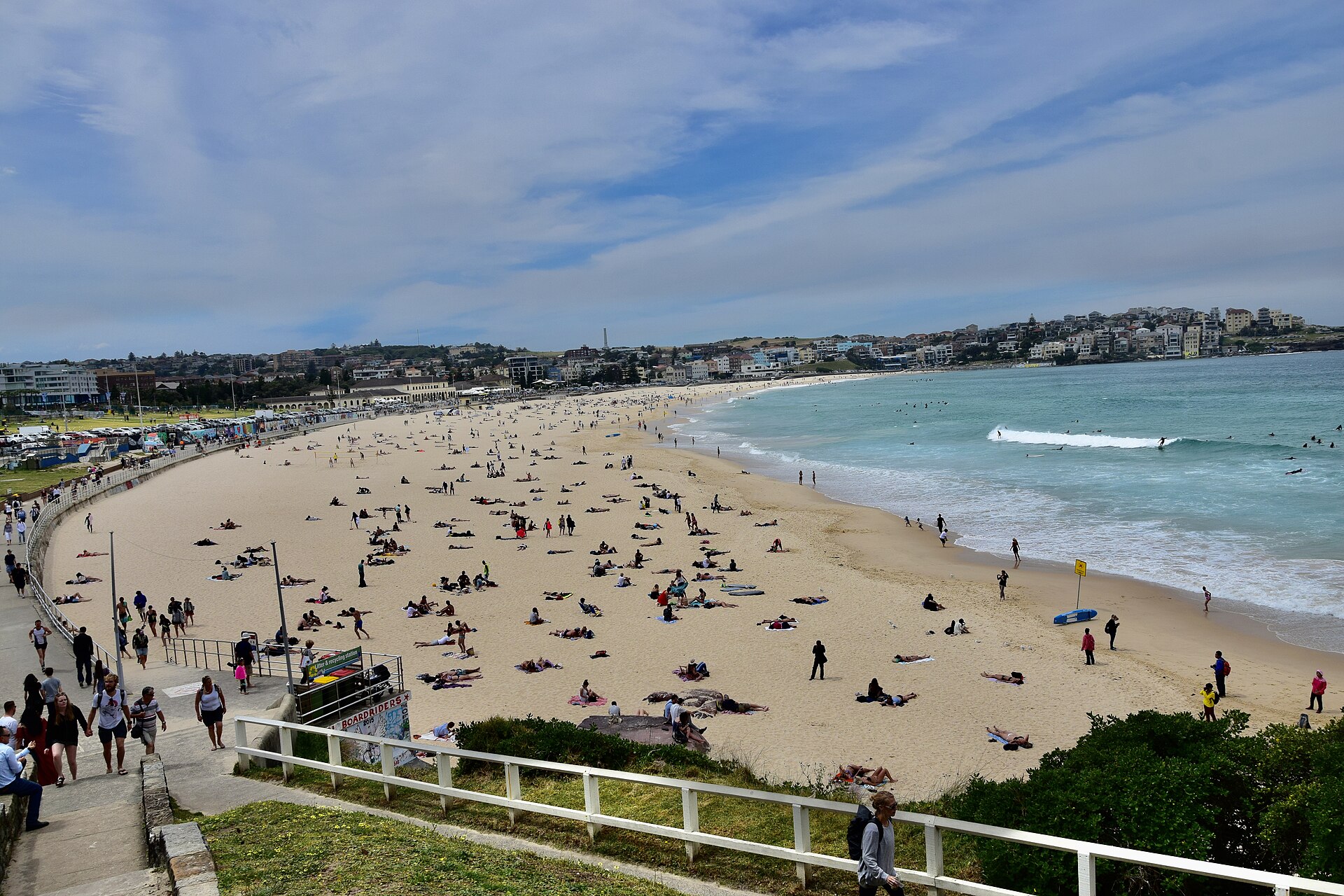
Every Australian summer follows a grim pattern. The beaches fill, the temperature climbs, and the drowning toll creeps upward. The single biggest culprit is not sharks, not big surf and not sudden weather, but the rip current, the fast-moving channel of water that pulls swimmers away from shore and out past the breakers before many of them even realise they are in trouble. Now researchers at UNSW Sydney are testing whether artificial intelligence can do what generations of safety campaigns have struggled to achieve: teach ordinary beachgoers to recognise a rip before they wade into one.
The work, detailed in new research from UNSW Sydney, pairs the university’s long-running coastal science with computer vision, the branch of AI that interprets images and video. The idea is deceptively simple. If a machine can be trained to pick out the subtle visual signatures of a rip, a darker, calmer-looking gap between the waves where water is funnelling back out to sea, then that same capability could be built into apps, signage and education tools that help people read the water for themselves.
Why rips are so hard to see
The cruel irony of a rip current is that it often looks like the safest place to swim. To an untrained eye the churning white water of breaking waves signals danger, while the smooth, flat patch in between looks inviting. In reality that calm-looking gap is frequently the rip itself, a conveyor belt dragging swimmers offshore. Surf Life Saving Australia has spent years trying to correct this instinct, yet survey after survey shows most beachgoers, including confident swimmers, cannot reliably identify a rip from the sand.
That knowledge gap carries a heavy cost. Rip currents are consistently linked to a large share of Australia’s coastal drowning deaths, outstripping the toll from the hazards that tend to grab headlines. Much of the public education on the topic has leaned on the expertise of coastal scientist Rob Brander, the UNSW researcher widely known as “Dr Rip”, whose dye-release demonstrations and plain-language explainers have become a fixture of beach safety messaging. The challenge has always been scale. A handful of experts cannot stand on every beach, and a pamphlet cannot show you the particular rip in front of you on the day you are standing there.
Where the AI comes in
This is the gap the UNSW team hopes to close. By feeding an AI system large volumes of footage and imagery in which rips have already been identified by experts, the researchers aim to train a model that can flag the tell-tale patterns automatically. In practice that could take several forms. One is an educational tool that lets a student or a new arrival upload a beach photo and see the likely rip highlighted, turning an abstract warning into a concrete, visual lesson. Another is live analysis of beach camera feeds, which already stream from many popular swimming spots, to support lifeguards and researchers monitoring conditions in real time.
The appeal is that AI does not tire, does not need to be rostered on, and can process far more imagery than any human observer. A model trained on thousands of examples from beaches up and down the coast could, in theory, generalise the hard-won intuition of specialists like Brander and make it available on a phone. For a country with tens of thousands of kilometres of coastline and a population that treats the beach as a birthright, that kind of reach is genuinely significant.
Two schools of thought
Not everyone is convinced the technology is a silver bullet, and the researchers themselves are careful to frame it as a teaching aid rather than a lifeguard replacement. There is a long-standing view within the surf safety community that nothing substitutes for swimming between the red and yellow flags on a patrolled beach, where trained volunteers and professionals are watching the water. The worry is that a confident-sounding app could give people a false sense of security, encouraging them to swim at unpatrolled stretches on the strength of a green light from their phone. Rips also shift constantly with the tide, the swell and the shape of the sandbanks, so a reading that is accurate one hour can be dangerously out of date the next.
The counter-argument, favoured by advocates of the UNSW approach, is that most drownings happen precisely where there are no lifeguards and no flags, often outside patrol hours or at remote beaches. In those settings, the realistic choice is not between an app and a lifeguard but between an app and nothing at all. Used as an educational layer rather than a substitute for common sense, the technology could lift the baseline understanding of a hazard that too many Australians still fundamentally misread. The two positions are less a disagreement about the science than about how people will behave once a tool is in their pocket.
The Australian stakes
Few research questions are as distinctly Australian as this one. The beach is woven into the national identity, and the summer drowning toll is a recurring national trauma that touches locals, tourists and new migrants alike. Overseas visitors and recent arrivals are consistently over-represented in rip-related rescues and deaths, partly because they come from places with no comparable surf culture and no instinct for reading the water. A visual, language-light tool that simply shows a person where the danger is could be far more effective for that audience than a sign full of English text and iconography they have never seen before.
There is also a broader point about where Australian AI effort is being directed. Much of the national conversation this year has centred on productivity, white-collar automation and the economics of data centres. A project aimed squarely at saving lives on the beach is a reminder that some of the most valuable applications of the technology are narrow, practical and deeply local. It plays to an existing national strength in coastal science and marries it to a capability that is now cheap and widely available.
What’s next
The immediate task is accuracy. An AI rip detector is only as good as the data it learns from, and Australian beaches are enormously varied, from the long sand of the east coast to rocky Western Australian breaks and the big swells of the south. Getting a model to perform reliably across those conditions, in different light and weather, is the central research hurdle. Beyond that lies the harder question of how to deploy the tool responsibly, with messaging that reinforces the flags-and-lifeguard advice rather than undercutting it.
If the UNSW team can thread that needle, the payoff is a scalable, affordable way to teach water literacy to millions of people before they ever get wet. In a country that loses too many swimmers every summer to a hazard most of them cannot see, that is a problem worth throwing serious technology at.
Update, 10 November 2026: Surf lifesavers to trial the rip-spotting AI
Update, 10 November 2026: The project has moved from the lab towards the water, with surf lifesavers now set to trial an AI tool that detects rip currents in the field, according to ABC News. It is the step the earlier research had been building towards, taking the computer-vision model off the screen and putting it in the hands of the people who actually patrol the sand.
The shift matters because a trial run by lifesavers, rather than researchers alone, is where the technology meets the messy reality of the beach: changing light, shifting sandbanks and tides that can rewrite the hazard from one hour to the next. If the tool can flag rips reliably under those conditions, it moves from an interesting proof of concept towards something that could genuinely sit alongside the red and yellow flags rather than compete with them.
It also partly answers the central worry raised earlier, that a confident app in an untrained swimmer’s pocket might encourage people to take their chances at unpatrolled stretches. Routing the first real-world test through trained volunteers and professionals keeps a human in the loop, treating the AI as another set of eyes rather than a substitute for judgement. Whether that caution survives contact with a tool people inevitably want on their own phones is the question the trial will start to answer.
Sources: UNSW Sydney. · GNews · AI + Aus universities/CSIRO


