



















































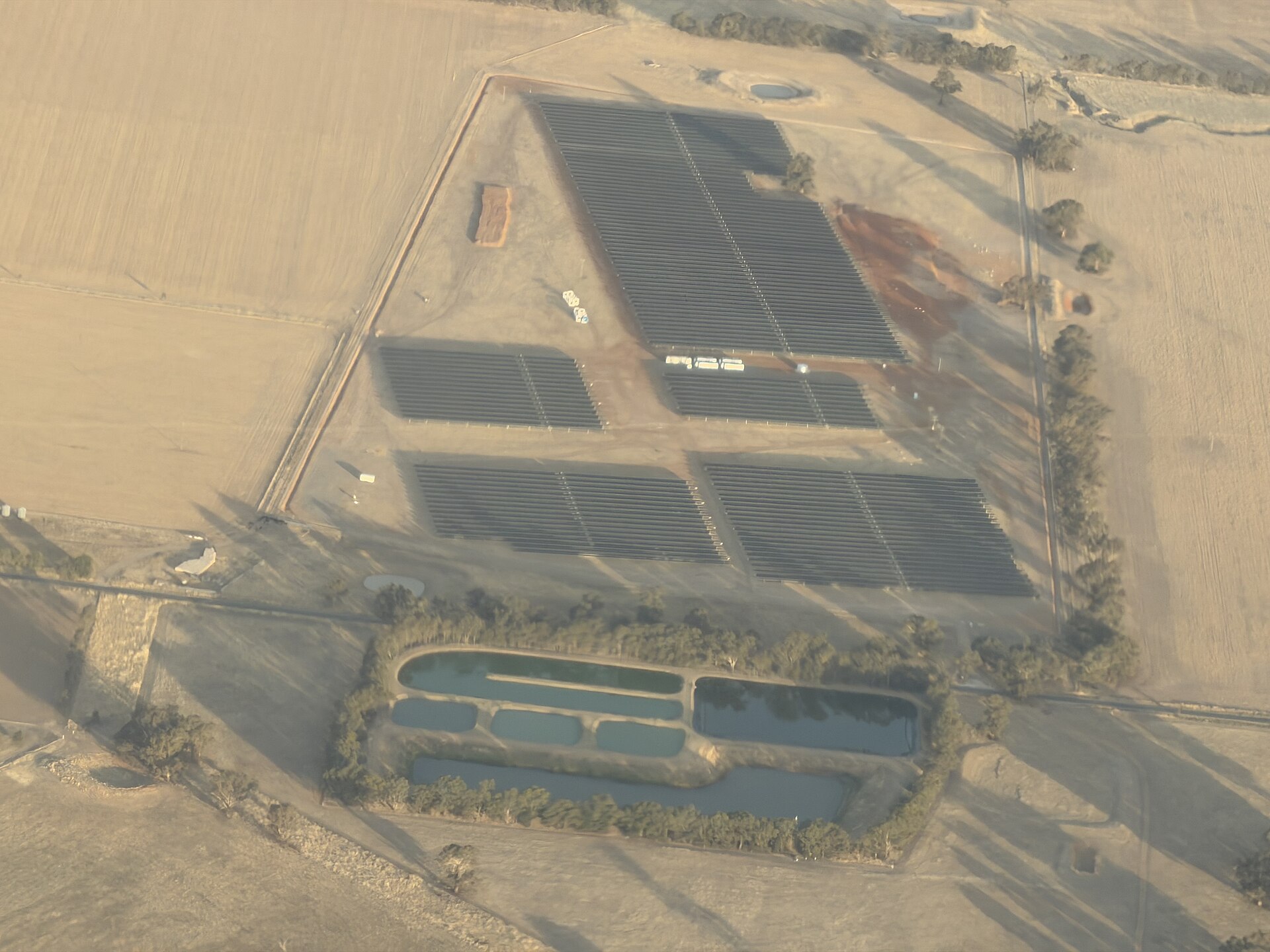
AirTrunk, the Sydney-born hyperscale data centre operator now owned by a Blackstone-led consortium, has signed a renewable energy supply agreement to help power one of its Australian facilities, according to a report from Bloomberg. The deal matters well beyond the company’s balance sheet, because it lands at the exact point where two of Australia’s biggest economic stories are colliding: the artificial intelligence build-out and the national energy transition.
For readers who have not followed the sector closely, AirTrunk is one of the largest data centre businesses in the Asia-Pacific. It was founded in Australia and grew into a regional heavyweight before being acquired last year in a landmark transaction that valued the group at roughly 24 billion dollars, one of the biggest infrastructure deals the country has seen. Its campuses are the kind of enormous, power-hungry warehouses full of servers that make cloud computing and, increasingly, generative AI possible. Every chatbot query, every model trained, every corporate migration to the cloud ultimately runs through facilities like these.
Why a power deal is suddenly front-page news
A few years ago, a data centre quietly contracting for electricity would have barely rated a mention. That has changed, and quickly. The scale of power that modern AI infrastructure consumes has turned energy procurement into a strategic question rather than a back-office one. Training and running large AI models demands dense clusters of specialised chips that draw far more electricity than traditional server racks, and the operators building for that future are locking in supply years in advance.
Signing a renewables agreement, rather than simply drawing from the grid at market rates, serves two purposes for a company like AirTrunk. It helps hedge against volatile wholesale electricity prices, and it answers the sustainability expectations of the global technology giants that rent space inside these facilities. The likes of Microsoft, Amazon and Google have all made public commitments to run on clean energy, and they increasingly push those obligations down to their landlords. A data centre that cannot credibly point to renewable supply risks losing the very customers it is built to serve.
The optimists and the sceptics
There are two broad ways to read a deal like this, and both have merit.
The optimistic view is that corporate demand of this magnitude is precisely what the renewable energy sector needs. Large, creditworthy buyers signing long-term contracts give wind and solar developers the certainty to finance new projects, which in turn adds generation capacity that benefits the whole grid. On this reading, the AI boom could become an accelerant for Australia’s clean energy transition rather than a brake on it, funnelling private capital into renewables at a speed that government subsidies alone would struggle to match.
The sceptical view is harder to dismiss. Contracting for renewable energy is not the same as physically removing a facility’s load from a grid that still leans heavily on coal and gas, especially overnight and during still, cloudy stretches when wind and solar fall away. Critics of the data centre rush argue that signing green supply agreements can amount to accounting that looks cleaner than the physical reality, and that the sheer new demand these campuses create risks tightening an already stretched system. The Australian Energy Market Operator has repeatedly warned about reliability pressures as ageing coal plants retire, and every gigawatt of fresh industrial demand changes those calculations.
What it means for Australia
This is where the story stops being a corporate footnote and becomes a genuinely national issue. Australia has positioned itself as one of the most attractive places in the Asia-Pacific to build data centres, thanks to political stability, land, abundant renewable resources and proximity to fast-growing Asian markets. That has triggered a construction wave, with operators and offshore investors pouring money into new capacity around Sydney, Melbourne and beyond.
The flip side is a set of hard questions about who pays and who benefits. Data centres consume electricity and water, employ relatively few people once built, and compete for the same clean energy that households and other industries are counting on to decarbonise. FluentSea has already covered the strain the boom is placing on the construction workforce, with a shortage of skilled tradespeople threatening to slow delivery, and the broader debate about how much new energy demand these facilities will add to the grid over the coming decade. A renewables deal from a major player like AirTrunk is a partial answer to the sustainability concern, but it also underlines just how much power the sector expects to draw.
For policymakers, the challenge is to capture the investment and the digital sovereignty benefits of a thriving data centre industry without letting it crowd out the energy transition or push up prices for everyone else. The federal government has talked up Australia’s ambitions to be a regional AI and cloud hub, and sovereign computing capacity is increasingly treated as a strategic asset. Deals that pair that growth with new renewable generation are, at least on paper, the kind of outcome regulators would like to see more of.
What’s next
Expect more of these agreements, not fewer. As AI workloads grow and the hyperscale tenants tighten their own emissions targets, long-term renewable contracts are likely to become standard practice rather than the exception for Australian data centre operators. The real test will be whether the clean generation that these deals underwrite actually gets built and connected, because a contract on paper does nothing for the grid until new turbines and panels are spinning and feeding power in.
The other thing to watch is transparency. As the sector scales, there will be rising pressure on operators to disclose not just how much renewable energy they have contracted, but how much electricity and water their campuses actually consume, and when. Those figures will shape the public debate about whether the AI build-out is a help or a hindrance to Australia’s energy goals. AirTrunk’s latest move is one data point in a much larger story that is only beginning to unfold, and it is a story Australians have every reason to follow closely.
Sources: Bloomberg via GNews.



Comments 4