



















































Australia has spent the better part of two decades building some of the most sensitive radio telescopes on the planet, and the payoff is a firehose of data that no team of astronomers could ever read by eye. Now researchers connected to the CSIRO are leaning on a very familiar branch of artificial intelligence, the same image-recognition techniques that power photo tagging and medical scans, to pull genuine black hole evidence out of that torrent and to confirm it faster than traditional methods allow.
The work, reported this week by news.lavx.hu, speaks to a shift that has been quietly reshaping astronomy for several years. The discipline has moved from a world of scarce observations, where a single clear image could make a career, to one of overwhelming abundance, where the harder problem is deciding what in the data is real, what is noise, and what deserves a closer look from a human expert.
From scarce images to an ocean of data
Black holes themselves emit no light, so astronomers never see them directly. What they detect instead are the fingerprints: the superheated discs of matter spiralling inward, the jets of energetic particles flung out across light years, and the gravitational distortion of everything nearby. In radio astronomy, those fingerprints show up as patterns and signatures buried in vast image cubes produced by instruments scanning the sky night after night.
Sorting that material is exactly the kind of task image-recognition AI was built for. A trained model can be shown thousands of confirmed examples of a particular signature and then set loose to flag candidates across a survey far larger than any person could inspect. The appeal is not that the machine is cleverer than an astronomer, but that it is tireless and consistent, and it can triage millions of sources so that scientists spend their limited time on the handful that matter.
The verification angle is the part worth dwelling on. It is one thing to let an algorithm trawl for candidates, which astronomers have done for a while now. It is another to use AI to check and confirm evidence that has already been surfaced, applying a second, independent pass that can catch false positives and lend statistical weight to a claim before it is published. That is where the real value sits, because a black hole detection that cannot be trusted is worse than no detection at all.
Two ways of reading the news
For supporters, this is simply good scientific practice catching up with the tools of the age. Machine learning has already proven itself across Australian research, from flagging dangerous rip currents off Sydney beaches to modelling the grid, and astronomy is a natural fit because the data is clean, abundant and well labelled. Used as an assistant rather than an oracle, image recognition frees researchers to think about physics instead of spending months squinting at pixels.
The sceptics are not against the method so much as wary of how its results get interpreted. Image-recognition models are notoriously good at finding patterns that are not there, a tendency that would be merely embarrassing in a photo app but genuinely costly in a field where a confirmed discovery reshapes theory. A model trained on known black hole signatures can also become blind to the genuinely novel, the oddball object that does not resemble anything in its training set, which is often precisely what pushes science forward. The honest position, and the one most working astronomers hold, is that AI should narrow the field and quantify confidence, while the final call stays with people who understand what the instrument is actually measuring.
Why this matters for Australia
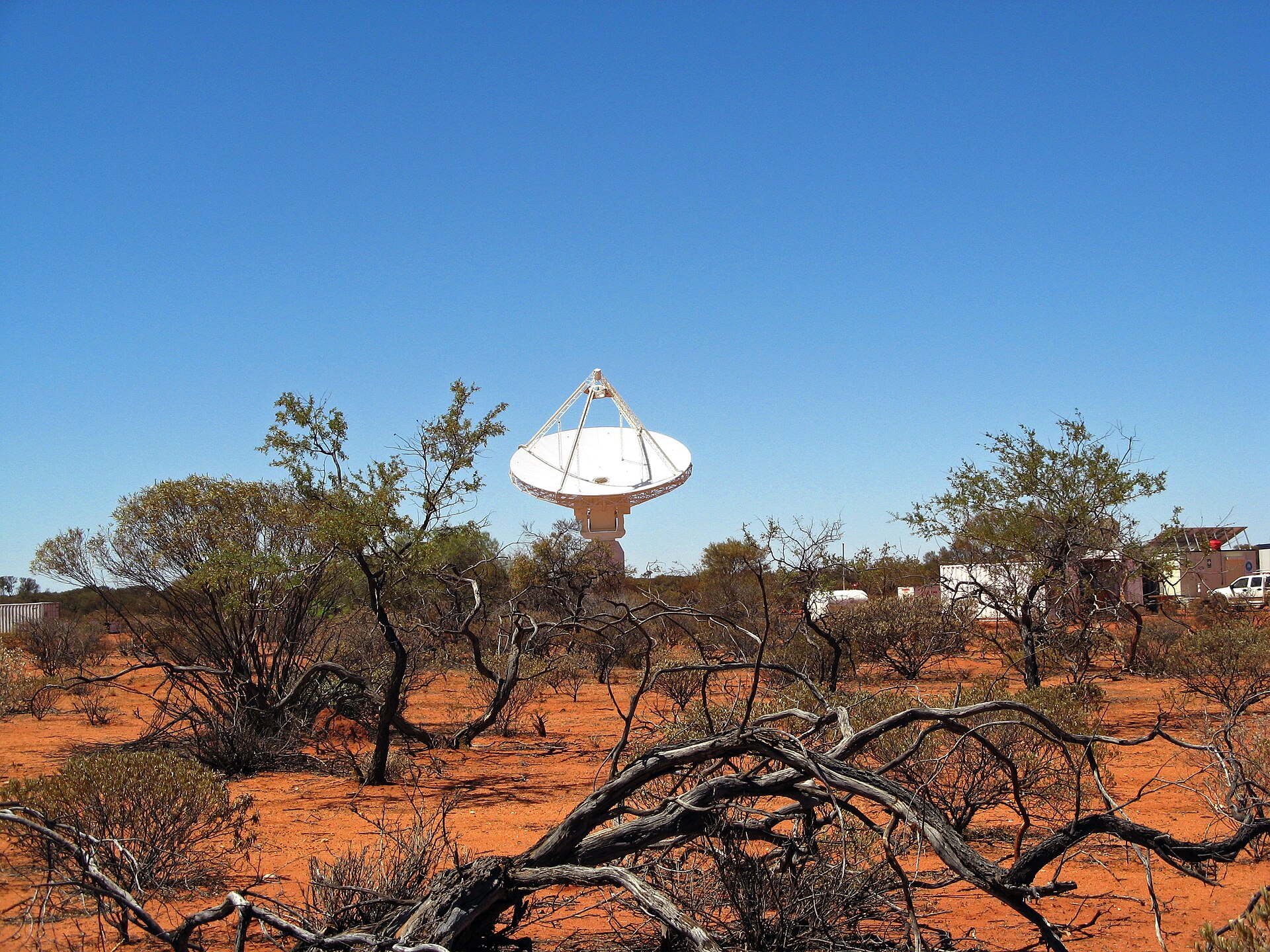
This is not a borrowed overseas story with a token local angle. Australia sits at the centre of the global radio astronomy map, and that is the whole point. The CSIRO operates the ASKAP array in remote Western Australia, a wide-field survey machine that generates data on a scale that forces exactly this kind of automation. Within the decade, the Square Kilometre Array Observatory, with its enormous low-frequency component being built in the WA outback, will produce data volumes that make today’s surveys look modest. There is no version of the SKA that works without heavy, trusted machine learning sitting between the antennas and the astronomers.
That gives Australia a rare position. The country is not just a consumer of these techniques, it is one of the places where they have to be invented, tested and proven at scale, because the instruments here demand it. Skills built verifying black hole evidence do not stay locked in astronomy either. The same expertise in handling noisy, high-volume imaging flows directly into medical diagnostics, defence sensing, mineral exploration and environmental monitoring, all sectors where Australia has both commercial interest and a shortage of people who can do the work well.
There is a sovereign capability argument here too. As the national conversation turns increasingly to where Australia’s AI compute lives and who controls it, pure-science projects like this one are a reminder that the country already runs world-class data and AI operations on home soil. The CSIRO’s astronomy infrastructure is a national asset, and the AI methods layered on top of it are a form of local capability that no amount of imported software can replace.
What happens next
The near-term path is incremental and sensible. Expect these verification models to be folded into the standard pipelines that process survey data, running quietly alongside existing analysis rather than replacing it, and gradually earning the trust of a community that is right to be cautious. The real test arrives with the SKA, when the data rates climb past anything human teams can meaningfully check and automated verification stops being a nice-to-have and becomes the only way the science gets done at all.
The broader lesson reaches well beyond black holes. Australia has quietly become a proving ground for AI applied to genuinely hard scientific problems, the kind with clear right answers and no tolerance for hype. If image recognition can be trusted to help confirm something as consequential as a black hole, it says a great deal about how carefully the method has been built, and about the depth of talent doing the building here.
Sources: news.lavx.hu via GNews.


