



















































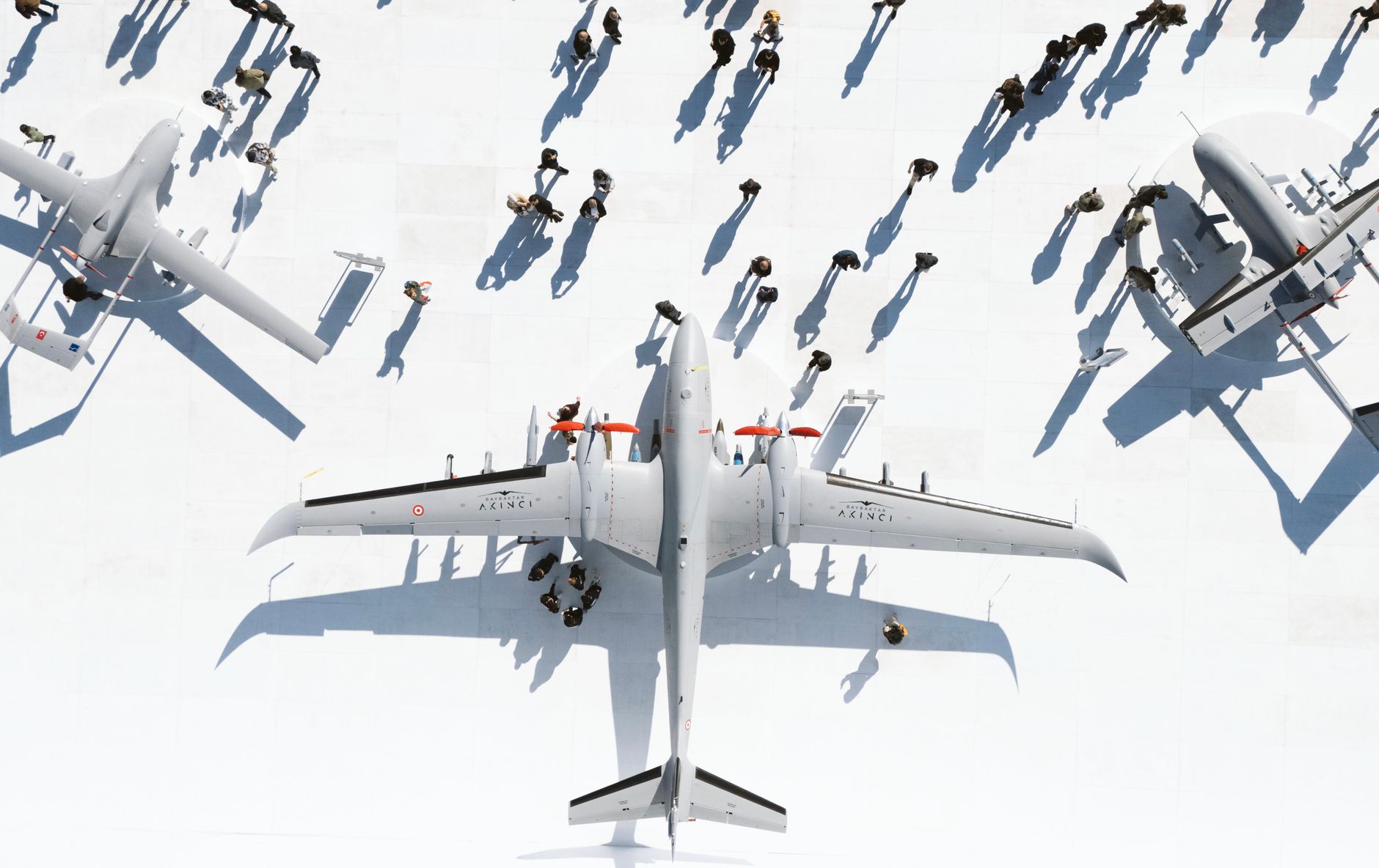
The money flowing into defence technology keeps arriving in bigger parcels, and the latest comes from Germany. SE3, a Munich-based startup building artificial intelligence for military drones, has raised US$30 million to speed up development of software that lets uncrewed aircraft navigate, target and operate when the humans controlling them lose contact. The round, reported this week by Fortune, lands at a moment when European governments are pouring money into rearmament and when the war in Ukraine has rewritten the economics of the battlefield around cheap, smart, expendable machines.
SE3’s pitch sits at the heart of that shift. Modern drones are vulnerable to electronic warfare, the jamming and spoofing that severs the radio link between an operator and the aircraft. On the front lines in Ukraine, that link is now the first thing both sides try to break. The response from a wave of startups has been to move the intelligence onto the drone itself, so that a loss of signal does not mean a loss of the mission. SE3 is one of a growing cohort selling exactly that capability: onboard autonomy that keeps a drone useful even when its connection to base is cut.
The news
According to Fortune’s report, SE3 will use the fresh capital to expand its engineering team and push its autonomy software towards wider deployment with European militaries. The company is part of a cluster of German defence-tech firms that have emerged since Berlin pledged to lift military spending sharply after Russia’s full-scale invasion of Ukraine. That political backdrop matters: the funding is not simply a bet on a clever product, but on a continent that has decided, for the first time in a generation, to spend heavily on its own defence.
Thirty million US dollars is modest against the valuations now attached to the sector’s biggest names, but it buys a serious head start for a young company in a field where software, not hardware, increasingly decides who wins. The hardest problems in drone warfare are no longer about building the airframe. They are about perception, deciding what a camera is looking at, and decision-making under uncertainty, choosing what to do when the link drops. Those are AI problems, and they are where SE3 is placing its chips.
Two ways to read it
For defence-tech optimists, rounds like this are overdue. Europe spent decades letting its military industrial base wither while relying on American protection, and the argument now is that software-defined, mass-producible systems are the only affordable way to close the gap quickly. On this view, a nimble startup that can ship autonomy software to thousands of cheap drones is worth more than another gold-plated legacy platform that takes a decade to field. Investors who once avoided weapons on ethical grounds have, since 2022, quietly changed their stance, and capital that used to flow only to civilian applications is now chasing dual-use and outright military ones.
The counter-argument is harder to wave away. Putting more autonomy into weapons raises the question of how much human judgement sits between a machine’s perception and its decision to strike. Arms-control researchers and a number of European lawmakers have warned for years that the line between a drone that navigates itself and a drone that selects its own targets is thinner than the industry likes to admit. SE3, like most firms in the space, frames its work around keeping a human in the loop, but the commercial pressure of electronic warfare pushes relentlessly in the other direction, because the whole point of onboard intelligence is to function when no human can intervene. That tension will not be resolved by any single funding round, and it is the reason this corner of the startup world draws scrutiny that a payments app never would.
What it means for Australia
Australia is not a bystander in this. The Albanese government has made uncrewed and autonomous systems a centrepiece of its defence planning, from the Ghost Bat combat aircraft developed with Boeing in Queensland to a string of maritime drone programs, and the 2024 National Defence Strategy leaned heavily on asymmetric, cheaper capabilities of exactly the kind SE3 is building software for. The AUKUS pact’s second pillar, covering advanced technologies including AI and autonomy, is explicitly meant to pull allied startups and research into the Australian supply chain. A German company proving that drone-autonomy software is both fundable and fieldable is a data point local founders and investors will note.
There is money and talent here to do it. Australian firms such as DroneShield, listed on the ASX, already sell counter-drone technology into global markets, and a clutch of younger ventures are working on the autonomy and sensing problems that SE3 is tackling. The local challenge is less about engineering ability than about capital patience and procurement. Defence contracts move slowly, and Australian venture investors have historically been wary of the sector’s long timelines and reputational complications. If European money is now flowing freely into drone AI, the risk for Australia is that its best people and ideas migrate to where the cheques are being written, unless domestic funding and Commonwealth purchasing move to match.
There is also a sovereignty dimension that lines up with debates already running in Canberra about sovereign AI capability. A nation that buys its drone autonomy software from overseas inherits someone else’s assumptions about what the system should see, trust and do. For a middle power trying to field credible deterrence in its own region, the ability to build and control that software domestically is starting to look less like a nice-to-have and more like a strategic requirement.
What’s next
SE3 now has to turn capital into contracts, and in defence that is the hard part. Trials with European militaries, integration onto real airframes and the slow grind of qualification will determine whether this round is a milestone or a footnote. For Australia, the signal to watch is whether the government’s stated enthusiasm for autonomous systems translates into the kind of early, risk-tolerant funding that lets a local SE3 exist at all. The technology is maturing fast. The open question is whether Australian policy and money keep pace.
Sources: Fortune, via UA.NEWS.


