



















































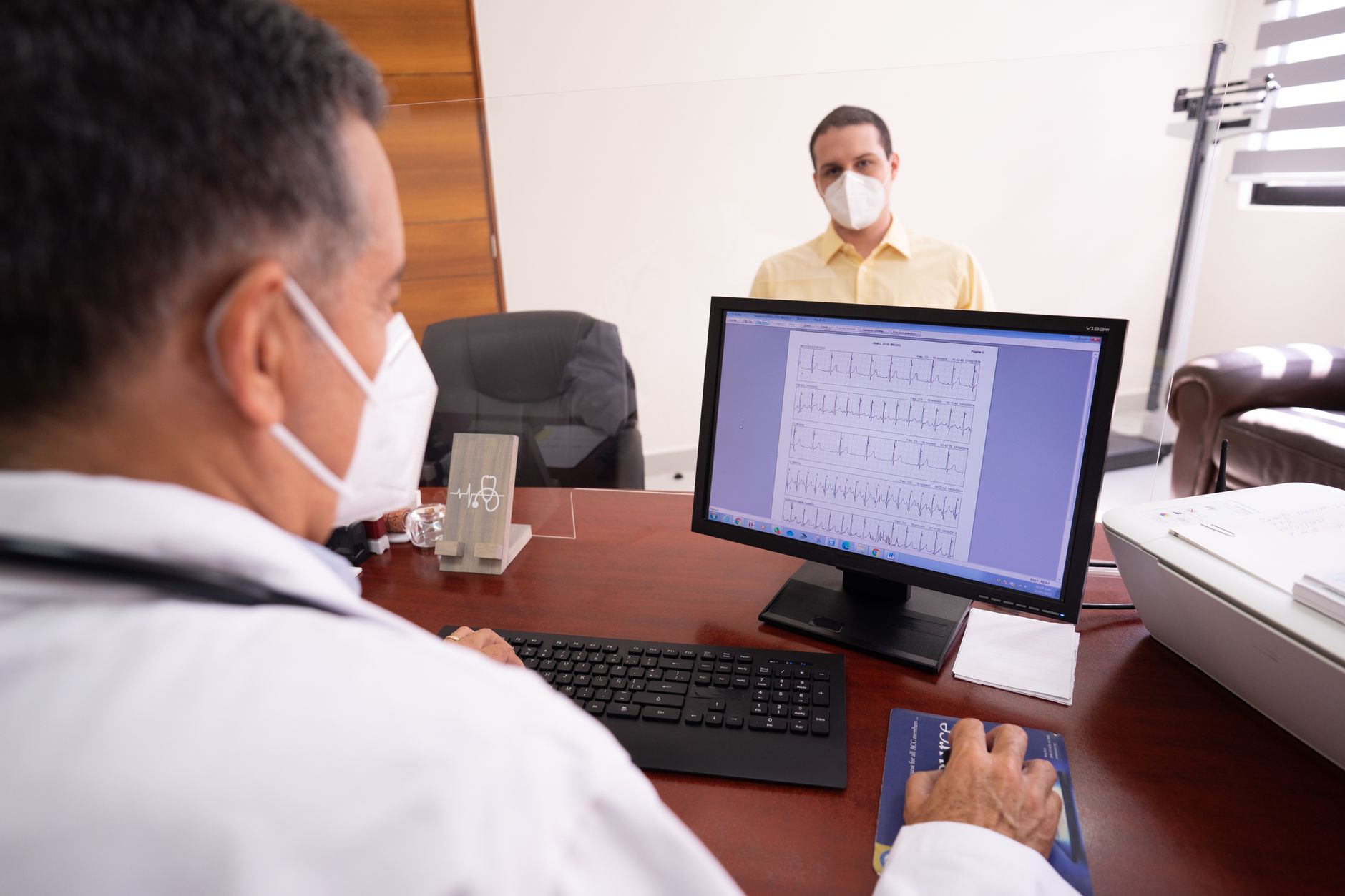
One of Australia’s fastest-growing health technology companies is heading offshore. Heidi Health, the Melbourne start-up that builds artificial intelligence tools to write up a doctor’s notes, has agreed to work with Samsung Medical Center in Seoul on a clinical documentation platform designed from the ground up for Korean clinicians and Korean hospitals. The tie-up, first reported by technology outlet TNGlobal, would see the two organisations jointly develop a system that captures a consultation and turns it into a structured medical record without a clinician typing it up by hand.
From Melbourne clinics to Seoul hospitals
Heidi sits in a crowded but booming corner of health technology known as the ambient AI scribe. The pitch is simple enough to explain to any overworked GP. The software listens to a consultation, with the patient’s consent, and drafts the clinical note, the referral letter and the summary while the doctor is still in the room. The promise is that clinicians spend more time looking at the person in front of them and less time staring at a screen after hours, catching up on paperwork that has become one of the biggest drivers of burnout in modern medicine.
The company has grown quickly on that proposition, and it already counts clinicians across Australia, the United Kingdom and North America among its users. Moving into South Korea is a different kind of challenge, and it is the reason the Samsung Medical Center partnership matters more than a simple reseller deal would. An English-language scribe cannot be dropped into a Korean hospital and expected to work. The clinical shorthand is different, the record structures are different, the medicines and billing codes are different, and the language itself does not map neatly onto tools trained largely on English consultations. Building a genuinely Korean-ready platform means tuning the underlying models to Korean medical speech and to the way Korean hospitals actually keep their records.
That is where a partner like Samsung Medical Center comes in. One of the country’s largest tertiary hospitals, it brings the clinical data, the frontline staff and the institutional weight that a foreign start-up cannot assemble on its own. For Heidi, it is a route into a sophisticated and well-funded healthcare market with a credible local anchor. For the hospital, it is access to a documentation engine that has already been stress-tested in other health systems rather than something built from scratch.
The case for the partnership
Supporters of this kind of collaboration point to a genuine problem it is trying to solve. Administrative load is crushing clinicians everywhere, and South Korea is no exception, with high patient volumes and short consultation times placing enormous pressure on doctors to document quickly and accurately. If an AI scribe can shave even a few minutes off every encounter and reduce the risk of something being missed in the notes, the cumulative effect across a large hospital is substantial.
There is also a strategic logic for Australia. Health AI built here has tended to stay here, or to look first to the familiar markets of Britain and the United States. A deal that takes an Australian product into a major Asian health system is a reminder that the region on our doorstep is a large and serious buyer of clinical technology, not just a source of competition. If Heidi can make the Korean build work, it establishes a template for adapting the same platform to Japan, to parts of Southeast Asia and to other markets where English-first tools have struggled.
The case for caution
Not everyone in the sector is uncritical about the rush to put AI between the doctor and the record. Clinical safety specialists have warned for some time that ambient scribes can introduce subtle errors, the kind that are easy to miss precisely because the draft looks fluent and professional. A so-called hallucination in a casual chatbot is an annoyance. The same failure in a discharge summary or a medication list is a patient safety issue. The responsibility for checking every note still rests with the clinician, and the harder question is whether busy doctors will reliably scrutinise a document the software has helpfully written for them.
Privacy is the other live concern. These systems depend on recording and processing some of the most sensitive data that exists, and a cross-border partnership raises questions about where that data is held, how it is used to improve the models, and which regulator has the final say. South Korea has its own strict data protection regime, and any platform operating there will have to satisfy local rules on health information. Critics argue that the governance around these tools has not kept pace with how quickly they are being adopted, and that hospitals are signing up partly because their staff are desperate for relief from paperwork rather than because the safety case has been fully settled.
What it means for Australia
For the local industry, the Heidi deal lands at a telling moment. Australian regulators and professional bodies are still working through how AI scribes should be governed in our own hospitals and clinics, including questions of consent, record retention and medico-legal liability when an AI-drafted note turns out to be wrong. Watching one of the country’s leading players build a tightly regulated version of its product for South Korea could feed useful lessons back home, because the guardrails demanded by a large overseas hospital often end up raising the bar for everyone.
There is a commercial signal too. Australian venture investors have poured money into health AI on the expectation that the best companies can sell globally, and an export deal of this kind helps validate that thesis. It suggests the local sector can produce firms that major international institutions want to partner with, rather than acquire cheaply or copy. For a country that often frets about inventing clever technology only to see the value captured elsewhere, a Melbourne company licensing its know-how into Seoul is a more encouraging story than the usual one.
What is next
The practical test will be the build itself. Adapting an ambient scribe to a new language and a new health system is painstaking work, and the measure of success will be whether Korean clinicians actually trust the output enough to use it day to day. Expect early pilots inside Samsung Medical Center before any broader rollout, close attention from Korean privacy regulators, and keen interest from Heidi’s rivals, who will be watching to see whether the Asian market opens up or proves harder to crack than the pitch suggests. If it works, it will not be the last Australian health AI product to make the trip north.
Sources: TNGlobal.


