



















































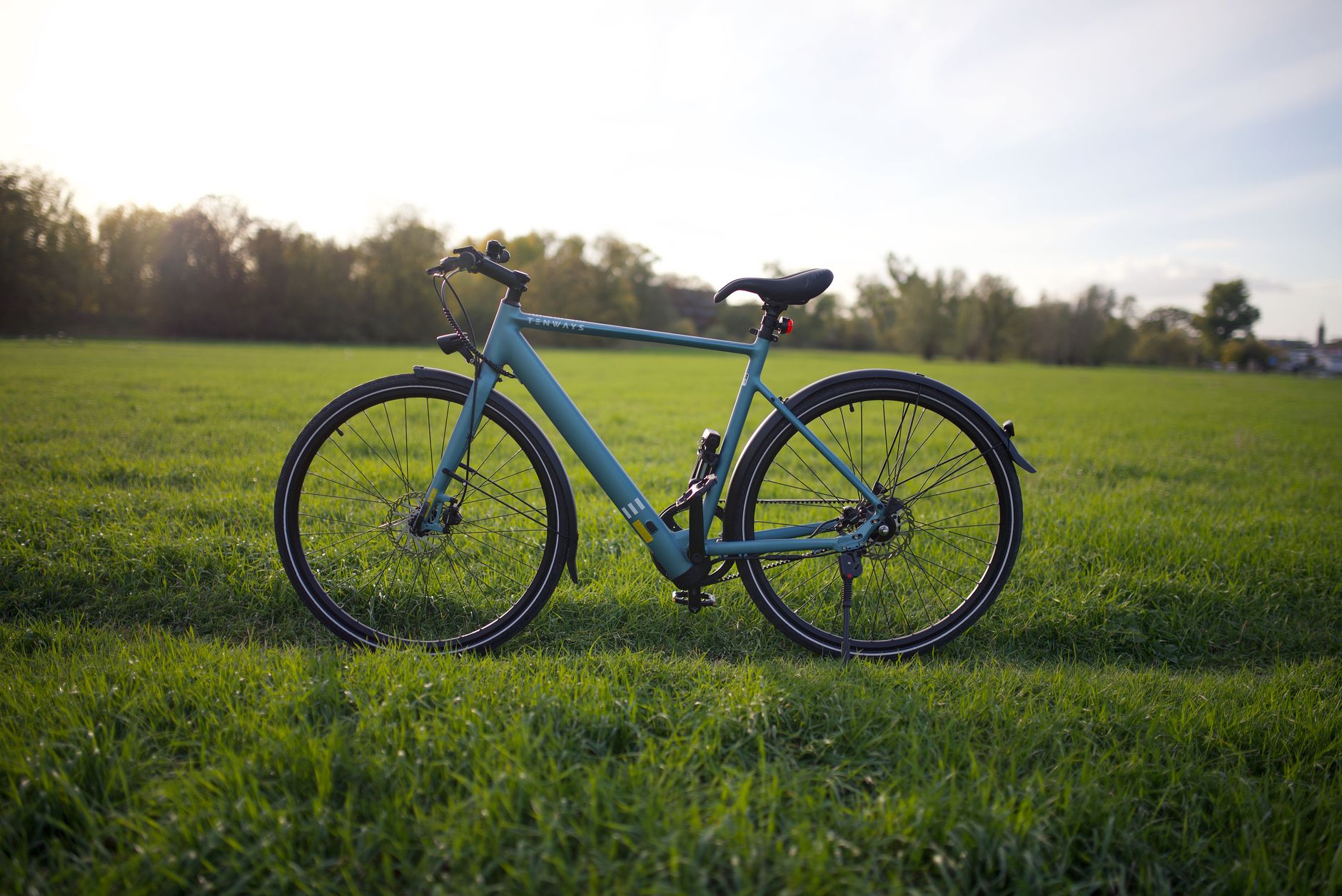
There was a time when a striking advertisement earned admiration. Now, increasingly, it earns suspicion. That is the lesson a small Byron Bay electric bike maker has just learned in public, after the launch film for its newest model was widely assumed to be the work of a generative video model rather than a camera crew and a carefully hidden rig.
Vallkree, the northern New South Wales brand known for its retro board-tracker styling, unveiled the FS1 Magic Carpet as the opening act of a new Future Series. The launch film leaned into the model’s name, presenting the bike as though it were gliding along without visible support, a clean and slightly surreal piece of imagery designed to stop the scroll. It did stop the scroll, but not entirely in the way the team intended. A meaningful share of viewers looked at the floating bike and concluded they were watching something generated by artificial intelligence, the kind of frictionless, physics-optional footage that tools such as OpenAI’s Sora and Google‘s Veo have made familiar over the past year.
Rather than let the assumption harden, the company did something that is becoming a genre of its own: it pulled back the curtain. Vallkree released material showing how the effect was achieved through practical production rather than prompts, a response documented by Campaign Brief. The point was not simply to satisfy curiosity. It was to reclaim credit for human craft at a moment when audiences no longer assume they are looking at anything real.
Why a real film reads as fake
The irony is sharp. For most of advertising history, the goal of a visual effects team was to make the artifice invisible, so that the trick looked effortless and real. The better the illusion, the less anyone questioned it. That incentive has now flipped. When an image looks too smooth, too weightless or too perfect, a growing slice of the audience reads those qualities as tells of synthetic generation rather than markers of a skilled crew.
Generative video has moved quickly from novelty to background noise. Social feeds are now thick with clips that bend physics, morph objects and stage impossible camera moves, almost all of it produced without a single person on set. Audiences have absorbed that shift faster than many marketers expected. The default posture toward a polished clip has quietly changed from “how did they do that” to “is that even real”. For a brand that invested in an actual shoot, with real hardware and real location work, being mistaken for a text prompt is a genuine commercial insult, because it strips away the very authenticity the production was meant to convey.
Vallkree’s decision to show the making-of taps into a tactic that creative agencies around the world have started to adopt. The behind-the-scenes clip is no longer a nice extra for the brand’s loyalists. It is becoming a defensive necessity, a way of certifying that human hands, physical products and location crews were involved. In effect, process footage is turning into a trust signal, the advertising equivalent of a “no artificial ingredients” label.
Two readings of the same moment
From the creative industry‘s side, the episode is a vindication of practical skill. Production companies and effects artists have spent the year watching clients ask whether a given idea could simply be generated more cheaply, and here is a clear case where the handmade version was so convincing it was mistaken for the machine version. That is a strong argument for the continuing value of real craft, and a reminder that audiences still respond to it, even if they cannot always tell what they are looking at.
There is a more uncomfortable reading as well. If a genuine, well-produced film is indistinguishable from synthetic output to a large part of its audience, then the commercial premium that real production has always commanded is under pressure. Why fund a shoot, a location and a crew if the finished result will be assumed to be AI regardless, and if a generated alternative could land the same impression at a fraction of the cost. The Vallkree film works as a proof point for human craft and, at the same time, as a warning about how thin the perceived difference has become.
What it means for Australia
For the Australian creative and production sector, this is more than a quirky viral moment. The local industry, from Byron Bay to the production hubs of Sydney and Melbourne, sells itself partly on authenticity and on the quality of real-world craft. If clients come to believe that audiences can no longer distinguish a genuine shoot from a generated one, the budget case for commissioning local crews, hiring Australian talent and travelling to Australian locations gets harder to make. A small brand showing its working is, in that sense, quietly defending a much larger ecosystem.
There is a regulatory dimension too. Australian advertising operates under the oversight of Ad Standards and the Australian Competition and Consumer Commission, both of which take a dim view of misleading representations. As synthetic imagery becomes routine, questions about disclosure will only grow louder. If a bike appears to perform in ways a real bike cannot, audiences and regulators alike may start asking brands to be explicit about what was captured and what was constructed, whether the construction came from a rig or from a model. Vallkree’s instinct to explain the effect, rather than let viewers guess, is arguably ahead of where the rules will eventually land.
It also speaks to a broader shift in how Australian consumers relate to what they see online. Trust in digital media was already fragile before generative video arrived. Each time a real thing is mistaken for a fake one, the baseline scepticism rises a little further, and brands that want to be believed will have to work harder to earn it. Transparency about method, once an afterthought, is becoming part of the product.
What is next
Expect more Australian brands to build the explanation directly into the campaign, treating the making-of as a core asset rather than a bonus. The smarter players will anticipate the “is this AI” question before it is asked and answer it in the same breath. For Vallkree, the upside is tangible: a launch that might have passed quietly instead sparked a conversation about craft, authenticity and the strange new reflex to doubt our own eyes. In a crowded market, being accused of using AI, and then disproving it, turned out to be its own kind of advertising.
Sources: Campaign Brief



Comments 1