



















































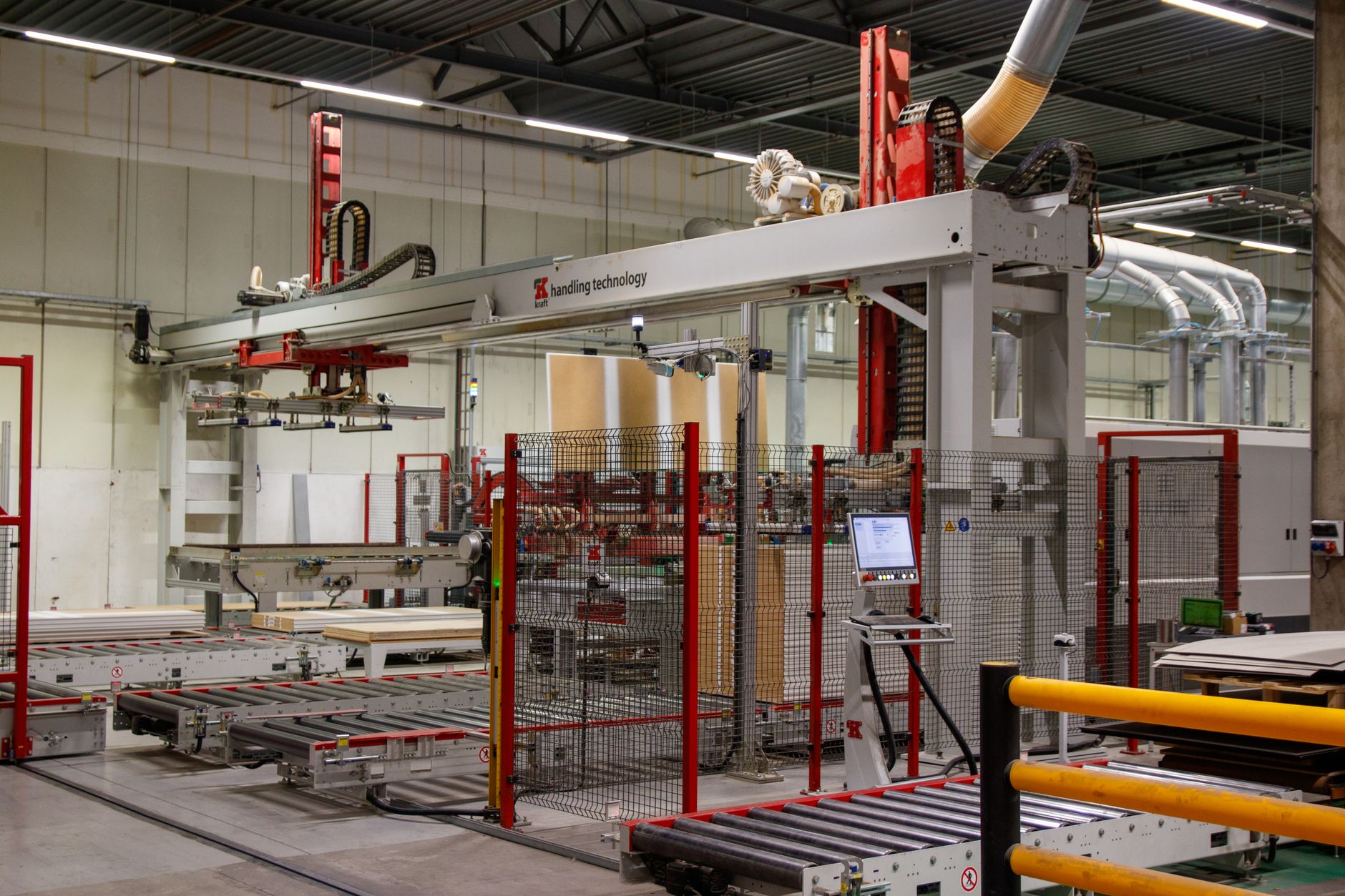
Walk into a modern distribution centre and the busiest worker is often the one you cannot see. Behind the conveyor belts, pick-and-pack stations and forklifts sits a layer of software that decides where stock goes, which order gets picked first and how a truck should be loaded. A new study from the Massachusetts Institute of Technology suggests that invisible layer is about to get a lot more say, with researchers tipping that artificial intelligence will make a materially larger share of warehouse decisions on its own by 2028.
The finding, reported this week by Australian Manufacturing, lands at a moment when the local logistics sector is already leaning hard on automation to cover chronic labour shortages. It also reframes a debate that has, until now, mostly been about robots and robotic arms. The MIT work is less interested in machines that move boxes and more in the software intelligence that tells them what to do.
From suggestion to decision
For years, warehouse AI has largely played an advisory role. Systems crunch demand forecasts, flag slow-moving stock and recommend the most efficient picking route, but a human signs off before anything happens. The shift the MIT researchers describe is subtler and arguably more consequential: the move from AI that suggests to AI that decides, acting within set guardrails and only escalating to a person when something falls outside its confidence range.
That distinction matters because it changes the nature of the work. A warehouse supervisor who once approved hundreds of small calls a shift becomes an exception handler, stepping in only when the system is unsure. Routine choices about replenishment, slotting and labour allocation drift into the background, handled by models that learn from every order they process. By 2028, on the study’s reading, that quiet autonomy becomes the norm rather than the experiment.
None of this arrives in a vacuum. The groundwork has been laid by cheaper sensors, better demand data and a wave of so-called agentic AI, software that can carry out multi-step tasks without being prompted at each stage. Warehouses are an unusually good fit for that technology. The environment is bounded, the goals are measurable and the cost of a wrong decision, while real, is rarely catastrophic. It is the kind of controlled setting where handing more judgement to a machine looks reasonable long before the same leap feels safe in, say, healthcare.
Two ways to read the forecast
Supporters of the trend argue it is overdue. Global supply chains have spent half a decade lurching from one shock to the next, from pandemic backlogs to the Red Sea shipping disruptions, and human planners simply cannot react at the speed those conditions demand. On this view, letting AI handle the thousands of micro-decisions that keep a facility humming frees scarce staff for the judgement calls that genuinely need a person. Productivity rises, error rates fall, and the warehouse becomes more resilient when the next disruption hits.
The sceptics are not persuaded that the maths is so tidy. Their worry is accountability. When an autonomous system makes a poor call, mis-ships an order, starves a store of stock or quietly deprioritises a product that then sells out, it can be hard to reconstruct why. Handing more decisions to opaque models risks baking in errors that nobody notices until they compound. There is also the familiar labour question. If the supervisor’s role shrinks to exception handling, employers may conclude they need fewer supervisors, and the people most exposed are often those with the least bargaining power.
Both readings can be true at once, which is part of why the 2028 timeframe is useful. It is near enough to plan for and far enough away to shape. The decisions being made now about where to draw the guardrails, what stays with a human and how much visibility workers get into the system’s reasoning will largely determine which version of the forecast comes to pass.
What it means for Australia
For Australia, the stakes are sharpened by geography and demographics. The country runs long, thin supply lines across vast distances, with population clustered on the coasts and goods often travelling thousands of kilometres from port to shelf. That makes efficient warehousing less a nicety than a structural necessity, and it is one reason major retailers and third-party logistics operators here have been among the keener adopters of automation.
The labour backdrop pushes in the same direction. Warehousing and transport have struggled to fill roles for years, and the sector has leaned on technology to plug the gap rather than simply to cut costs. An MIT forecast that AI will shoulder more day-to-day decisions will read, to many Australian operations managers, less like a threat and more like a lifeline for facilities that cannot find enough people to run at full tilt.
Yet the same thin market cuts both ways. Autonomous warehouse systems are overwhelmingly built offshore, which deepens Australia’s reliance on imported platforms and the vendors behind them. That raises questions this masthead has tracked across other sectors, from data sovereignty to who holds the keys when a critical system misbehaves. A distribution centre in western Sydney running on decision-making software tuned in another hemisphere is efficient right up until it is not, and local teams need the skills and the access to intervene when it matters.
There is a regulatory dimension too. Australia’s debate over AI guardrails has centred on frontier models and high-risk uses, with warehouse logistics barely rating a mention. But a system that autonomously decides how goods flow through the economy is quietly high-stakes, even if no single call looks dramatic. As these tools spread, expect pressure for clearer standards on auditability and human oversight in supply chains, mirroring arguments already playing out in finance and healthcare.
What is next
The honest answer is that 2028 is a direction, not a deadline. The MIT study maps a trajectory, and trajectories can stall on cost, integration headaches or a single high-profile failure that spooks boards into pulling AI back to an advisory role. What seems firmer is the direction of travel. The warehouse is becoming a place where software makes more of the calls, and the humans increasingly supervise the exceptions rather than the routine.
For Australian logistics leaders, the practical task is less about whether to adopt and more about how to adopt without losing the thread. That means investing in the people who can audit these systems, insisting on transparency from vendors and treating autonomy as something earned task by task rather than switched on wholesale. Get that balance right and the efficiency gains are real. Get it wrong and the first sign of trouble may be an empty shelf that nobody can quite explain.
Sources: Australian Manufacturing.


