



















































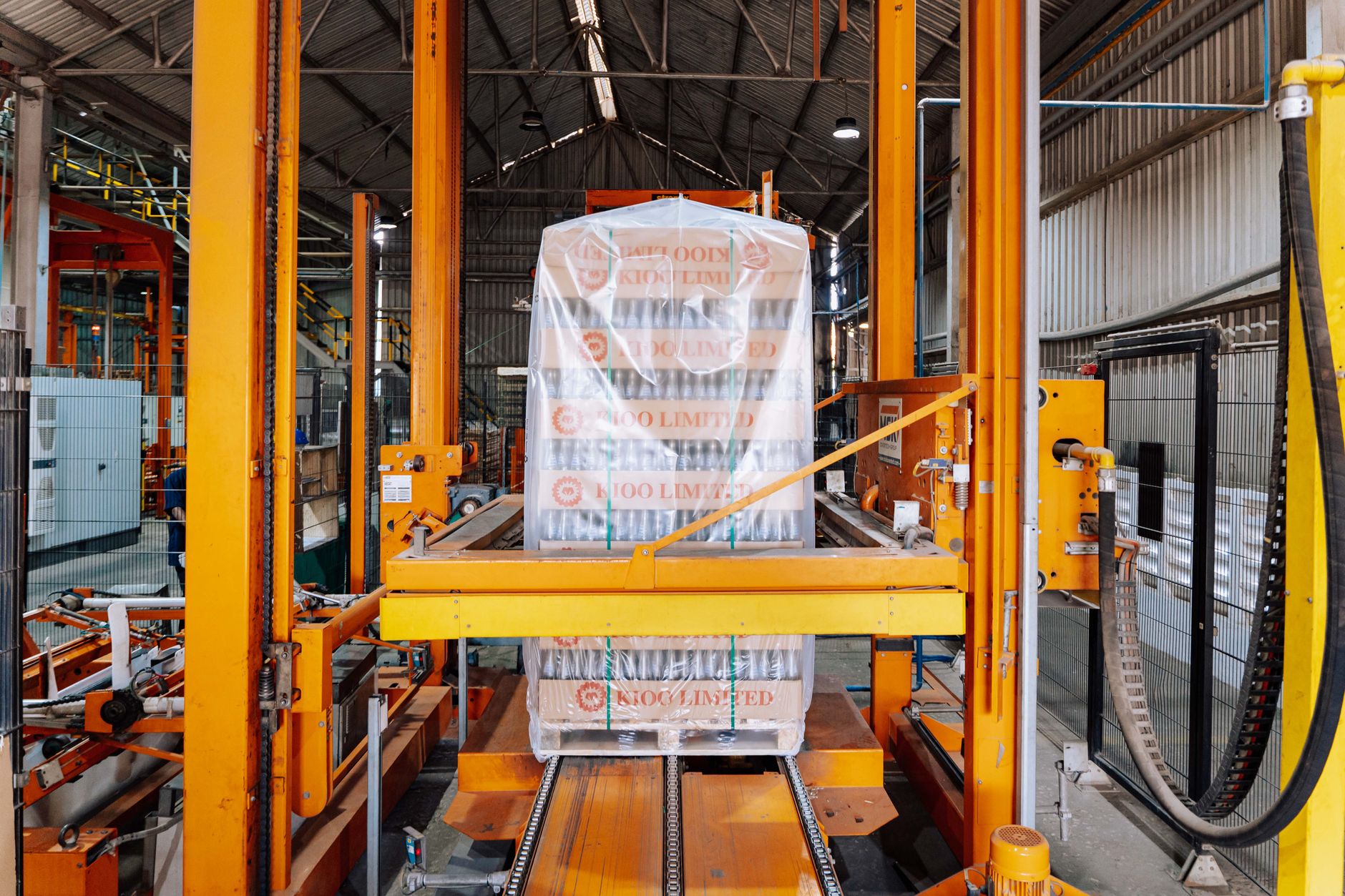
Australia’s factories have spent the better part of a decade being told they must automate or fall behind, and a Singapore robotics company now thinks the moment has finally arrived to put money behind that pitch. Botsync, which builds autonomous mobile robots and the software that coordinates them, has raised USD $11 million and earmarked a sizeable chunk of it for an Australian expansion that includes hiring staff on the ground.
The raise, reported this week by IT Brief Australia, lands at a point where the economics of local manufacturing are under genuine pressure. Energy costs remain stubbornly high, skilled labour is scarce and expensive, and a run of Reserve Bank commentary through 2025 has kept returning to the same uncomfortable theme: Australia’s productivity growth has stalled, and the industries that make physical things are among those feeling it most sharply. Into that gap steps a company arguing that fleets of self-driving robots moving materials around a plant can do the dull, repetitive work that firms struggle to staff.
What Botsync actually does
Founded in Singapore, Botsync sits in a corner of robotics that has matured quietly while flashier humanoid demonstrations grabbed headlines. Its focus is the autonomous mobile robot, the wheeled unit that ferries components, pallets and work-in-progress between stations without the fixed tracks or heavy infrastructure that older factory automation required. The harder problem, and arguably the more valuable one, is the orchestration layer that lets a mix of robots and existing machinery talk to one another and share a single view of the floor. That software glue is where a lot of automation projects have historically come unstuck, because a robot that cannot integrate with the systems already running a plant is an expensive ornament.
The company has framed the new capital as fuel for geographic growth rather than a pivot, and Australia features prominently in that plan. Beyond selling hardware, Botsync intends to hire locally, which matters for a market that has repeatedly watched overseas technology vendors treat it as a remote sales territory serviced from Singapore or Sydney on a fly-in basis. A permanent local team suggests a bet that Australian demand will be durable rather than opportunistic.
Why manufacturers are listening now
The timing is not accidental. Australian manufacturers have been squeezed from several directions at once, and automation has shifted in the national conversation from a threat to the workforce into something closer to a survival strategy for firms that cannot find enough workers in the first place. The argument Botsync and its peers make is straightforward: if a plant physically cannot fill its shifts, a robot that handles material movement is not displacing a human so much as filling a vacancy that was never going to be filled anyway.
That view has real support among operators who have lived the staffing crunch. Industry groups representing Australian manufacturing have spent recent years lobbying for exactly this kind of capital investment, pointing to the yawning productivity gap between local plants and their counterparts in more heavily automated economies. For a mid-sized food processor or a parts maker running thin margins, the pitch is that automation pays for itself through throughput and reduced error rates, and that falling robot prices have finally brought the payback period inside a range a cautious board will approve.
There is a competing view, and it deserves airtime. Unions and some labour economists remain wary of a narrative that casts automation as purely additive, noting that the “we can’t find workers” framing can quietly become a justification for not raising wages or improving conditions enough to attract them. The honest answer is that both things are often true at once: some automation genuinely backfills shortages, and some substitutes for labour that could have been retained with better pay. Which outcome dominates tends to depend less on the technology than on how individual firms choose to deploy it, and on whether the productivity dividend is shared with the workers who remain.
The Australian stakes
For Australia, Botsync’s arrival is a small data point in a much larger story about whether the country can actually convert its automation rhetoric into installed capacity. The federal government‘s Future Made in Australia agenda rests on the premise that advanced manufacturing can be viable here despite high input costs, and that premise is difficult to defend without exactly the kind of productivity-lifting technology that robotics vendors are selling. Every overseas firm that commits to a local team, rather than a distributor arrangement, strengthens the case that the ecosystem is thickening rather than hollowing out.
It also raises a familiar question about where the value ultimately accrues. The robots and the orchestration software are being developed offshore, and an Australian expansion that amounts to sales, installation and support leaves the high-margin intellectual property in Singapore. That is not a reason to discourage the investment, but it is a reminder that attracting foreign automation firms and building a domestic robotics industry are different goals, and Australia has historically been far better at the former than the latter. The jobs Botsync creates here will be real, yet they will mostly be in deployment rather than invention.
The broader labour market effect is likely to be gradual rather than dramatic. Material-handling automation tends to reshape roles on a floor rather than empty it, shifting workers from pushing trolleys toward supervising and maintaining machines. Whether that transition is managed well, with retraining and a genuine path to higher-skilled work, will do more to determine public sentiment than any single funding announcement.
What’s next
The near-term test is execution. Capital is plentiful relative to the number of Australian plants that have actually signed deployment contracts, and the sales cycle for factory automation is notoriously long, dominated by pilots, integration headaches and risk-averse procurement teams. Botsync’s local hiring will be the clearest signal of seriousness, and the contracts it lands over the next year will show whether Australian manufacturers are ready to move from interest to purchase orders. If they are, this USD $11 million round will look like an early marker in a wider shift. If they are not, it will join a long list of automation bets that assumed Australian industry was closer to the tipping point than it turned out to be.
Sources: IT Brief Australia.


