



















































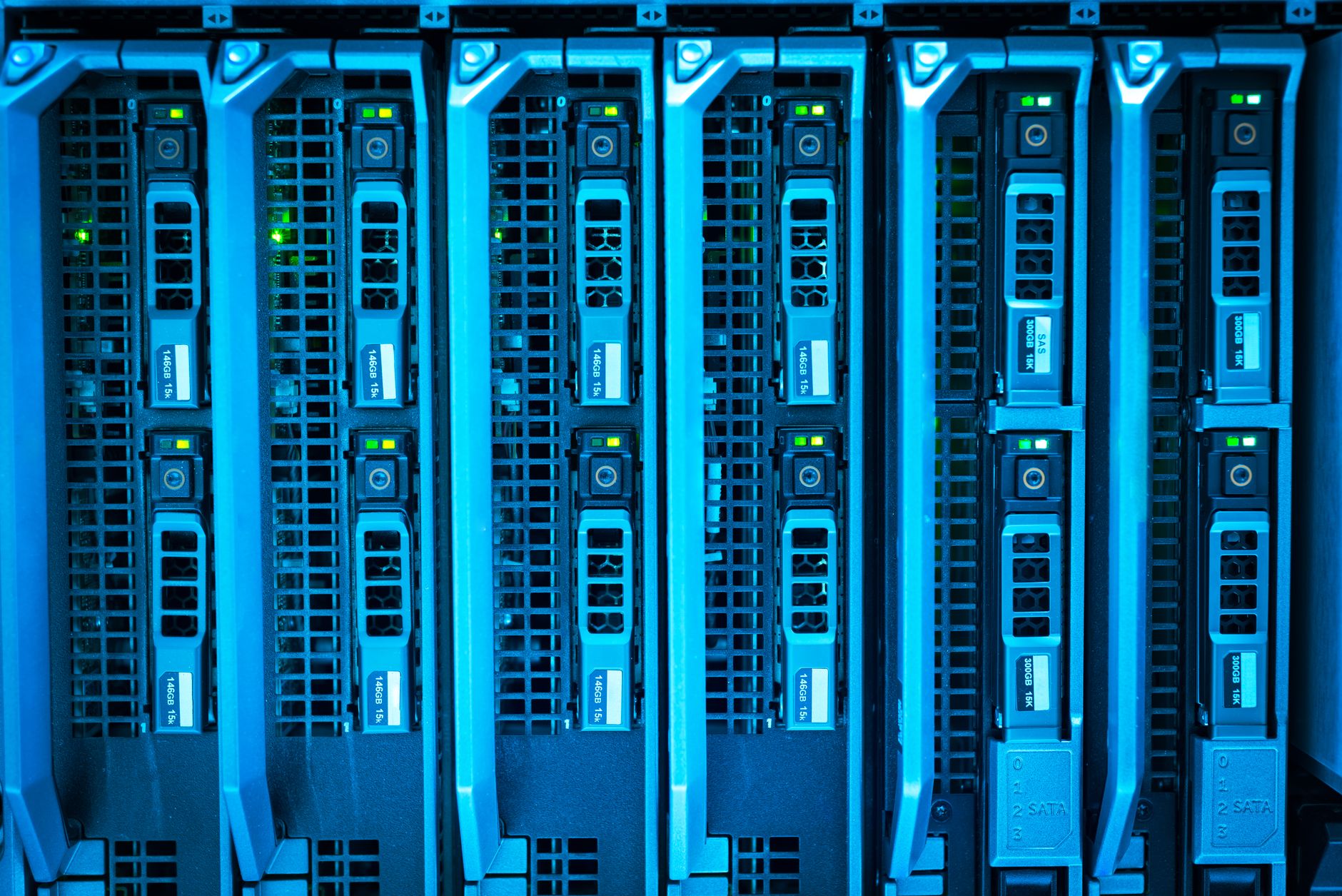
Australia’s appetite for computing hardware has rarely been sharper, and a new distribution agreement is aiming to widen the range of kit that local resellers can put in front of customers chasing AI capacity. Value-added distributor ACA Pacific has signed enterprise infrastructure vendor xFusion to carry its FusionServer line across Australia and New Zealand, opening another channel for the rack servers, high-density storage and GPU-laden systems that increasingly sit at the heart of AI deployments.
The deal, reported by ARN, gives resellers, managed service providers and systems integrators a route to xFusion’s enterprise portfolio. That portfolio spans rack-mounted servers, dense storage platforms and the AI and GPU server solutions that have become the scarce commodity of the moment, as organisations race to train and run models on their own terms rather than renting everything from the hyperscalers.
Who is xFusion
For readers outside the server-buying world, xFusion will not be a household name, and that is part of what makes the agreement worth watching. The company spun out of Huawei’s x86 server business in late 2021, when Huawei sold the unit amid the fallout from United States trade restrictions. The divested operation has since built itself up as a standalone infrastructure vendor, selling general-purpose compute, storage and AI-oriented systems into enterprise and telecommunications markets, largely across Asia, Europe, the Middle East and Africa.
Pushing into Australia and New Zealand places xFusion in a crowded field. The local server market is long dominated by Dell, Hewlett Packard Enterprise, Lenovo and Supermicro, with Nvidia’s reference designs shaping much of the AI tier. Breaking in means convincing integrators and their customers that a relatively new brand can match the incumbents on supply, support and warranty, the practical things that decide whether a vendor wins a tender or never gets shortlisted. Distribution is the mechanism for that, because a distributor like ACA Pacific handles stock, credit, pre-sales engineering and the day-to-day relationship with resellers that a vendor cannot easily run from offshore.
Why distribution deals matter right now
Signings of this kind rarely make front pages, yet they are a reliable barometer of where the market thinks demand is heading. Distributors do not take on new lines lightly, because carrying a brand ties up warehouse space, working capital and the time of technical staff. Adding a server vendor with a clear AI and GPU focus is a bet that partners will keep asking for that hardware well beyond the current hype cycle.
The timing fits a broader pattern in the local channel. Earlier this month ASX-listed distributor Dicker Data moved to broaden its own AI hardware shelves, a sign that the companies sitting between vendors and resellers are jostling to be the ones holding stock when the orders land. For ACA Pacific, best known in Australia and New Zealand for audvisual, display and specialist IT products, a full enterprise server range marks a notable expansion of its remit into the data centre.
There is also a competitive logic for buyers. GPU-class systems have been in chronically tight supply, with some customers facing long waits for the silicon that AI workloads demand. A wider set of vendors competing for the same business gives integrators more options on price, lead time and configuration, which matters when a single AI training rack can run to hundreds of thousands of dollars.
Two ways to read it
Optimists will frame the agreement as healthy competition arriving at the right moment. More vendors chasing Australian and New Zealand infrastructure budgets should, in theory, ease the bottlenecks and sharpen pricing that have frustrated buyers through the AI build-out. For mid-market firms and managed service providers that cannot command the attention of the biggest brands, a hungry challenger backed by a local distributor can be an attractive proposition.
Sceptics will point to the harder questions. A server is a long-term commitment, often five years or more in a rack, and customers want confidence that spare parts, firmware updates and support engineers will still be there at the end of it. A newer brand has to earn that trust, and procurement teams in government and regulated industries may hesitate over a vendor with roots in a divested Huawei business, however independent the operation is today. Supply chain provenance and security assurance have become live issues in Australian infrastructure buying, and any vendor with a China lineage can expect extra scrutiny regardless of the corporate structure.
What it means for Australia
The stakes here are distinctly local. Australia is in the middle of a data centre boom, with Melbourne recently overtaking Sydney on the strength of its development pipeline and operators from NextDC to global players committing to new capacity to meet AI demand. All of that floor space has to be filled with compute, and much of it with the GPU-dense systems that AI training and inference require. Every additional supplier that establishes a credible local channel adds resilience to a procurement landscape that has at times looked worryingly dependent on a handful of vendors and a single dominant chipmaker.
For the Australian channel specifically, the agreement is a modest but real vote of confidence. It signals that an international infrastructure vendor sees enough demand in a market of roughly 27 million people, plus New Zealand, to invest in getting its hardware onto local shelves. That demand is being driven by enterprises wanting to run AI workloads on-premises or in sovereign facilities for reasons of cost, data residency and regulatory comfort, a theme that has run through much of the local AI conversation this year as organisations weigh the true price of a seat at the AI table.
The flip side is that Australia’s build-out still leans heavily on imported hardware, and adding another overseas vendor does not change that underlying exposure. It does, however, give buyers more leverage, and in a market where lead times and pricing have been painful, leverage is not nothing.
What’s next
The real test will be execution. Distribution agreements are announcements of intent, and their value shows up only when stock lands, partners are trained and the first reference customers go live. Watch for which resellers pick up the line, whether xFusion commits local support and engineering resources, and how it positions on price against the incumbents. If the AI infrastructure wave holds, expect more vendors to seek the same path into Australia and New Zealand, and more distributors to compete for the right to carry them.
Sources: ARN.


