


















































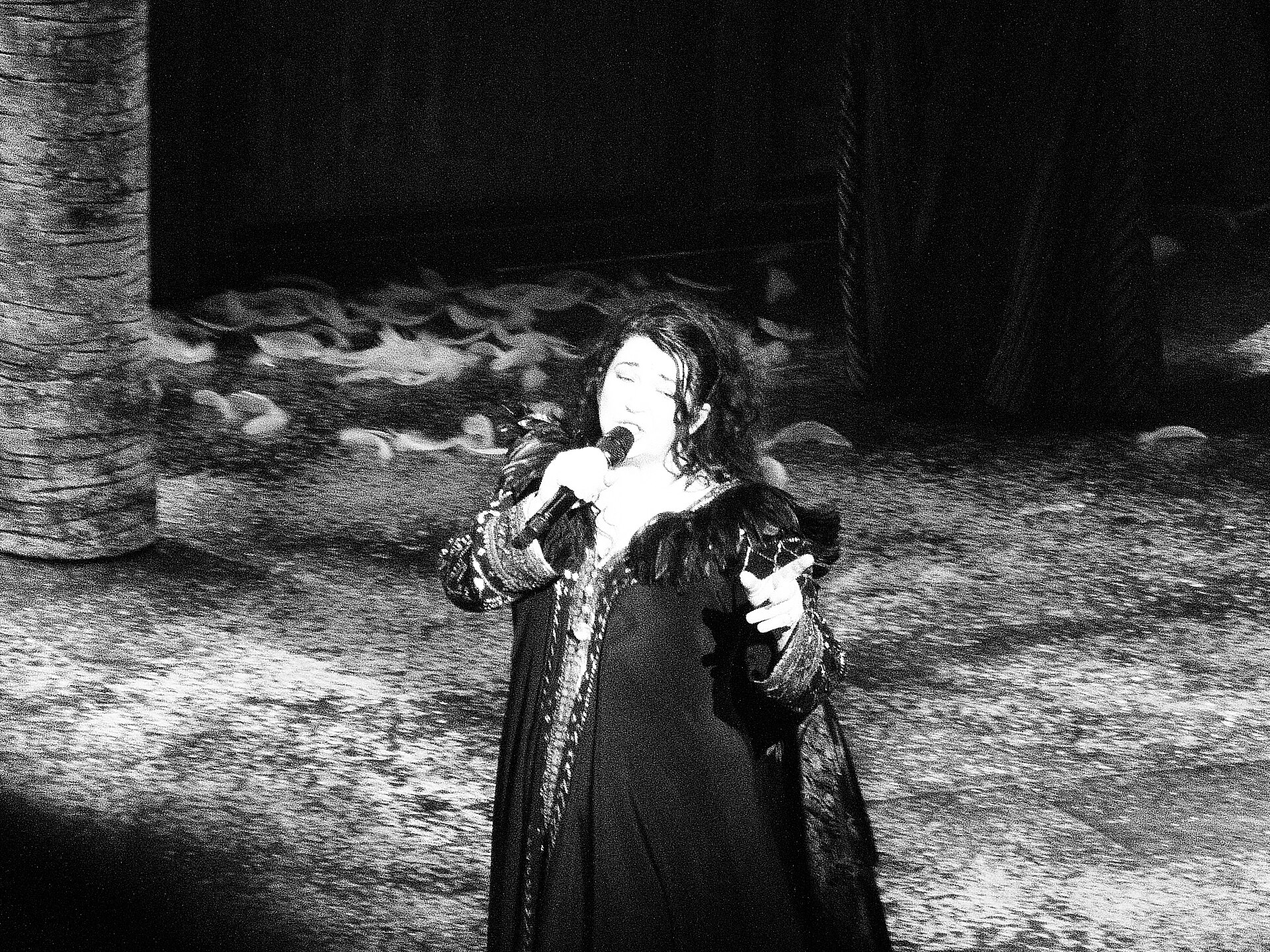
Australia’s long-running fight over artificial intelligence and copyright has drawn in some of the biggest names in global music, with the English songwriter Kate Bush among roughly 7,000 artists who have put their names to a statement demanding that the federal government shut the door on what they call AI theft.
The intervention lands at a pointed moment. Canberra has spent much of the past year weighing whether, and how, to allow AI developers to mine copyrighted books, songs, images and journalism to train their systems, and the creative sector has grown increasingly uneasy that any decision could run against it. The new statement, reported via GNews, turns an international spotlight on a very domestic argument.
What the signatories are asking for is not complicated. They want the government to reject any reform that would let technology companies feed creative works into generative models without the permission of the people who made them, and without paying for the privilege. The framing is deliberately blunt: not a licensing debate or a fair-dealing technicality, but theft on an industrial scale. That language echoes a broader global campaign over the past two years, driven by the former AI executive turned campaigner Ed Newton-Rex and his non-profit Fairly Trained, which has gathered tens of thousands of signatures from writers, performers and visual artists worldwide. Australia is now squarely in its sights.
Why the creative sector is worried
The anxiety is grounded in a specific policy question. For months, officials have been examining whether Australia should adopt some form of text and data mining exception, a carve-out in copyright law that would make it lawful to copy protected material for the purpose of training AI. Supporters argue such an exception would bring the country into line with jurisdictions that have moved to accommodate the technology, and would stop local developers from being locked out of a field dominated by the United States and China.
Artists and their representative bodies see it very differently. Groups including APRA AMCOS, the Australian Society of Authors and the Media, Entertainment and Arts Alliance have warned repeatedly that a broad exception would amount to handing the value of a lifetime’s creative labour to some of the richest companies on earth for nothing. Their argument is that a song, a novel or a painting does not stop being property simply because a machine can ingest it in milliseconds, and that consent and compensation should remain the default rather than the exception.
On the other side sits a technology industry that bristles at the word theft. Developers and their advocates contend that training a model is closer to analysis than copying, that the output is transformative, and that a permissions-and-payment regime applied to billions of works would be practically impossible to administer and would simply push AI research offshore. They point to the pace of investment in data centres and sovereign AI capability as evidence that Australia cannot afford to make itself a difficult place to build.
The Australian stakes
For Australia the dispute is more than an abstract clash of principles. The creative economy is a substantial employer, and the music, publishing, screen and visual arts sectors have long punched above their weight relative to the size of the population. A policy that weakened copyright protection would reverberate through royalty streams, publishing contracts and the business models of collecting societies that distribute income to local creators. Many of those creators are not household names earning global royalties but working musicians, illustrators and authors for whom licensing income is the difference between a sustainable career and a side hustle.
There is also a question of leverage. Because so much of the material already absorbed into the big foundation models was scraped without consent, Australian rights holders have limited practical ability to claw back what has gone. That is why the fight has shifted to the legislative front, where a clear statutory line on consent and payment would at least shape how future models are trained and how local work is treated. The involvement of an artist of Kate Bush’s stature is calculated to make the issue impossible for politicians to file under niche, giving a sector that often struggles to be heard in Canberra a burst of international amplification.
It also feeds into a wider national conversation about who benefits from the AI boom. Australian writers and performers have grown increasingly vocal about the gap between the valuations of AI firms and the returns flowing to the people whose work trains them, a theme that has run through much of the creative sector’s campaigning this year. The 7,000-signature statement is the latest and loudest expression of that frustration.
What happens next
The pressure arrives as the government finalises its thinking on copyright and AI. A bipartisan Senate committee has already floated the idea of a dedicated payment scheme that would require AI developers to pay for the Australian material they use, an approach that would reject a blanket free-use exception while still allowing training to proceed on commercial terms. Whether the government adopts that model, opts for something closer to the tech industry’s preferred position, or tries to thread a compromise, remains the central unknown.
Industry bodies on both sides are expected to keep lobbying hard through the consultation process, and the creative coalition has signalled it will escalate if a decision goes against it. For now, the signatories have made their position unmistakable. They are not asking Canberra to pause AI, and they are not asking for the technology to be banned. They are asking that the people who make the culture a machine learns from be asked first, and paid when the answer is yes. How the government responds will tell Australian creators a great deal about where they stand in the age of generative AI.
Sources: GNews / Magzter.



