
































CSIRO has switched on Vetra, a compact 48-GPU artificial intelligence system installed at its Queensland Centre for Advanced Technologies at Pullenvale in Brisbane, in a bid to let robots and sensors learn from real-world data on site rather than shipping it to a distant cloud.
The national science agency announced the infrastructure on 18 May 2026, describing it as an Australian-first piece of edge computing purpose-built for physical AI research.
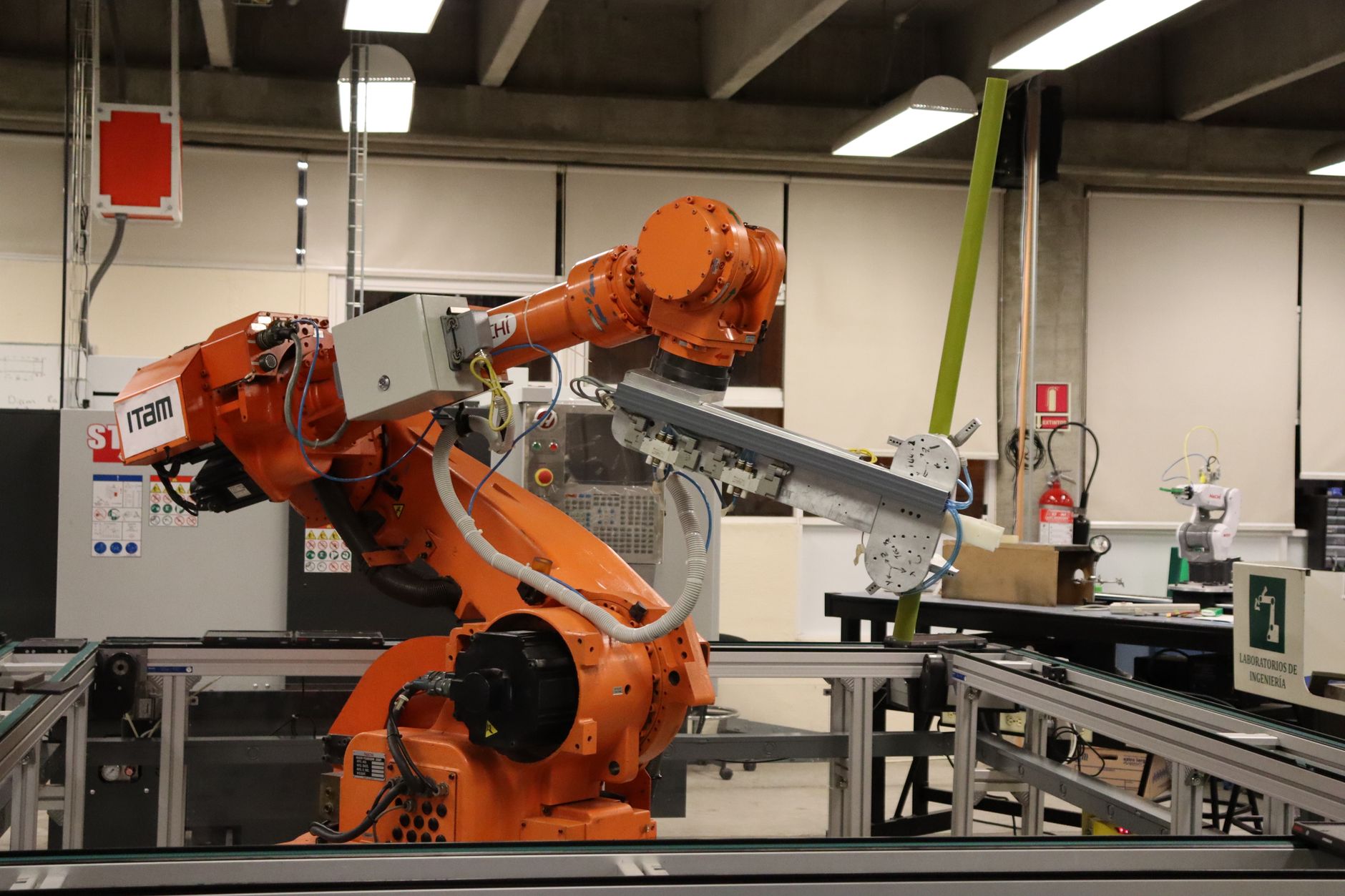
Vetra sits alongside what CSIRO calls Australia’s largest robotics research facility, feeding immediate processing power to machines being tested in complex, real environments.
What Vetra actually is
At its core, Vetra packs 48 high-performance graphics processing units into a modular, expandable enclosure. Those chips run thousands of calculations in parallel across large data sets, the kind of work that trains and refines modern AI models.
The design is deliberately close to the action. Rather than sending sensor and robotics data to servers hundreds of kilometres away, Vetra processes it locally, cutting the lag that makes cloud-only approaches awkward for machines that must react in the moment.
It is not meant to stand alone. CSIRO frames Vetra as the “edge” in an “edge-core-cloud” model, handling urgent local processing before passing heavier analysis to the agency’s larger supercomputing systems in Canberra.
Dr Liming Zhu, director of CSIRO’s Data61, said the system lets machines “respond, learn and operate safely in complex environments” in ways not possible with the cloud alone, in comments reported by ITBrief Australia.
Dr Peyman Moghadam, who heads CSIRO’s Embodied AI Cluster, put the point more plainly. “Vetra gives us the missing edge layer for this workflow,” he said, according to the same report, describing it as a way to turn real-world robotics data into safer, more adaptable AI.
Built to run cool and dry
The engineering story is as much about heat as horsepower. Dense banks of GPUs run hot, and the usual answer, evaporative cooling, drinks large volumes of water, a growing concern as data centres multiply across a dry continent.
Vetra instead uses carbon dioxide-based cooling paired with a closed-loop liquid system. CSIRO says the machine wastes almost no water in normal operation and should avoid around 225 tonnes of carbon dioxide emissions a year, which ITBrief likened to taking about 50 cars off the road.
“High-performance AI systems generate a lot of heat in dense, enclosed spaces,” CSIRO chief technology officer Angus Macoustra told trade outlet HVAC&R News. He said Vetra showed advanced technology could be delivered “in a way that significantly reduces water use and emissions”.
The cooling choice matters beyond one machine. Water use and grid strain have become flashpoints for the data-centre boom, and a working, sustainably cooled reference design from a public agency gives Australian operators something concrete to point to.
An Australian supply chain, and a sovereignty pitch
CSIRO built Vetra with home-grown help. Australian firms Oper8 Global and XENON Systems contributed to the design, delivery and installation, with Oper8 handling the specialised modular computing environment and XENON the high-performance computing, networking and software, according to CSIRO and ITBrief. Unnamed global technology partners rounded out the build.
That local involvement feeds a broader argument. Industry publication InnovationAus, in a piece by senior reporter Joseph Brookes, framed Vetra as delivering “a different form of sovereign AI”, one built on domestic compute close to the data rather than rented from offshore hyperscalers.
It is a modest system by hyperscale standards. But the point is less about raw scale than about where the capability, and the data, physically live.
Why it matters
For Australia, the stakes sit at the intersection of skills, industry and sovereignty. Much of the country’s AI compute is leased from overseas cloud giants, which keeps advanced work, and the value it creates, offshore.
Vetra is small, but it is a locally engineered, locally cooled asset that keeps sensitive robotics data on Australian soil. For sectors such as mining, agriculture, defence and logistics, where CSIRO’s robotics work has long found customers, edge processing close to the machine is a practical requirement, not a luxury.
There is a jobs and capability dividend too. Involving firms like Oper8 Global and XENON means Australian engineers gain hands-on experience designing dense, sustainable AI infrastructure, expertise that is scarce and increasingly valuable.
The environmental angle carries weight as well. If a 225-tonne annual emissions saving and near-zero water use can be reproduced at scale, it offers a template for an industry under mounting scrutiny over its resource footprint.
The forward look
CSIRO designed Vetra to grow, and the modular build means GPUs can be added as demand rises. The real test will be what the connected robots learn, and how quickly that feeds back into safer, more capable machines for Australian industry.
The edge-core-cloud model also bears watching. If CSIRO can show that splitting work between Brisbane’s edge and Canberra’s core delivers faster, cheaper and greener results than cloud-only setups, expect Australian firms and agencies to take note.
For now, Vetra stands as a small but pointed statement: that sovereign, sustainable AI infrastructure can be built here, cooled without draining water, and put to work beside the robots that need it.
Sources: CSIRO, ITBrief Australia, InnovationAus, HVAC&R News