










FluentSea
  • Home
  • News
  • Startups
  • Funding
  • Enterprise
  • Government & Policy
  • Data & Infrastructure
  • Creative & Media
  • Research & Education
  • Success Stories
  • Opinion
No Result
View All Result
SUBSCRIBE
FluentSea
  • Home
  • News
  • Startups
  • Funding
  • Enterprise
  • Government & Policy
  • Data & Infrastructure
  • Creative & Media
  • Research & Education
  • Success Stories
  • Opinion
No Result
View All Result
FluentSea
No Result
View All Result
Home Data & Infrastructure

A Tesla drove Queensland roads for 100 days. It never once finished a trip without help

Tom Mercer by Tom Mercer
July 11, 2026
in Data & Infrastructure
0
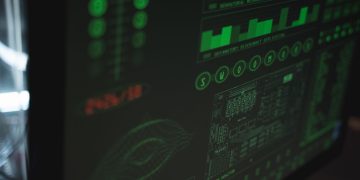
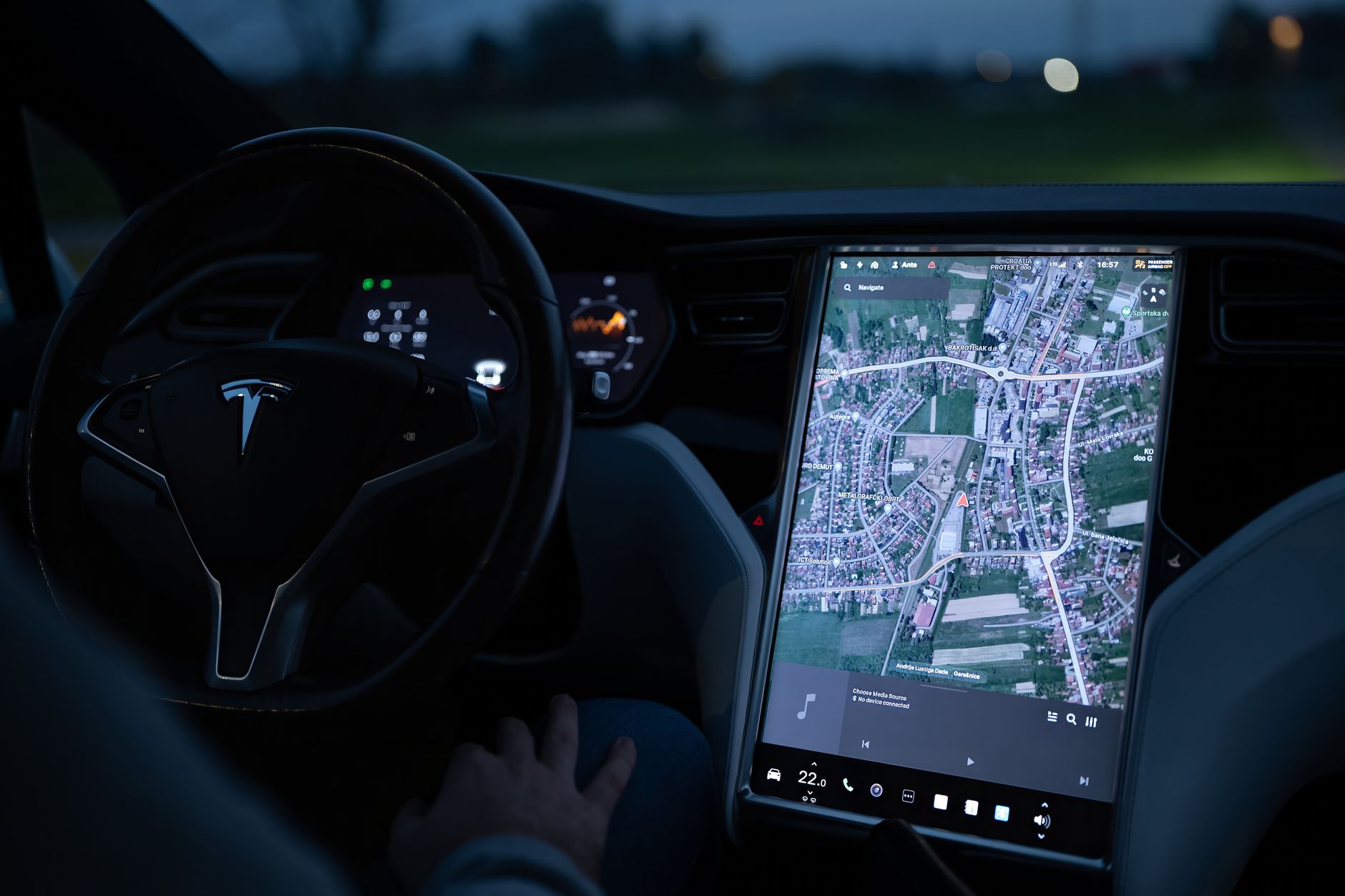
Explore the advanced touchscreen navigation in a modern electric vehicle's sleek interior at night.

Photo: Vladimir Srajber / Pexels

74
SHARES
1.2k
VIEWS
Share on FacebookShare on Twitter

A University of Queensland research team drove a Tesla Model Y running Full Self-Driving (FSD) across Queensland roads every day for more than 100 days, and did not complete a single trip from start to finish without a human taking over.

You might also like

Monash switches on MAVERIC, a sovereign AI supercomputer

Australia leans on Claude for documents, not code

Pause the data-centre boom? Three of five Australian experts say yes

Over the study, the team logged more than 500 safety-critical events, moments where the driver had to intervene or the system revealed a clear limitation in how it read the road.

The findings, published in The Conversation and detailed by the University of Queensland, land at a pointed moment. Australia is drafting the rules that will let cars like this one drive themselves on public roads from 2027.

What the car kept getting wrong

The work was led by Professor Zuduo Zheng of UQ’s School of Civil Engineering, with support from the Queensland Department of Transport and Main Roads. The team has published its records through a project it calls White Box Autonomy, a public archive of moments where autonomous vehicles hit trouble in real conditions.

Zheng’s team stresses the technology is more capable than many assume. For long stretches the Model Y drove smoothly, holding lanes and spacing with a precision hard for a human to match.

The problem was the everyday exceptions. According to The Conversation, most failures were not rare edge cases but ordinary situations a licensed driver handles almost without thinking.

On a small neighbourhood bridge, the car weaved side to side, confused by the road markings. It mishandled time-restricted speed limits in more than 90 per cent of cases, including slowing for school zones outside school hours.

Railway crossings and boom gates caused trouble, in one case prompting emergency braking when the vehicle ahead stopped near the tracks. Australia’s zipper merge rule defeated it repeatedly, with one event where neither the Tesla nor the other car gave way at the merge point.

Complex roundabouts, steep streets crowded with parked cars, and faded markings in poor weather all tripped the system. It also misread e-scooter riders as pedestrians, despite the two behaving very differently on the road.

The gear is already on Australian roads

This is not a lab curiosity. Tesla switched on FSD (Supervised) for eligible cars in Australia and New Zealand on 18 September 2025, making them the first right-hand-drive markets to get the software, as carsales reported.

Since 1 April 2026, FSD (Supervised) has been offered on a subscription-only basis at 149 dollars a month in Australia, per CarExpert. The newest V14.3.3 build reached local cars in June 2026, according to The Driven.

The word supervised is doing heavy lifting. The driver remains legally responsible and must keep hands on the wheel and eyes on the road. The UQ study is, in effect, a measure of how much supervising is actually required, and the answer is: constantly.

Why it matters for Australia

The stakes are national and immediate. On 21 November 2025, Australia’s transport ministers agreed to allow conditional deployment of automated vehicles from 2027 in selected locations, a milestone tracked by the National Transport Commission.

That framework, including a new Automated Vehicle Safety Law, would shift responsibility for a car’s driving from the human behind the wheel to an Automated Driving System Entity, the company standing behind the software. The UQ log of 500-plus interventions is exactly the kind of evidence regulators will weigh when they decide which systems, and which roads, qualify.

Our analysis: The most useful finding here is not that FSD makes mistakes. It is where they cluster. School zones, zipper merges, boom gates and roundabouts are not exotic; they are the daily fabric of Australian driving, and they are also products of how we build and mark our roads.

Zheng’s team frames the fix as meeting the technology halfway, through clearer and repeated lane markings, consistent intersection design, better surface maintenance and reliable, machine-readable speed-limit information. That reframes autonomous driving as an infrastructure question as much as a software one, and it puts the ball partly in the court of state road agencies, not just Silicon Valley.

There is a sovereignty angle too. FSD was trained overwhelmingly on the wrong side of the road in the United States, and the local quirks it stumbles over, our merge etiquette, our time-based school zones, our e-scooter share, are precisely the ones a foreign training set underweights. Independent, locally funded testing like UQ’s is how Australia keeps its own evidence base rather than importing a vendor’s marketing claims.

The White Box Autonomy archive also hints at an upside. A fleet of instrumented cars that flags potholes, faded lines and broken signs is a rolling audit of the road network. If regulators and road agencies can tap that data, the same vehicles struggling with our infrastructure could help us fix it, well before anyone takes their hands off the wheel for good.

Sources: The Conversation, University of Queensland, National Transport Commission, carsales, CarExpert, The Driven.


Tags: Autonomous VehiclesAV RegulationBrisbaneRoad InfrastructureTesla FSDUniversity of Queensland
Share30Tweet19
Tom Mercer

Tom Mercer

Tom covers enterprise AI adoption, government and policy for FluentSea.

Recommended For You

Monash switches on MAVERIC, a sovereign AI supercomputer

by Tom Mercer
July 13, 2026
0
Detailed image of illuminated server racks showcasing modern technology infrastructure.

Monash University has switched on MAVERIC, a $60 million NVIDIA-powered supercomputer hosted at CDC's Melbourne data centre. Built as a trusted research environment, it lets researchers train AI...

Read moreDetails

Australia leans on Claude for documents, not code

by Tom Mercer
July 13, 2026
0
Two professionals working diligently on laptops in a modern office setup, capturing productivity and teamwork.

Anthropic's first data-driven portrait of Australian Claude use finds adoption is broad knowledge work rather than developer-led, and heavily concentrated in the Sydney-Melbourne corporate corridor. It reframes how...

Read moreDetails

Pause the data-centre boom? Three of five Australian experts say yes

by Tom Mercer
July 12, 2026
0
Detailed image of illuminated server racks showcasing modern technology infrastructure.

Asked whether Australia should pause building new data centres, three of five experts said yes. We look at the energy, water and sovereignty arguments driving the split, and...

Read moreDetails

WeedSAT turns boomsprays into AI spot-sprayers

by Tom Mercer
July 13, 2026
0
Drone spraying pesticides over a green field, highlighting modern agricultural technology.

A GRDC-funded system called WeedSAT pairs 30cm satellite imagery with weed-detection algorithms built with University of Sydney analysts, letting grain growers retrofit existing boomsprays for spot-spraying and cut...

Read moreDetails

Anthropic weighs $150b bet to double Australia’s compute

by Tom Mercer
July 12, 2026
0
Detailed image of illuminated server racks showcasing modern technology infrastructure.

Anthropic is in advanced talks to procure up to 1.4GW of data-centre capacity across Australia, a plan valued as high as A$150 billion. If completed, it would roughly...

Read moreDetails
Next Post
Monochrome image showcasing the National Library of Australia with illuminating fountains at night.

Albanese's AI speech looms as Labor splits over copyright

Leave a Reply Cancel reply

Your email address will not be published. Required fields are marked *

Related News

Happy healthcare worker in scrubs standing near emergency room sign.

AI scribes give SA emergency doctors time back in Adelaide hospital trial

July 12, 2026
A diverse group of professionals having a collaborative meeting in a modern office space.

Quantum clocks to gut bugs: seven ANZ startups open June with $17m raised

July 12, 2026
Drone shot capturing a herd of cattle grazing on a vast grassland during daytime.

Teen’s GrazeMate wins $1.2m from Y Combinator for muster drones

July 13, 2026

Browse by Category

  • Creative & Media
  • Data & Infrastructure
  • Enterprise
  • Funding
  • Government & Policy
  • News
  • Opinion
  • Research & Education
  • Startups
  • Success Stories
FluentSea

FluentSea delivers AI training for Australian teams — hands-on Claude Code and Claude Cowork courses, online and in person.

CATEGORIES

  • Creative & Media
  • Data & Infrastructure
  • Enterprise
  • Funding
  • Government & Policy
  • News
  • Opinion
  • Research & Education
  • Startups
  • Success Stories

BROWSE BY TAG

Adelaide advertising agentic AI Agtech AI adoption AI governance AI infrastructure AI literacy AI policy AI regulation AI safety AI Safety Institute AI scribe Anthropic artificial intelligence Australia Brisbane Canberra ChatGPT Claude creative industry CSIRO data centres digital health Digital Transformation Agency enterprise AI fintech generative AI Google Cloud Government & Policy healthcare AI Higher Education marketing Melbourne National National AI Plan OpenAI Public Sector AI Regional Australia regulation responsible AI skills sovereign AI Sydney venture capital

© 2026 JNews - Premium WordPress news & magazine theme by Jegtheme.

No Result
View All Result
  • Home
  • News
  • Startups
  • Funding
  • Enterprise
  • Government & Policy
  • Creative & Media
  • Success Stories
  • Opinion

© 2026 JNews - Premium WordPress news & magazine theme by Jegtheme.

Not enough quota to unlock this post
Unlock left : 0
Are you sure want to cancel subscription?