

















































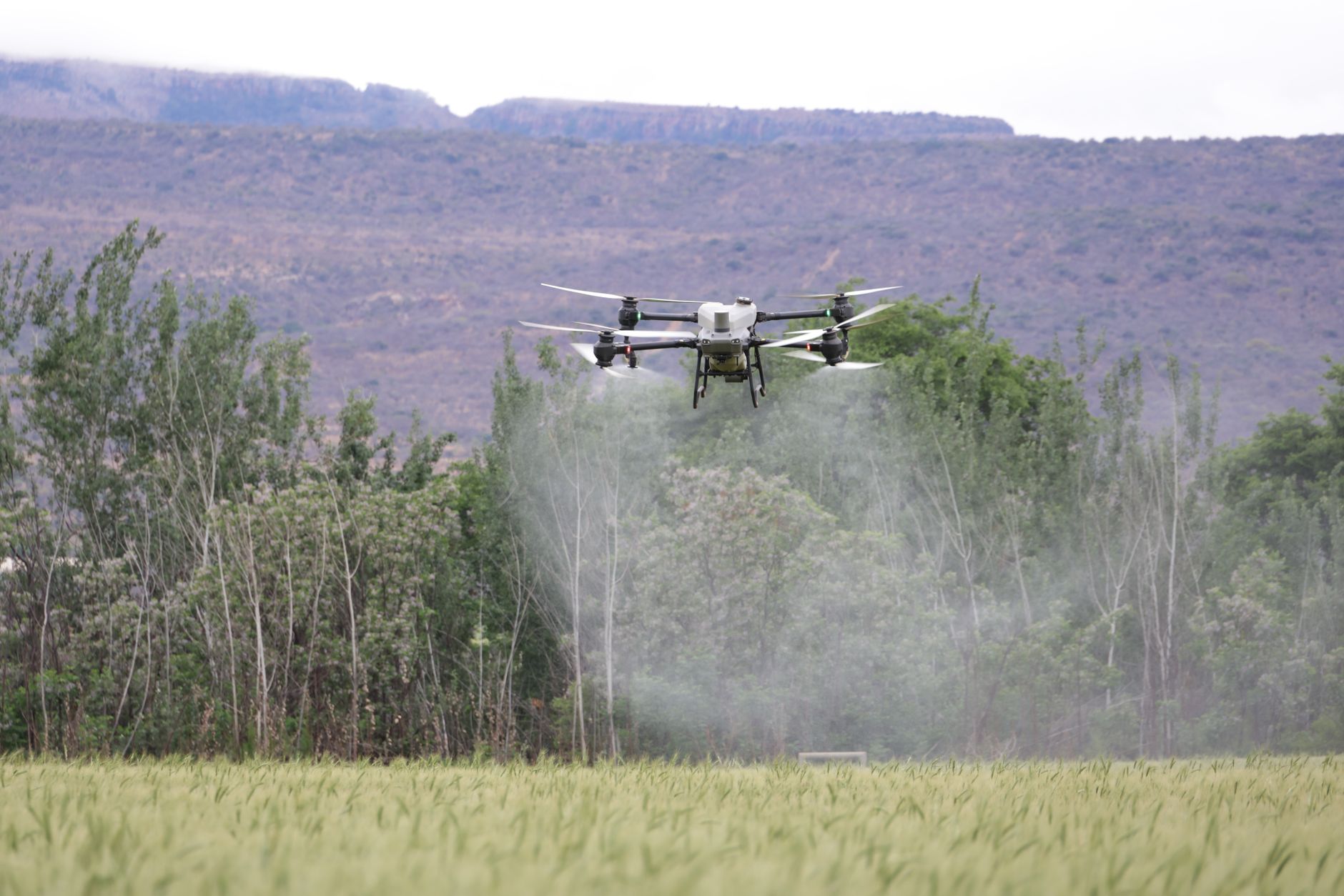
A weed-detection system funded by the Grains Research and Development Corporation is letting Australian grain growers turn the boomsprays they already own into precision spot-sprayers, with early trials pointing to herbicide savings of up to 80 per cent.
The system, called WeedSAT, uses ultra-high-resolution satellite and drone imagery to build a map of where weeds actually sit in a paddock. That map is loaded into a grower’s existing sprayer, which then switches individual sections or nozzles on and off so chemical lands only on the weeds rather than the whole field. According to the GRDC-owned publication GroundCover, whose release was also carried by the Shepparton News, the approach can spare growers from spraying roughly 80 per cent of a paddock’s area.
What sets the project apart is that it targets hardware farmers have owned for years. The technology works with about 90 per cent of farm boomsprays already fitted with section or individual nozzle control, according to the release, which removes the need to buy a dedicated spot-spraying robot or an in-cab optical camera rig.
How the AI reads a paddock from orbit
The research began in 2023, when GRDC identified an opening to make precision spraying cheaper and more accessible using a new generation of high-resolution satellites. Toowoomba-based agtech firm DataFarming built the platform, working with analysts at the University of Sydney to develop the algorithms that pick weeds out of imagery and stitch them to growers’ GPS paddock boundaries.
The satellites resolve plants within a 30cm by 30cm patch of ground. As WeedSmart reported, the imagery draws on so-called military-grade sensors, with the newest satellites capturing up to 350 bands of light compared with the three bands visible to the human eye. That spectral depth is what lets the algorithms separate a weed from surrounding stubble or crop.
Detection has held up under testing. The GroundCover release says the system was evaluated across more than 120 paddocks covering upwards of 12,000 hectares in every Australian growing region, and separate monitoring reported an average of 94 per cent positive detection for weeds larger than 30cm across 41 intensively watched sites. The software also adds a buffer around each detected weed to reduce the risk of a miss, and still, on conservative settings, left about 92 per cent of paddock area untreated in trials.
The economics are the part growers notice. A single 125-hectare trial paddock saved roughly $9,000 in high-cost herbicide by treating only about a quarter of the area, according to the release. DataFarming charges around $7 per hectare for image acquisition, analysis and prescription processing, against a benchmark blanket herbicide cost near $20 per hectare.
“Large, hard-to-kill weeds represent a very small percentage of the total paddock area but a significant per-hectare chemical cost,” DataFarming managing director Tim Neale told GroundCover. Western Australian precision agriculture consultant Bindi Isbister said the system’s clearest strength so far was green-on-brown summer weed control, where isolated weeds stand out against bare fallow.
A national follow-on aims at weeds hiding inside the crop
Spotting a green weed against brown stubble is the comparatively easy case. The harder problem, known as green-on-green, is picking a weed out of a standing green crop. That is the focus of a follow-on national project, backed in the lead announcement by a $6 million GRDC investment, which targets broadleaf weeds in wheat across Australian grain-growing regions.
To crack it, the platform leans on hyperspectral satellite imagery, which reads hundreds of light bands to tell plants apart at close to species level, such as ryegrass from wheat. DataFarming expected a limited green-on-brown release for winter fallows around August 2025 and a full commercial green-on-brown release in early 2026, with field-ready green-on-green algorithms for weeds inside crops targeted for 2026 and beyond as more data is gathered. The work has also drawn support from the SmartSat CRC, reflecting the space-and-agriculture crossover at the heart of the system.
GRDC has framed the value in terms of accessibility rather than novelty. Dedicated optical spot-spraying systems can cost upward of $150,000, GRDC agtech investment manager Peter Thompson told GroundCover, and the corporation saw value in a technology growers could deploy on gear they already run.
Why it matters for Australia
Herbicide is one of the largest variable costs in Australian broadacre cropping, and one of its most persistent headaches. Herbicide resistance has spread across the grain belt, from the Western Australian Wheatbelt through South Australia and into New South Wales, and blanket spraying accelerates the problem by exposing every weed in a paddock to chemical. Cutting the sprayed area sharply reduces both the bill and the selection pressure that breeds resistance.
WeedSAT is a case study in how AI reaches farmers at scale in this country. Rather than asking growers to replace fleets with autonomous machines, it packages weed recognition as a data service that plugs into the boomsprays already parked in the shed. For a sector where capital is tied up in land and machinery, a $7-per-hectare map that halves or better the chemical footprint is a far shorter path to adoption than a six-figure robot.
It also plays to a genuine Australian strength. The country has invested heavily in satellite and space capability through bodies such as the SmartSat CRC, and precision agriculture is one of the clearest near-term returns on that spending. A weed map generated from orbit, refined by university-built algorithms and executed by a farmer’s own nozzles, is remote-sensing infrastructure doing tangible work on the ground.
The open question is green-on-green. Detecting isolated weeds on fallow is now largely proven; reliably separating broadleaf weeds from a wheat canopy at paddock scale is materially harder, and the national follow-on will test whether hyperspectral imagery and better algorithms can deliver it across varied soils, seasons and crop stages. If they can, the same retrofit logic that made summer spot-spraying viable could carry precision weed control deep into the winter cropping program, where most of Australia’s grain and most of its herbicide bill actually sit.
Sources: GroundCover (GRDC), Shepparton News, WeedSmart, GRDC Update Papers.


