



























Three of five experts consulted by The Conversation in early July said Australia should hit pause on new AI data centres, as concern grows in Sydney and Melbourne over the power, water and community costs of the build-out.
The split is narrow, and it is not a simple case of for or against the technology. Every expert accepted that data centres will keep being built. The disagreement is about whether Australia understands what they cost before it commits to more of them.
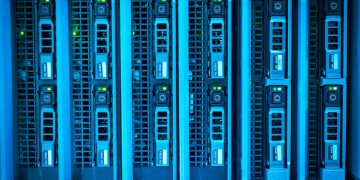
The debate lands as the pipeline swells. The United States Studies Centre counts more than 250 data centres already operating nationally with about 1.4 gigawatts of installed capacity, and roughly half the national project pipeline sits in Sydney.
Why three experts said pause
The case for a moratorium rests on a gap in the evidence, not opposition to AI.
Michael Vardon, an environmental accounting researcher at the Australian National University, argued for a temporary pause rather than a ban, on the grounds that data centres are close to invisible in Australia’s national energy, water and economic accounts. His point, as reported by The Conversation, is that we cannot see clearly what they cost or deliver.
Bronwyn Cumbo from the University of Technology Sydney framed a pause as breathing space. She noted that communities are raising legitimate concerns about the pace and scale of expansion, with no systematic government response yet, and that a well-run moratorium could be used to build planning processes and a more trusted industry.
Macquarie University’s Tamika Worrell raised a dimension often missing from the energy-and-water framing. She argued the current speed of development poses serious risks to Indigenous rights to land and resource governance, with accountability to affected communities frequently absent.
That data gap is real. A separate Conversation analysis notes the Australian Bureau of Statistics bundles data centres into broader categories, so detailed figures on their water or energy use simply do not exist. The same piece reports that if all 41 proposed Sydney facilities are built, they could draw 15 to 20 per cent of Sydney’s water supply within a decade.
Why two said keep building
The two experts who opposed a pause did not dispute the pressures. They disputed the remedy.
Ehsan Noroozinejad of Western Sydney University put the counter-case plainly, telling The Conversation the real issue is not whether Australia builds data centres but how it builds and operates them. He argued AI is becoming core economic infrastructure and that Australia already trails many developed nations on digital capacity.
Olivia Shen, director of strategic technologies at the United States Studies Centre, brought the sovereignty lens. Her centre’s work argues Australia needs sovereign digital infrastructure rather than relying on offshore capacity, to keep control of sensitive data and anchor high-value investment in the Indo-Pacific.
The economic prize is the backdrop to that argument. The United States Studies Centre cites modelling that AI deployment could deliver around A$115 billion in annual economic gains to Australia by 2030.
What the numbers actually show
The grid data explains why both camps can be right.
Data centres used roughly four terawatt-hours, or about 2 per cent of the National Electricity Market, in 2024-25, according to the Climate Council. That share is projected to reach about 6 per cent by 2030 and roughly 12 per cent by 2049-50.
The concentration is the sharper problem. In New South Wales, data centres are expected to move from about 4 per cent of state electricity to 11 per cent by 2030; in Victoria, from 2 to 8 per cent. Sydney Water has fielded enquiries from single facilities seeking up to 40 million litres a day, the equivalent of 16 Olympic pools.
Canberra has already moved. On 23 March 2026 the federal government released its Expectations of data centres and AI infrastructure developers, setting out that operators should underwrite new renewable supply, pay their full share of grid connection so costs are not passed to consumers, use water sustainably and invest in local skills. The expectations are not legally binding, but proposals that do not align will not be prioritised in Commonwealth assessments.
Why it matters for Australia
For Australia, the pause debate is really a question about who pays and who benefits. Households already facing power-price pressure have a direct stake in whether new load underwrites its own renewable supply and grid connection, or leans on the existing system.
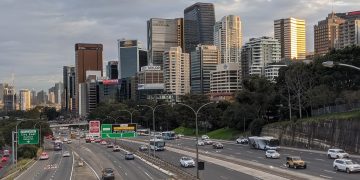
Sydney carries the heaviest exposure, hosting about half the national pipeline while its water utility fields industrial-scale requests. That makes local planning capacity, not just federal policy, the binding constraint.
There is a genuine sovereignty upside on the other side of the ledger. Domestic compute lets Australian firms, agencies and researchers run AI on local infrastructure rather than renting it offshore, which matters for sensitive data and for keeping skilled operations jobs onshore.
Our analysis: The vote is 3-2 for a pause, but read the reasoning and the experts are closer than the tally suggests. Nobody wants to stop building; the “yes” camp wants measurement and consent first, the “no” camp wants standards applied to projects already moving. The March expectations quietly grant much of what the pause advocates seek, minus the pause itself, by making renewable underwriting and water transparency the price of Commonwealth priority. The real test is enforcement. Expectations that only shape which projects get fast-tracked, without measurement the ABS admits it lacks, risk becoming a preference rather than a standard. Australia does not need to choose between sovereign compute and community trust. It needs the data to prove it is getting both.
Sources: The Conversation, Should Australia pause building new data centres?; The Conversation, How much water and power will AI data centres use?; United States Studies Centre, Powering the cloud; Climate Council, Doing data centres right; Department of Industry, Science and Resources, Expectations of data centres and AI infrastructure developers; Macquarie University Lighthouse republication.