



















































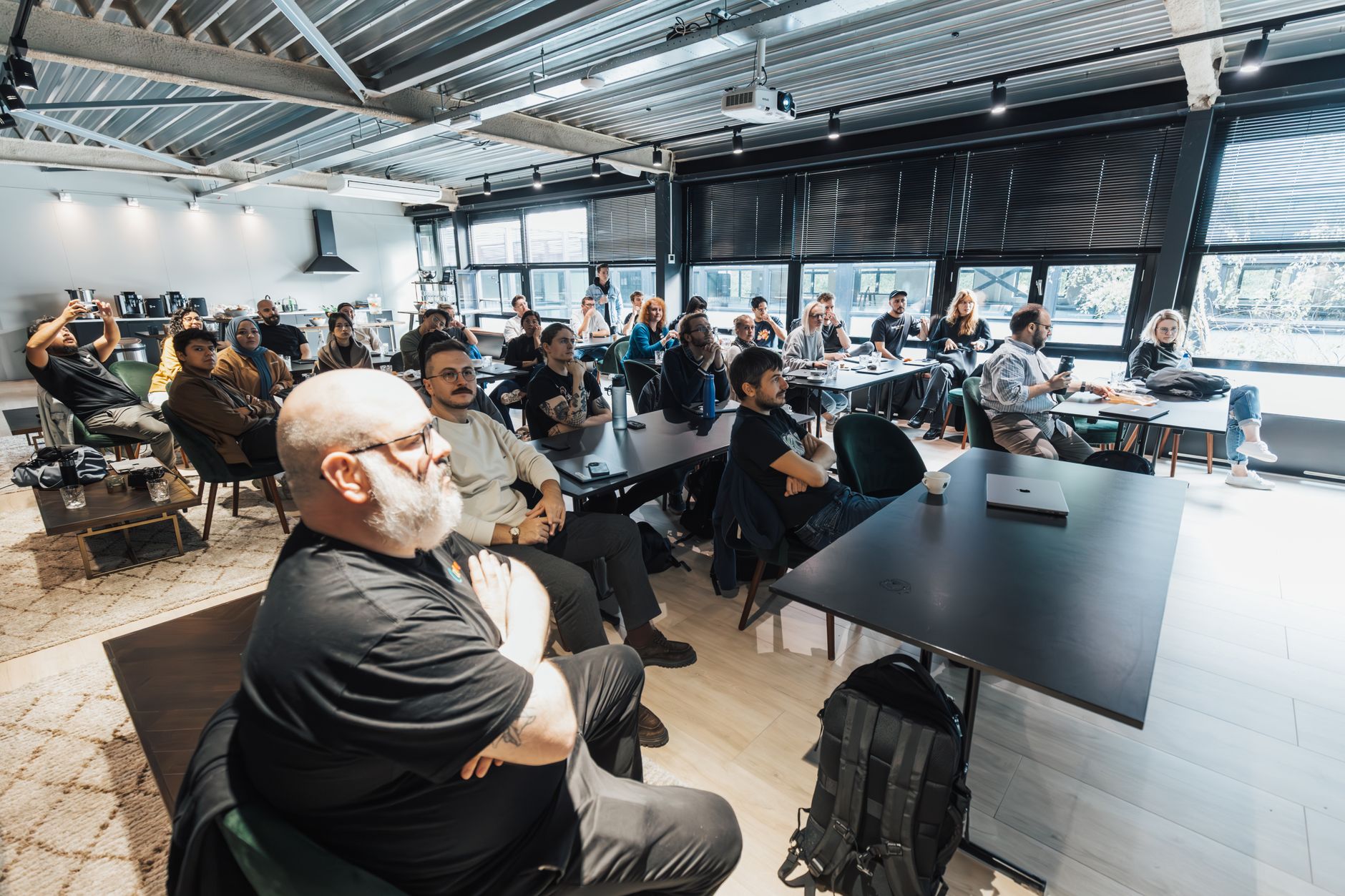
Walk into almost any large Australian organisation this year and you will find the same quiet tension. Executives have signed off on artificial intelligence as a strategic priority, licences for tools such as Microsoft Copilot and Google Gemini have been purchased, and yet a large share of staff either ignore the technology or use it tentatively, unsure what they are permitted to do. Into that gap steps a growing cohort of specialist trainers promising to turn expensive software subscriptions into measurable productivity. One of them, Paloren, is making its pitch on a simple premise: train whole departments at once, only on the tools the business has actually approved, and do it using the real tasks people perform every day.
The approach, outlined in coverage by The Chronicle-Journal, is a deliberate rejection of the generic lunchtime webinar that has defined much of the corporate AI rollout so far. Instead of a one-size seminar on “prompting”, the model trains a finance team on reconciling invoices, a marketing team on drafting campaign briefs, and a human resources unit on screening and summarising, each within the specific AI products the employer has sanctioned.
Why applied training has become the battleground
The shift reflects a hard lesson from the first wave of enterprise AI. Buying the licences turned out to be the easy part. Across 2024 and 2025 a string of surveys found that adoption inside organisations was patchy, with a committed minority of power users extracting real value while the majority barely touched the tools. The reasons were rarely about the technology itself. Staff worried about putting sensitive data into the wrong system, were unclear whether their draft counted as “their own work”, and could not see how a chatbot connected to the actual job in front of them.
Training that fixes those specific anxieties, rather than demonstrating clever party tricks, is where the market is now concentrating. The logic running through Paloren’s model is that competence and permission need to arrive together. If a worker learns an impressive technique on a consumer tool their company has banned, the training has arguably made things worse, because it encourages shadow usage outside the governance perimeter. By anchoring every lesson to an approved tool and a sanctioned task, the trainer is effectively teaching the policy and the skill in the same breath.
There is a second argument for training departments as whole units rather than sending individuals to open courses. AI changes workflows that are shared. A procurement officer who starts summarising contracts with AI affects the legal reviewer downstream, and a manager who drafts with a model changes what a direct report receives. Upskilling the group together, on its own processes, is meant to reset those shared habits in one move rather than leaving pockets of early adopters to drag colleagues along.
The sceptics have a case too
Not everyone is convinced that intensive, tool-specific training is the smartest investment, and the counterarguments deserve a fair hearing. The most obvious risk is obsolescence. AI products are changing on a monthly cadence, with interfaces, features and even entire assistants being renamed or replaced. Training staff deeply on the exact mechanics of one version of Copilot or Gemini can look like teaching people to use a particular model of fax machine. Some workplace researchers argue the durable skills are the general ones, knowing how to frame a problem, check an output and judge when not to trust the machine, and that these transfer across whichever tool happens to be current.
There is also the perennial question of whether classroom-style training changes behaviour at all. Plenty of compliance and software rollouts have proved that attendance is not adoption. Workers nod through the session and revert to old habits the following Monday. Advocates of the applied model respond that this is precisely why generic training fails and task-based training should not, because the practice happens on genuine work the person has to finish anyway. The honest answer is that the evidence is still thin, and employers are largely taking the proposition on faith while the productivity data catches up.
What it means for Australia
For Australian businesses the stakes are sharpening quickly. The federal government has leaned into AI as a productivity lever, and Treasury modelling and the Productivity Commission have both pointed to generative AI as a potential source of economic uplift over the coming decade. Yet that uplift only materialises if ordinary workers in Melbourne call centres, Perth engineering firms and Brisbane councils actually use the tools well, not just the technology leadership that bought them.
The training question also collides with a distinctly Australian anxiety about jobs. The past few months have delivered a steady drumbeat of restructures justified partly by AI efficiency, from white-collar roles at major employers to targeted cuts across professional services. In that climate, asking staff to train their departments on the very tools that might thin their ranks is a delicate exercise in trust. Employers that frame AI training as augmentation, helping people do more valuable work, are likely to get more genuine engagement than those where the subtext is replacement. How a trainer handles that conversation may matter as much as the technical curriculum.
Data sovereignty and governance give the local market its own flavour as well. Australian organisations in regulated sectors such as banking, health and government are acutely sensitive about where information flows, which is one reason the “approved tools only” discipline resonates here. Teaching staff to stay inside sanctioned, contractually governed systems is as much a privacy and compliance play as a productivity one, and it dovetails with the tighter posture Australian regulators have been signalling on AI accountability.
What is next
Expect the corporate AI training market to keep crowding and keep specialising. Generic “intro to AI” content is rapidly commoditising, pushing providers toward verticalised, role-specific and sector-specific offerings where the value is in understanding a particular workflow rather than the technology in the abstract. The firms that endure will probably be the ones that can show outcomes, hours saved, error rates reduced, work actually shifted, rather than smiling post-session survey scores.
For employers weighing the spend, the sensible test is neither to dismiss training as a box-ticking cost nor to treat it as a silver bullet. The useful question is whether a program teaches people to work differently on the tasks that matter, inside the guardrails the business has set, in a way that survives the next software update. Paloren’s bet is that departments learn AI best by doing their own jobs with it. Whether that bet pays off will be written not in training-room attendance but in what Australian teams quietly stop doing the slow way.
Sources: The Chronicle-Journal.


