



















































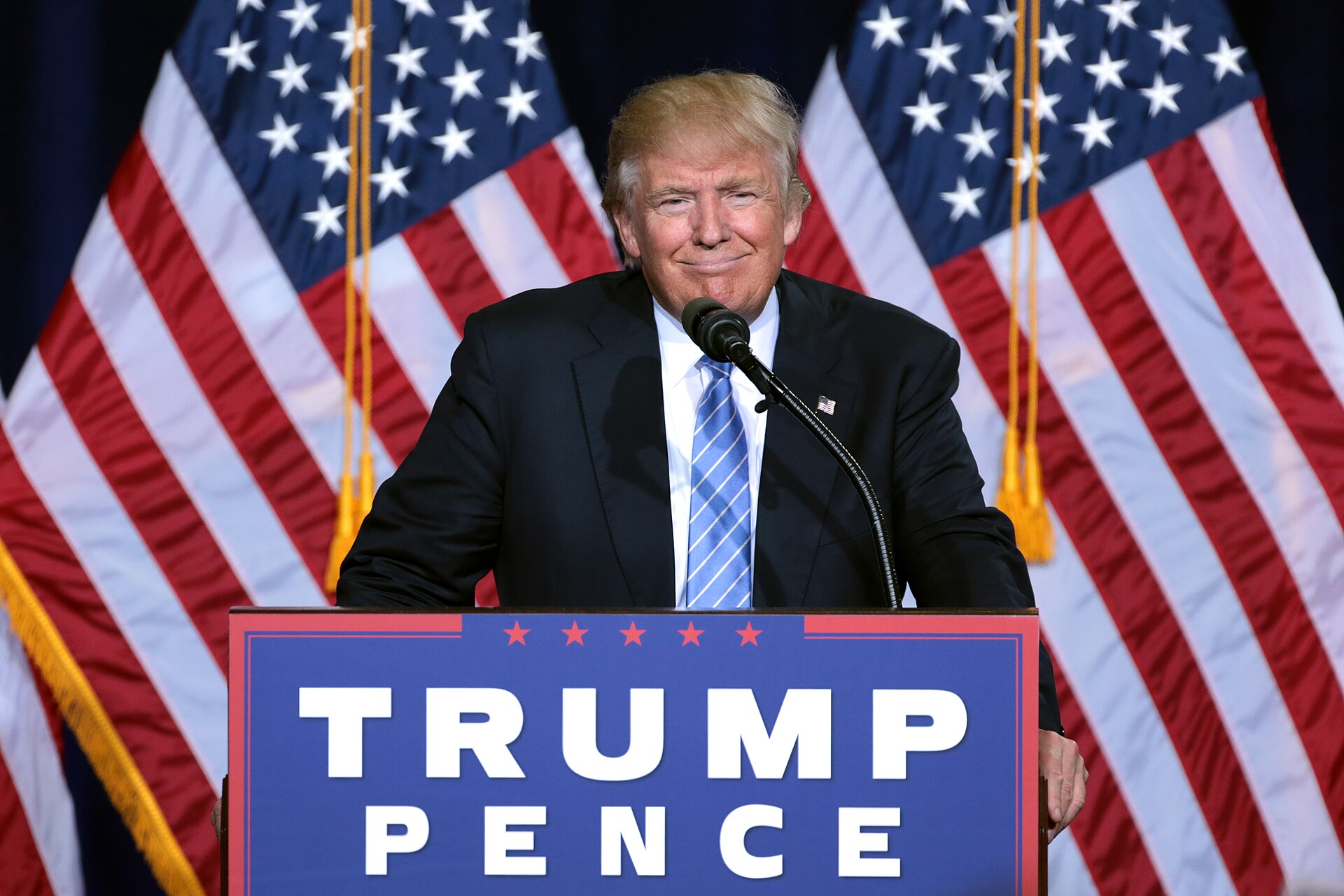
Artificial intelligence has become the newest currency of statecraft, and the latest proof came not from a laboratory or a boardroom but from the stage of a regional leaders’ summit in South-East Asia. US President Donald Trump used the ASEAN gathering to spruik a cluster of new technology and defence initiatives tied to the Quad, the grouping that binds the United States, Australia, India and Japan, and in doing so he placed AI squarely at the centre of Washington’s pitch to the Indo-Pacific.
According to 7News, the US president was effusive in his praise of the leaders sitting alongside him, lavishing compliments on Australia, India and Japan as the four nations unveiled fresh cooperation on artificial intelligence and maritime security. The framing was unmistakable. Where earlier iterations of the Quad leaned heavily on vaccines, infrastructure and critical minerals, this round of announcements elevated AI to a headline deliverable, treating it as both an economic engine and a lever of military advantage.
The news in context
The Quad has always been a slightly awkward creature, a partnership that insists it is not a military alliance while spending much of its energy worrying about the balance of power in the Indo-Pacific. Technology has given the grouping a more comfortable language to speak. Cooperation on AI, undersea cables, secure chips and maritime domain awareness lets the four democracies coordinate without the political weight of a formal treaty, and it plays directly to each country’s commercial strengths.
For Washington, the appeal is obvious. The United States wants its allies building on American AI standards, American cloud platforms and, increasingly, American silicon, rather than drifting towards Chinese alternatives. Folding AI into the Quad agenda is a way of knitting the region’s digital infrastructure together before Beijing can set the defaults. The maritime security component, meanwhile, speaks to a persistent anxiety about freedom of navigation and the surveillance of contested waters, where AI-enabled sensors and data-sharing promise to turn scattered national efforts into something closer to a shared picture.
Trump’s personal warmth towards the assembled leaders is worth noting without over-reading it. The president has a long record of mixing flattery with hard bargaining, and announcements made in the glow of a summit stage do not always survive contact with budgets, export-control lawyers and congressional appropriations. Still, the direction of travel is clear enough, and it matches a broader pattern in which AI has moved from a sideline curiosity to a core plank of alliance politics.
Two ways to read it
Supporters of deeper Quad technology cooperation argue that Australia simply cannot build a credible AI capability on its own. The country lacks the domestic chip fabrication, the hyperscale compute and the research density of the United States, and pooling effort with trusted partners is the only realistic path to staying near the frontier. On this view, a Quad AI framework gives Australian firms and researchers privileged access to shared standards, joint funding and the sort of secure supply chains that have become scarce as the US tightens its grip on advanced semiconductors.
The more cautious reading starts from sovereignty. Critics worry that binding Australia’s AI future ever more tightly to Washington leaves Canberra exposed to the swings of American politics, where export rules, tariffs and strategic priorities can shift with each administration. There is also the uncomfortable fact that AI woven into maritime surveillance and defence is not a neutral productivity tool. It carries questions about autonomous targeting, data governance and the ethics of systems that can misread a fishing boat as a threat. Australia has spent the past year debating whether to legislate safety rules for frontier AI, and a defence-flavoured Quad agenda adds a layer of complexity that civilian regulators are only beginning to grapple with.
What it means for Australia
For Canberra, the summit announcements land at a delicate moment. Australia is trying to stand up a sovereign AI capability, courting data-centre investment and local model development while remaining deeply dependent on American technology and, through AUKUS, on American defence hardware. A Quad AI initiative could accelerate that build-out by channelling compute, chips and research partnerships towards Australian institutions, and it may strengthen the case for the gigawatt-scale data-centre projects that have been pitched for sites around the country.
The flip side is strategic exposure. Australian policymakers have already watched Washington use chip export controls as an instrument of pressure on China, and any defence-linked AI cooperation will have to be managed against the reality that those same controls can constrain what Australian companies are allowed to buy, sell or build. There is a domestic political dimension too. With banks, retailers and government agencies all shedding jobs in the name of AI efficiency, voters are increasingly wary of grand technology promises, and a summit headline about defence AI will not automatically translate into public enthusiasm. The government will need to show that the initiative delivers skills, investment and research dollars at home, not just alignment abroad.
There is a quieter opportunity as well. Australia has genuine strengths in areas the Quad agenda touches, from critical minerals that feed chip manufacturing to maritime research and a growing cohort of AI safety and governance experts. If the initiative is handled deftly, Canberra can position itself as more than a junior partner, contributing standards, talent and trusted infrastructure rather than simply consuming them.
What is next
The announcements made at ASEAN are, for now, statements of intent rather than signed agreements with line-item budgets. The detail will matter enormously, and it will emerge over the coming months through officials’ meetings, defence dialogues and the slow machinery of Quad working groups. Watch for whether the AI commitments come with dedicated funding, whether Australian universities and companies are named as participants, and how the maritime security elements are squared with existing arrangements under AUKUS and the broader US alliance.
Equally important will be the response at home. Industry groups will press for clarity on what the initiative means for local investment, while civil society and researchers will want assurances about transparency and the limits placed on military applications. For a country trying to balance ambition with caution on AI, the Quad’s latest pivot is a reminder that the technology is no longer just an economic story. It is foreign policy now, and Australia is standing right in the middle of it.
Update, 17 November 2026: Albanese vows transparency ahead of China visit
The Quad announcements have since been fleshed out with hard detail, and the Australian response has sharpened accordingly. In the days after the summit, Prime Minister Anthony Albanese confirmed the grouping would move beyond warm words to a concrete programme of joint maritime exercises, an expansion of undersea energy cabling across the Indo-Pacific, and the artificial intelligence cooperation that Washington had trailed on stage, according to The Tribune.
The timing is what gives the update its weight. Albanese framed the Quad package while looking ahead to his own visit to China, and he pledged a measure of transparency about what the cooperation does and does not involve, an unusually careful piece of signalling for a leader trying to hold two relationships in balance at once. It is a tacit acknowledgement that Beijing will read maritime drills and allied AI sharing as directed at it, and that Canberra would prefer to manage that perception openly rather than let it fester.
For the AI strand specifically, the shift from announcement to agenda matters. Maritime exercises and energy cabling give the artificial intelligence cooperation something physical to attach to, from the sensor networks that feed domain awareness to the compute and secure connectivity that cabling expansion implies. It moves the Quad’s AI ambitions closer to the defence-flavoured reality that civilian regulators in Australia are still working out how to govern, and it does so just as the Prime Minister prepares to explain the whole arrangement to the one capital most likely to object.
Sources: 7News. · GNews · AI defence AU


