



















































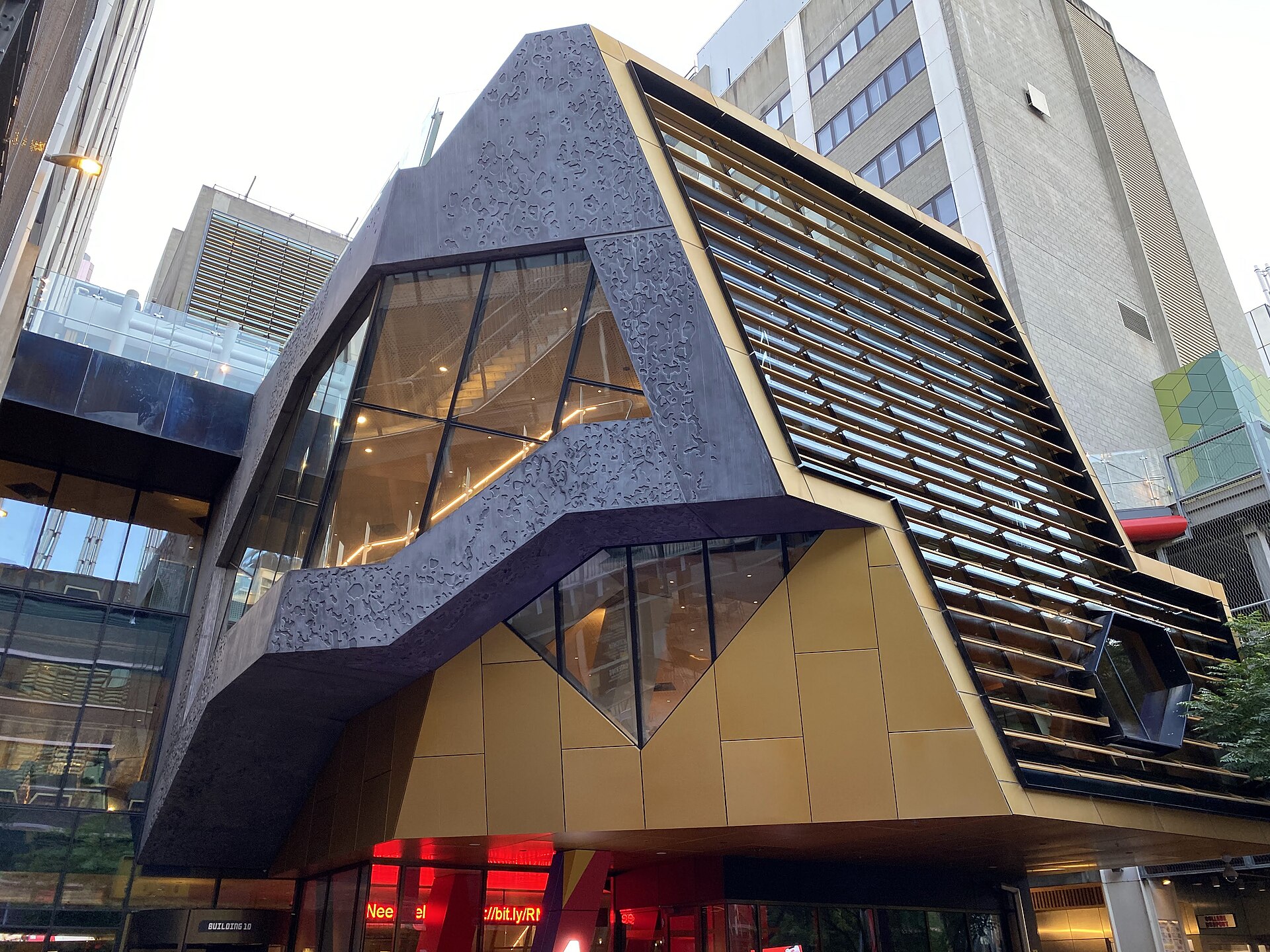
Nearly a decade after the Grenfell Tower fire in London forced governments around the world to confront the danger lurking on the outside of their apartment blocks, researchers at Melbourne’s RMIT University say they have found a smarter way to work out which buildings actually need fixing. According to reporting in The Australian, an artificial intelligence framework developed at the university has helped save an estimated $350 million in cladding rectification costs while assessing fire risk across roughly 63,000 apartments in Victoria.
The claim lands in the middle of one of the most expensive and politically fraught public safety exercises Victoria has undertaken. Combustible cladding, the aluminium composite and rendered polystyrene panels that spread flames up the Lacrosse tower in Docklands in 2014 and later contributed to the deaths of 72 people at Grenfell in 2017, has been found on thousands of buildings across the state. Sorting the genuinely dangerous from the merely non-compliant has been slow, costly and reliant on scarce engineering expertise.
What the framework does
At its core, the RMIT work tackles a triage problem. Not every building wrapped in combustible material carries the same level of risk. A low-rise block with a small amount of cladding away from escape routes is a very different proposition to a high-rise tower with panels running the full height of a stairwell. Assessing each one by hand, building by building, is labour intensive and introduces inconsistency, because two engineers can reach different conclusions about the same facade.
The AI framework is designed to bring consistency and speed to that judgement. By learning from large volumes of building data, including cladding type, coverage, building height, occupancy and proximity of panels to fire escape paths, the system can rank buildings by risk and direct limited rectification funding to the properties that need it most. The reported outcome, a $350 million saving, comes largely from avoiding unnecessary or over-engineered works on buildings where the real-world fire risk turns out to be manageable, while concentrating resources on the genuinely hazardous ones.
For a program of this scale, that distinction matters enormously. Cladding Safety Victoria, the government body set up to oversee the state’s rectification effort, has been working through a portfolio of buildings funded in part by a levy on building permits. Every dollar not spent stripping safe-enough cladding off one tower is a dollar available to make a dangerous one safe.
Two ways to read the result
Supporters of the approach will see it as exactly the kind of practical, data-driven public good that university research is meant to deliver. Engineering judgement remains in short supply, costs have ballooned since the crisis began, and a tool that helps authorities prioritise rationally rather than react politically is a tangible win. If the framework genuinely preserved safety outcomes while trimming hundreds of millions in spending, it is a strong argument for embedding more analytics into building regulation.
There is a more cautious reading, too, and it deserves airing. Fire safety is a domain where the cost of a false negative is not measured in dollars but in lives. Any model that recommends a building be rated lower risk, and therefore skipped or deprioritised for works, inherits a heavy burden of proof. Questions about how the system was validated, who signs off on its recommendations, how it handles unusual buildings that sit outside its training data, and whether a qualified engineer remains accountable for the final call are not academic. They are the difference between a useful decision-support tool and a liability. The responsible framing, and the one RMIT itself would almost certainly insist on, is that AI informs human experts rather than replacing them.
The Australian stakes
The cladding problem is not a Victorian curiosity. New South Wales, Queensland and other states have run their own identification and rectification programs, and the combined national remediation bill has been estimated in the billions. Insurers have sharpened their scrutiny of apartment towers, strata owners have been hit with special levies, and some buildings have struggled to secure professional indemnity cover for the very engineers asked to assess them. Anything that reduces the cost and increases the consistency of risk assessment has obvious appeal well beyond Melbourne.
It also fits a broader pattern that FluentSea readers will recognise. Australian universities and research agencies are increasingly positioning applied AI as a sovereign strength, solving concrete local problems rather than chasing frontier model headlines. A framework that helps a state government spend public money more precisely is a world away from a chatbot, but it is arguably a better advertisement for the technology’s value. It is the sort of unglamorous, high-stakes optimisation where machine learning tends to earn its keep.
There is a cautionary thread here as well. As governments lean on algorithms to make consequential calls about safety, the robodebt experience looms as a permanent reminder of what happens when automated decision-making runs ahead of transparency and accountability. The lesson is not to avoid the tools but to build in auditability, human oversight and clear lines of responsibility from the start. Applied to cladding, that means being able to explain, for any given building, why the system rated it the way it did, and ensuring a licensed professional owns the outcome.
What’s next
The immediate questions are practical. Will Cladding Safety Victoria and the Victorian Building Authority formally adopt the framework as part of their assessment pipeline, and will the methodology be published and independently reviewed so that engineers, insurers and building owners can interrogate it? If the $350 million figure holds up to scrutiny, expect interest from regulators in other states watching their own rectification budgets strain.
Longer term, the same approach could extend beyond cladding to other building-safety backlogs, from flammable insulation to structural defects in the wave of apartments built during Australia’s construction boom. For now, the headline is a reminder that some of the most consequential AI in the country is not generating images or writing emails. It is quietly deciding where a finite pot of safety money should go, across tens of thousands of homes where the stakes could hardly be higher.
Sources: The Australian.


