



















































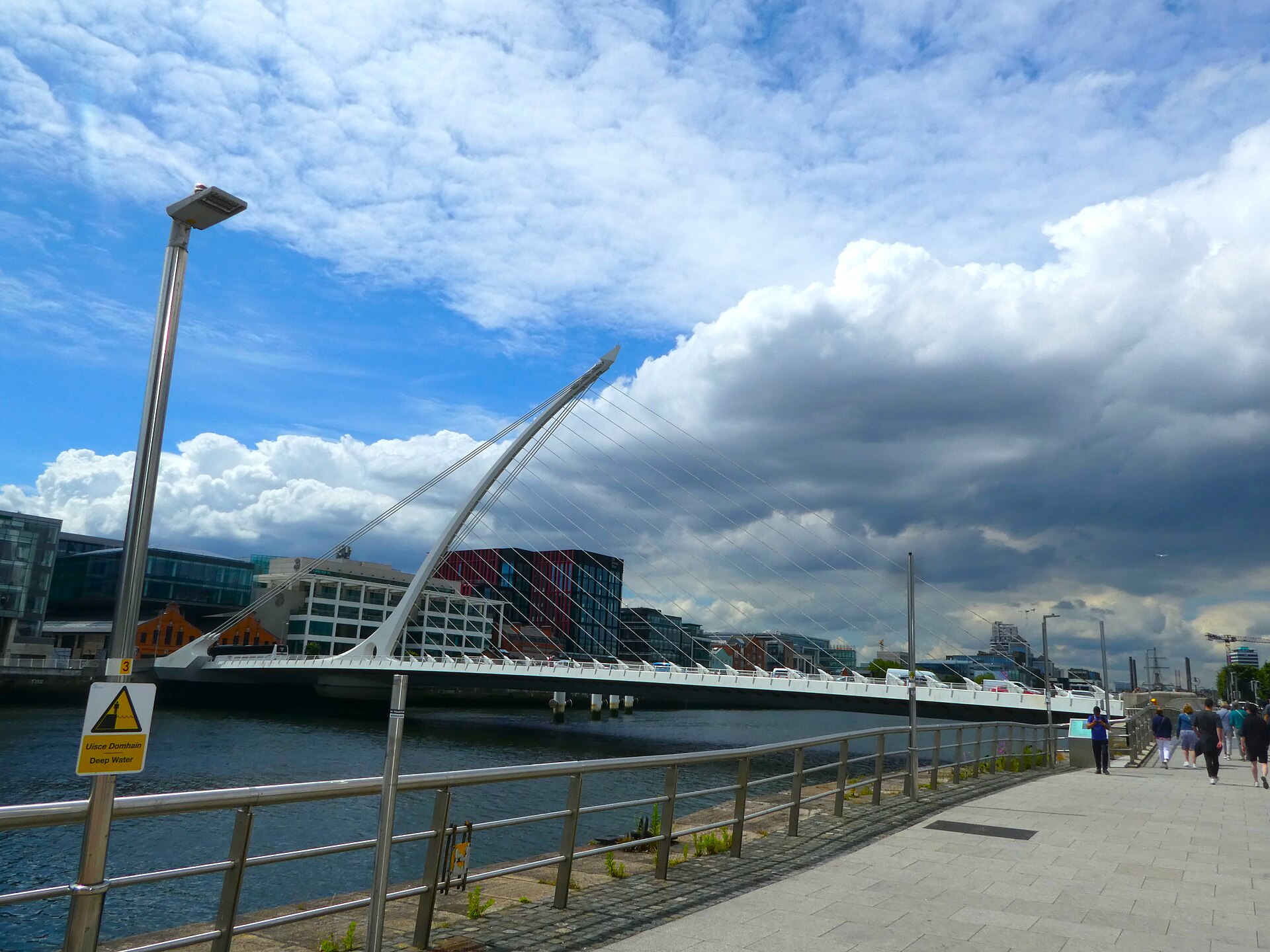
The physical cost of artificial intelligence is no longer an abstraction debated at conferences. It is being argued in a courtroom in Dublin, where Ireland’s extraordinary run as Europe’s data centre capital has collided with the simple reality that there is only so much electricity to go around.
According to Yahoo Finance Australia, the boom in AI-focused data centre construction across Ireland is now facing a legal challenge centred on the sheer scale of power these facilities draw from an already stretched national grid. It is a dispute that has been building for years, and one that carries an uncomfortable relevance for Australia as it chases its own slice of the global compute economy.
How Ireland became the test case
Ireland spent two decades turning itself into the preferred European home for the world’s biggest technology companies. Low corporate tax, an English-speaking workforce, membership of the European Union and a cool, stable climate made it an obvious landing pad. The hyperscalers followed, and with them came the data centres that keep their services running.
The problem is that these facilities are voracious consumers of electricity. Ireland’s grid operator, EirGrid, has for several years warned that data centres account for a remarkable share of national demand, now sitting at roughly a fifth of all electricity used in the country. That figure is extraordinary by international standards, and it is climbing as generative AI workloads, which run far hotter and denser than conventional cloud computing, push power requirements higher again.
The strain has already forced hard decisions. Grid connection applications for new data centres in the greater Dublin area were effectively paused, and the Commission for Regulation of Utilities introduced rules requiring new facilities to bring their own generation or storage to the table rather than simply drawing from the public network. The latest legal action escalates that tension from the regulatory arena into the judicial one, testing whether the pace of approvals can be reconciled with Ireland’s climate commitments and the physical limits of its infrastructure.
Two sides of a genuine dilemma
The case exposes a split that runs through every advanced economy weighing AI investment. On one side sit the operators and their supporters, who argue that data centres are the foundation of a modern digital economy. They point to the jobs created during construction, the foreign investment, the tax receipts and the broader argument that a country without sovereign compute capacity surrenders its digital future to others. Deny the data centres, this camp contends, and the capital simply moves to a more welcoming jurisdiction, taking the economic benefit with it.
On the other side are environmental campaigners, grid engineers and a growing number of ordinary residents who question why so much scarce, often fossil-backed electricity should be funnelled into facilities that employ relatively few people once operational. Their concern is not abstract. Every megawatt committed to a data centre is a megawatt unavailable for homes, electric vehicles, heat pumps and the electrification that decarbonisation demands. When a grid is finite, data centres and the energy transition are competing for the same wires.
Caught in the middle is a government that wants both the investment and the climate credibility, and is discovering that it may not be able to have both at once without serious new generation coming online first. That is the knot the courts are now being asked to help untangle.
Why this matters for Australia
It would be comfortable to file Ireland’s predicament under distant European news, but the parallels with Australia are close enough to be instructive. Australia has made no secret of its ambition to build sovereign AI capability, with data centre developers announcing multi-billion-dollar projects and governments at both state and federal level courting the investment. The appetite is real, and so is the power problem.
Australia’s National Electricity Market is in the middle of its own difficult transition, closing coal-fired generators while trying to firm up renewables with storage and transmission that is running behind schedule. Layering a wave of energy-intensive AI facilities on top of that transition raises precisely the question Ireland is now litigating: who gets the electrons, and who decides? The Reserve Bank has already flagged AI’s productivity promise, but productivity assumes the infrastructure underneath it actually works.
There are uniquely Australian wrinkles too. The country’s renewable resources are abundant but concentrated in regions far from the coastal cities where data centres cluster for connectivity. Water, used heavily for cooling, is a sensitivity in a dry continent that Ireland, with its temperate rainfall, barely has to consider. And the debate over nuclear power, which some see as a firm, low-emissions answer to AI’s baseload hunger, remains politically fraught in a way it is not across much of Europe.
The upside is that Australia has the luxury of watching Ireland hit the wall first. The regulatory tools Ireland reached for, requiring new facilities to bring their own generation, prioritising projects that add rather than subtract from grid stability, and insisting on transparency about actual consumption, are all options Australian regulators can study before the pressure becomes acute. Getting the framework right early is far cheaper than retrofitting it during a court battle.
What happens next
The immediate outcome rests with the Irish courts, and a ruling that constrains new approvals would ripple well beyond Ireland’s borders. Hyperscalers plan their European capacity years ahead, and any signal that Ireland’s open door is closing would send planners scanning the map for alternatives, from the Nordics to southern Europe. For Australian developers pitching this country as a stable, well-governed destination for AI infrastructure, that reshuffling could present an opportunity, provided the grid can actually deliver.
The deeper lesson is that the AI era is as much an energy story as a technology one. The models grabbing headlines are only as capable as the power stations, transmission lines and cooling systems quietly feeding them. Ireland has run that equation to its limit sooner than most, and its courtroom reckoning is a preview of debates Australia will be having, in its own accent and against its own constraints, before the decade is out.
Sources: Yahoo Finance Australia.



Comments 2