



















































For most of the past decade the direction of travel in corporate technology seemed settled. Workloads moved to the big public clouds, data centres were quietly decommissioned, and the question for chief information officers was how fast they could get out of the business of owning hardware. Artificial intelligence is now scrambling that logic, and a quiet infrastructure decision by an Australian operator shows why.
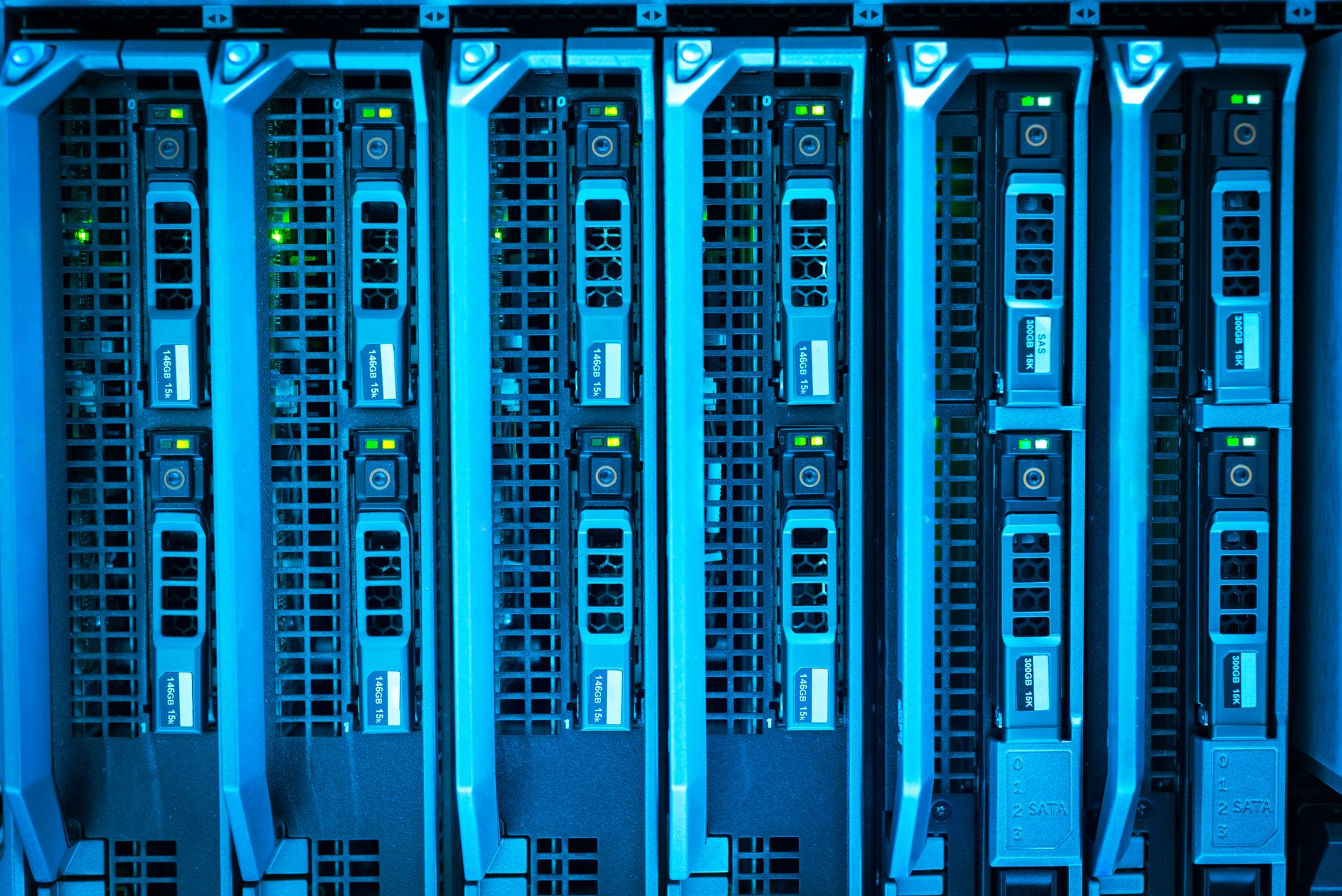
According to CRN Australia, CMTG has boosted the capacity of its private cloud environment and refreshed the underlying Lenovo infrastructure, with an explicit eye on the AI workloads it expects to run in the coming years. Rather than shift those workloads wholesale into a hyperscale public cloud, the organisation has chosen to build out the kit it controls directly, adding compute and storage headroom so that future AI projects have somewhere to live without a disruptive re-platforming exercise later.
Why private cloud is back in the conversation
The decision reads as unremarkable on the surface, but it lands in the middle of one of the more interesting debates in enterprise IT. For years the assumption was that private infrastructure was a legacy problem to be managed down. What has changed is the economics and the sensitivity of AI. Training and running models chews through compute in a way ordinary business applications never did, and the bills that arrive when those workloads sit in a metered public cloud can be eye-watering. Running them on hardware you own, where the marginal cost of an extra hour of processing is effectively zero once the box is paid for, starts to look attractive again.
There is also the matter of data. AI systems are only as useful as the information fed into them, and the most valuable information is usually the most sensitive: customer records, financial data, operational telemetry and intellectual property. Keeping that data inside a private cloud, on infrastructure whose physical location and access controls are known and documented, answers a lot of questions that a general-purpose public cloud contract does not. For a business weighing where to run AI, that control can matter as much as the raw cost.
Lenovo, for its part, has been positioning its server and storage lines as the natural home for exactly this kind of build-out. The company has leaned heavily into the idea that AI will not live solely in the hyperscale clouds but will be distributed across private data centres, colocation facilities and the edge, and it has pitched its infrastructure as the hardware layer for organisations that want to own their AI stack rather than rent it. CMTG’s expansion is a concrete example of that thesis playing out with a paying customer.
Two ways to read the move
From the vendor and channel perspective, this is validation. Every refresh cycle that ends with a customer buying more on-premises or private cloud capacity is evidence that the predicted swing back toward owned infrastructure is real, and it gives resellers and integrators a renewed reason to sell hardware, design and managed services rather than simply broker public cloud subscriptions. The AI narrative has handed the traditional infrastructure channel a growth story it had been missing.
The more cautious reading comes from analysts who have watched waves of repatriation promise more than they deliver. Buying capacity ahead of demand is a bet, and a bet with a shelf life. GPUs and AI accelerators move quickly, and hardware bought today to be AI-ready can look dated within a couple of refresh cycles if the workloads do not materialise as planned. The risk for any organisation making this kind of call is that it over-provisions for an AI future that arrives more slowly, or in a different shape, than the business case assumed. The discipline, in that view, is to size the expansion to workloads you can actually name rather than to a general sense that AI is coming.
Both readings can be true at once. CMTG’s expansion is a sensible hedge if the organisation has a clear pipeline of AI use cases, and a speculative one if it does not. The detail that matters, and that any board should be probing, is which of those two situations the investment is based on.
What it means for Australia
For Australian businesses the story is a useful signal. The country sits a long way from the largest concentrations of hyperscale AI compute, and the combination of data sovereignty rules, privacy obligations and the simple physics of latency has always given local firms a reason to think carefully about where their workloads run. The federal government‘s push on sovereign capability, and the steady tightening of expectations around how Australians’ data is handled, only sharpens that calculus. A private cloud sitting on home soil, with a clear line of sight to where data lives, is an easier thing to defend to a regulator or a nervous customer than an arrangement whose geography is abstract.
There is an energy and property dimension too. Australia’s data centre market has been running hot, with power availability and grid connection emerging as real constraints on how quickly new AI-capable capacity can be stood up. Every organisation that chooses to expand its own footprint adds to demand for power, cooling and floor space that the sector is already scrambling to supply. The CMTG decision is a small instance of a pressure that, multiplied across the economy, is reshaping where and how Australia builds its digital plumbing.
It also speaks to the local technology channel. Australia’s reseller and integrator community has spent years adjusting to a world where the margin moved to the hyperscalers. A renewed appetite for private cloud and on-premises AI infrastructure, if it holds, hands that community a more durable role as the people who design, build and run the environments businesses cannot or will not outsource. For a sector that employs a great many Australians, that shift is worth watching.
What’s next
The near-term question is whether CMTG’s expanded capacity gets filled with genuine AI workloads or sits as expensive insurance. The broader question is whether this is an isolated move or an early example of a pattern that plays out across Australian enterprises over the next couple of years. If the economics of running AI in the public cloud stay punishing, and if data residency pressures keep building, expect more organisations to make the same call, and expect vendors like Lenovo to keep sharpening a pitch aimed squarely at businesses that have decided owning the stack beats renting it.
Sources: CRN Australia.


