
















































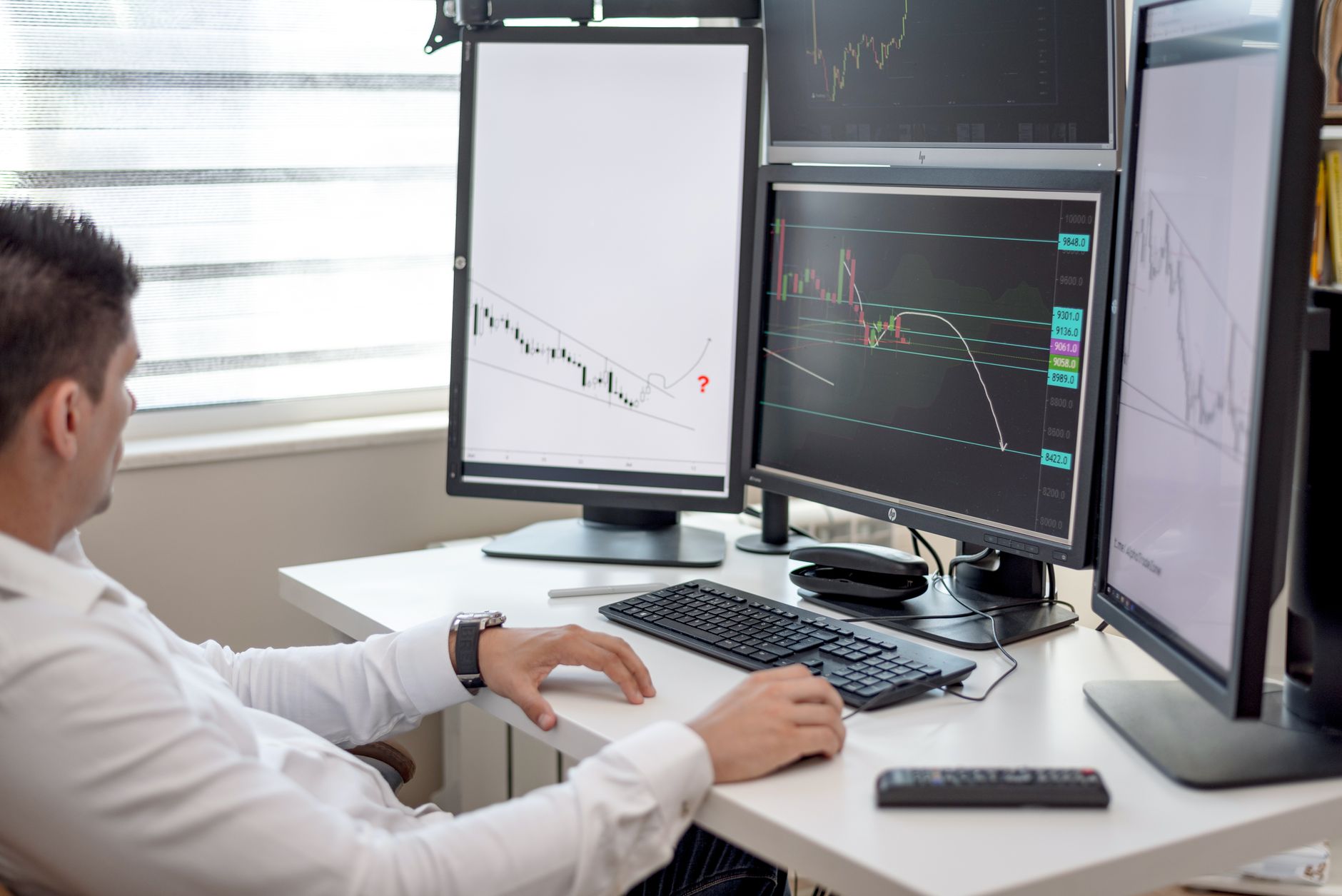
For the best part of three years, the clearest way to get rich on global sharemarkets has been to bet on artificial intelligence, and the clearest proxy for that bet has been Nvidia. So when the chipmaker fell roughly 8% in a single session and dragged the rest of the AI complex down with it, the losses did not stop at the share price. They landed squarely on the people most exposed to the boom.
According to Forbes Australia, the slump stripped close to US$380 billion from the combined net worth of the world’s billionaires in the space of a day, with the heaviest damage concentrated among the handful of founders and investors whose wealth is tied most directly to the AI trade. Tesla and xAI founder Elon Musk, Nvidia chief executive Jensen Huang and Oracle co-founder Larry Ellison were among the biggest individual losers as the valuations that had made them vastly richer through 2024 and 2025 went into reverse.
What actually happened
The mechanics of a day like this are less dramatic than the headline figure suggests. Nvidia has become the single most valuable company on the planet precisely because investors have treated it as a one-stop bet on AI demand, so even a modest wobble in sentiment moves an enormous amount of paper wealth. An 8% fall in a company of Nvidia’s size translates into hundreds of billions of dollars of market capitalisation on its own, and because the same investors tend to hold the other big AI names, the selling rarely stays in one stock.
That is why the pain spread so quickly to the fortunes of men like Huang, whose stake in Nvidia rises and falls with the shares, and Ellison, whose Oracle holding has been revalued sharply higher on the back of the company’s cloud and AI infrastructure push. Musk’s exposure is more diffuse, running through Tesla’s AI ambitions and his privately held xAI, but the market treats all of it as part of the same story. When confidence in that story cracks, it cracks everywhere at once.
The deeper question investors are now wrestling with is whether this is a healthy pause after an extraordinary run, or the early signs of something more serious. AI stocks have climbed so far, so fast, that even bullish analysts have been warning that the valuations leave little room for disappointment. A single cautious comment about spending, a soft data point on demand, or simply a decision by large funds to take profits can be enough to trigger the kind of broad rotation seen here.
Two ways to read the fall
There are two competing interpretations doing the rounds, and both have serious backers. The optimists argue that nothing has fundamentally changed. Demand for AI chips and data centre capacity remains enormous, the major technology companies are still committing record sums to build it out, and a pullback of this size is both normal and overdue after gains that have repeatedly been described as a once-in-a-generation boom. On this reading, the selloff is a buying opportunity rather than a warning.
The sceptics are less relaxed. They point out that the entire rally has been carried by a very small number of companies, that much of the forecast AI revenue is still a promise rather than a profit, and that circular arrangements, where the big players invest in each other and in their own customers, have inflated the sense of unstoppable momentum. If the market starts to doubt that the spending will ever pay for itself, they warn, a correction in a stock as widely held as Nvidia could feed on itself. The truth, as usual, probably sits somewhere between the two camps, which is why a day like this produces so much anxiety rather than a clear verdict.
Why this matters in Australia
It would be comforting to think of this as an American problem involving American billionaires, but Australian investors are more exposed than many realise. The local market does not have an Nvidia of its own, yet the AI trade still reaches Australian portfolios through several channels, and the most important of them is superannuation. Large industry and retail funds hold significant positions in global equities, and in recent years those global allocations have been dominated by exactly the US technology giants now in the firing line. When Nvidia and its peers fall, the international portion of millions of Australian super balances falls with them, even if the member never knowingly bought a single AI stock.
The Australian Securities Exchange is not insulated either. Local technology names, data centre operators and the growing cohort of AI-linked small caps tend to take their cue from the Nasdaq, so a heavy night on Wall Street usually means a soft open in Sydney. The ASX has already shown how tightly it tracks this sentiment, rallying hard when Nvidia surges and sliding when the AI story stumbles. For a market that has leaned heavily on resources and banks for its heft, the arrival of AI as a swing factor is a relatively new source of volatility that local investors are still learning to price.
There is a broader policy dimension too. Australia is in the middle of a national conversation about building sovereign data centre capacity and attracting AI investment, with projects in regional areas and major commitments from global cloud providers all premised on the assumption that AI demand keeps climbing. A sustained loss of confidence in the economics of AI would not stop that build-out overnight, but it would change the financing conversation, raise the cost of capital for speculative projects, and test whether the enthusiasm of the past two years can survive a genuine downturn.
What happens next
In the immediate term, attention turns to how the big AI companies justify their spending when they next front investors, and whether the buyers who have reliably stepped in on every previous dip do so again. A quick rebound would reinforce the view that this was a healthy shakeout, while a series of heavy sessions would embolden those calling the top. For the billionaires at the centre of the story, a single day’s paper loss of this magnitude is uncomfortable but recoverable, and much of it could be clawed back as fast as it disappeared.
For ordinary Australians, the sensible response is the unglamorous one. Super is a decades-long investment, and single-day swings, however large the dollar figures attached to them, are noise against that horizon. The more useful takeaway is simply how concentrated the global market has become around a single idea, and how much of everyone’s financial future now rides, quietly, on whether that idea delivers.
Sources: Forbes Australia.


