









































For more than a century, Australia’s prosperity has rested on what it can ship out: wool, wheat, iron ore, coal, gas and, more recently, education and tourism. Now a provocative idea is circulating among economists, investors and technology executives, and it reframes the country’s economic future in unfamiliar terms. The suggestion is that the next great Australian export may not be a commodity pulled from the earth at all, but artificial intelligence computing power, generated inside data centres and sold to a world that cannot build capacity fast enough.
That is the thesis put forward in a recent piece in The Australian, which argues that the global scramble for computing capacity hands Australia an opening it would be foolish to waste. The logic is straightforward. Training and running large AI models consumes staggering amounts of electricity, requires vast tracts of land, and depends on political and regulatory stability that investors can count on for decades. Australia, the argument goes, has all three in abundance at a moment when much of the developed world does not.
Why the pitch is landing now
The timing is not accidental. The world’s hyperscale cloud providers and AI developers are racing to secure power and real estate, and the bottleneck is increasingly energy rather than chips. In parts of Europe, Ireland and the United States, grid operators have begun warning that new data centres cannot be connected without threatening supply for households. Against that backdrop, a continent with enormous solar and wind potential, sparse population across much of its interior, and a track record of honouring contracts starts to look like prime real estate for the computing age.
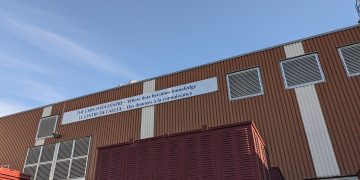
Australia is already seeing the early shape of that story. The country has attracted a growing pipeline of data centre commitments, with investment plans running well into the tens of billions of dollars and major developments tied to renewable generation. Governments at both state and federal level have begun talking seriously about sovereign AI capability, the idea that the nation needs to own and control at least some of the computing infrastructure underpinning its economy rather than renting it all from offshore. The export framing takes that further still, casting surplus capacity not just as a domestic necessity but as a product the world will pay a premium for.
A compelling story, but not a done deal
Enthusiasts see a natural fit. The same regions that once hosted mining and agriculture could, in theory, host enormous computing campuses powered by the sun and wind that fall freely across the continent. That would create construction jobs, high-value engineering roles and a recurring revenue stream far less exposed to the boom-and-bust swings of commodity prices. Supporters also point to Australia’s geography and legal system as selling points: a stable democracy in the Asia-Pacific, close to the fast-growing economies of South-East Asia, with data protection rules that Western companies find reassuring.
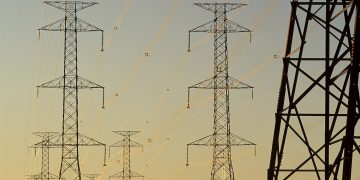
Sceptics are less convinced that the vision survives contact with reality. The central problem is energy. Data centres are ravenous consumers of power, and Australia’s grid is already under strain as it manages the retirement of coal and the uneven rollout of renewables and storage. Critics question whether a country still arguing over the pace of its own energy transition can responsibly bolt on gigawatts of new demand purely to serve offshore customers. There is also the water question, since many cooling systems draw heavily on it, and the harder matter of whether exporting raw computing capacity actually builds lasting sovereign capability or simply turns Australia into a landlord for foreign technology giants while the real value accrues elsewhere.
Then there is the labour and skills gap. Designing, building and operating hyperscale facilities requires specialist expertise that Australia does not have in great supply, and the sector will compete for talent with every other advanced economy chasing the same goal. Without a deliberate effort to train engineers and technicians locally, the risk is that the high-value work is done by imported teams while Australia supplies the land and the power bill.
What it would mean for Australia
For a country whose budget still leans heavily on iron ore and gas royalties, the appeal of a new export category is obvious. Treasury forecasters have long warned about the fragility of an economy tethered to a handful of commodities sold largely to one customer, China. A thriving AI computing industry would, at least in principle, diversify that base, deepen the technology sector and keep more of the value chain onshore. It also dovetails with the national conversation about sovereignty in critical technology, a theme that has grown louder as governments weigh how much of their digital infrastructure sits beyond their control.
But the Australian stakes cut both ways. If the country rushes to position itself as the world’s computing warehouse without first sorting out energy, water and skills, it risks importing the very grid pressures that are turning other nations against data centres, and doing so to benefit customers overseas. The policy challenge is to capture the upside, the jobs, the investment and the strategic capability, without simply exporting cheap power and scarce water dressed up as high technology. That calculation will fall to regulators, energy market operators and the companies deciding where to place their next multbillion-dollar bets.
What’s next
The immediate test will be whether the current pipeline of announced projects actually gets built, and on what terms. Watch for how new facilities are connected to the grid, whether they bring their own dedicated renewable generation rather than drawing on existing supply, and whether governments attach local content and training conditions to approvals. Watch, too, for whether the sovereign AI rhetoric translates into public investment or stays at the level of speeches. The vision of AI computing as a flagship Australian export is genuinely plausible, but it is still a proposition rather than a plan. Turning it into an industry will depend less on the quality of the pitch and more on whether the hard infrastructure, and the political will to build it responsibly, actually shows up.
Sources: The Australian.