



















































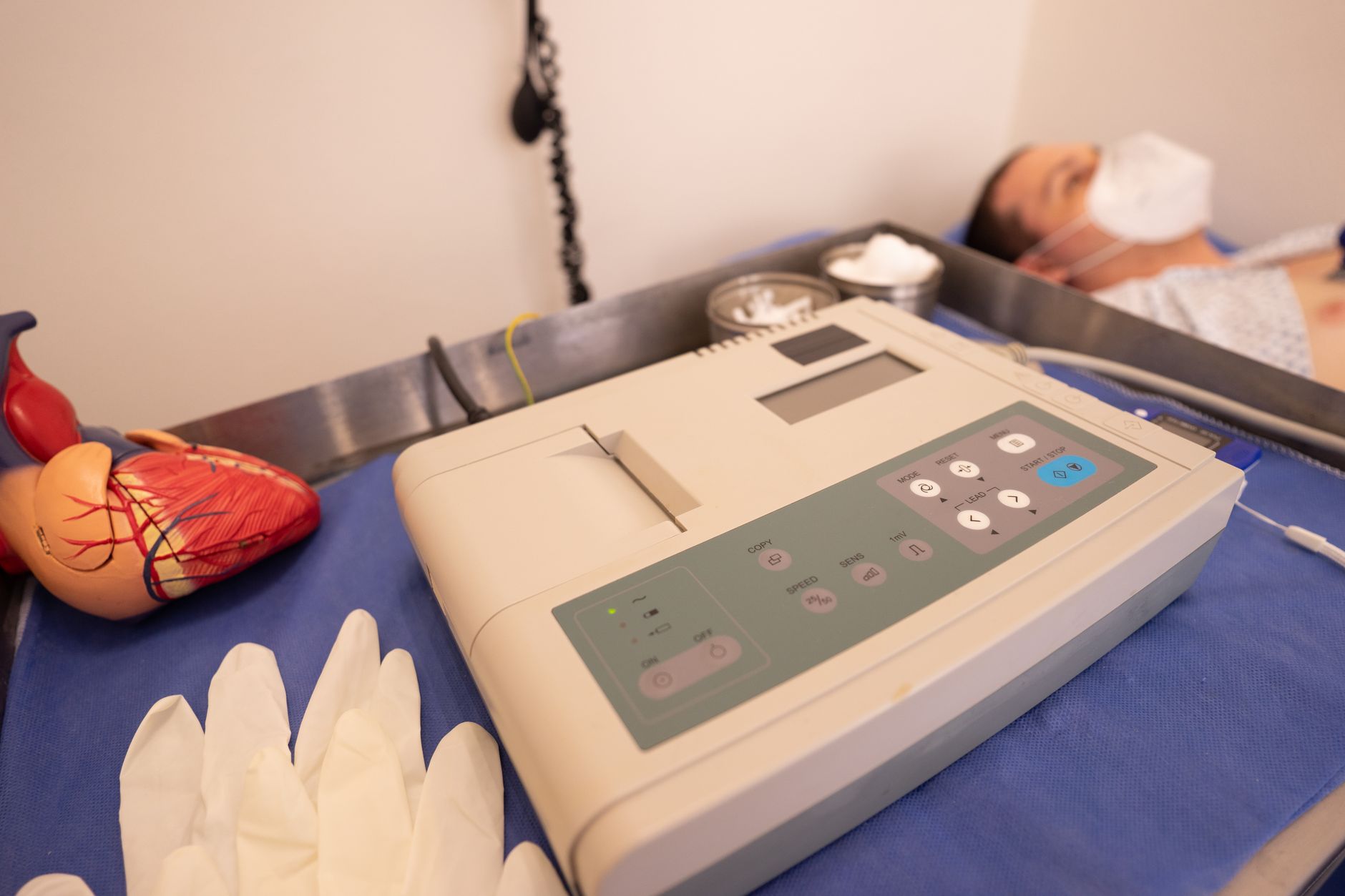
Shares in Echo IQ, the Australian medical technology company building artificial intelligence for cardiac diagnostics, moved higher this week as investors kept their attention trained on the commercial progress of its flagship software. The lift, flagged in market commentary from Kalkine, is modest in dollar terms but keeps a small-cap health name in a sector that has otherwise been dominated by data centres, large language models and enterprise software.
Echo IQ, which trades on the ASX under the ticker EIQ, has spent the past few years positioning itself at the intersection of two trends that rarely meet on the local bourse: clinical cardiology and machine learning. The company’s technology is designed to read echocardiograms, the ultrasound scans cardiologists use to assess how the heart is pumping, and to flag patients who may be developing serious structural heart disease. The pitch is that AI can surface conditions such as severe aortic stenosis earlier and more consistently than a stretched human workforce reading scans one at a time.
What the market is actually watching
For a company of Echo IQ’s size, a share price that advances on a quiet news day says more about sentiment than about any single announcement. Investors in pre-revenue or early-revenue medtech are effectively buying a thesis, and the thesis here rests on a few load-bearing pillars: regulatory clearance in the lucrative United States market, the pace at which hospitals and cardiology networks actually adopt the software, and whether the company can turn clinical validation into recurring, scalable revenue rather than one-off pilots.
That is why the stock tends to trade on milestones rather than on broad market moves. Clearance from the US Food and Drug Administration, partnerships with health systems, peer-reviewed validation of the algorithms and the signing of commercial contracts all tend to matter far more to EIQ holders than the direction of the ASX 200 on any given morning. When the news flow goes quiet, as it has this week, the price can still drift up on the expectation that the next catalyst is coming, which is precisely the dynamic playing out now.
Two ways to read the move
The bullish case is straightforward. Cardiovascular disease remains one of the largest causes of death in the developed world, echocardiography is performed in enormous volumes, and the shortage of specialist clinicians to interpret those scans is structural rather than cyclical. If Echo IQ’s software can reliably triage which patients need urgent attention, it slots into an existing clinical workflow rather than asking hospitals to invent a new one. Supporters argue that a locally built company with US regulatory standing and a clear clinical use case is exactly the kind of exporter Australia says it wants, and that patient sentiment will eventually be rewarded as contracts land.
The sceptical case is just as coherent. Small-cap medtech is littered with companies that cleared a regulator, published strong data and then struggled for years to convert clinical interest into paying customers. Hospital procurement is slow, reimbursement pathways are complicated, and AI diagnostic tools face the additional hurdle of clinician trust: a cardiologist has to be willing to act on, or at least not ignore, what the software flags. A share price that rises without a fresh contract or revenue figure attached can retrace just as quickly, and thinly traded names can be volatile in both directions. For cautious investors, the question is not whether the technology works but whether the business model compounds.
The Australian stakes
Echo IQ sits inside a broader story that Australia keeps telling itself about commercialising home-grown research. The country produces world-class clinical and biomedical science, yet the path from laboratory to a profitable, listed company that keeps its intellectual property onshore is notoriously hard. A medtech that can show AI software moving from Australian development to US clearance to actual hospital deployment becomes a useful case study for policymakers who talk about sovereign capability and high-value exports, and for a startup ecosystem that has watched much of its best healthcare IP get acquired and relocated offshore.
There is also a domestic health dimension. Australia’s own public system is wrestling with specialist shortages, long diagnostic queues and the uneven distribution of cardiology expertise between the cities and the regions. Tools that help triage who needs a cardiologist first, rather than replacing the clinician, speak directly to that pressure. Whether local health networks move as quickly as a company like Echo IQ would like is a separate question, given that the commercial centre of gravity for cardiac AI, and for reimbursement, currently sits in the United States. For now, the ASX listing gives Australian investors direct exposure to a globally oriented health-AI story, which is still relatively rare on the local market.
What happens next
The near-term tells will be concrete. Market watchers will be looking for evidence of commercial traction: signed agreements with hospital groups or cardiology providers, early revenue, and any expansion of the conditions the software is cleared to screen for. Regulatory and reimbursement progress in the US will shape how big the addressable market really is, while any fresh clinical validation will feed the confidence that underpins adoption. For a stock that trades on catalysts, the absence of bad news is not the same as good news, and the coming updates will test whether this week’s advance reflects genuine momentum or simply a quiet market filling the gap with optimism.
The wider lesson for Australian investors is that health-AI is maturing into a distinct corner of the market, separate from the infrastructure and model-building names that have soaked up most of the attention. Echo IQ is one of the clearer local proxies for the idea that artificial intelligence will reshape diagnostics, not by replacing doctors, but by deciding which patients they see first. How that thesis converts into revenue is the story that will matter over the next few reporting periods.
Sources: Kalkine via GNews.


