



















































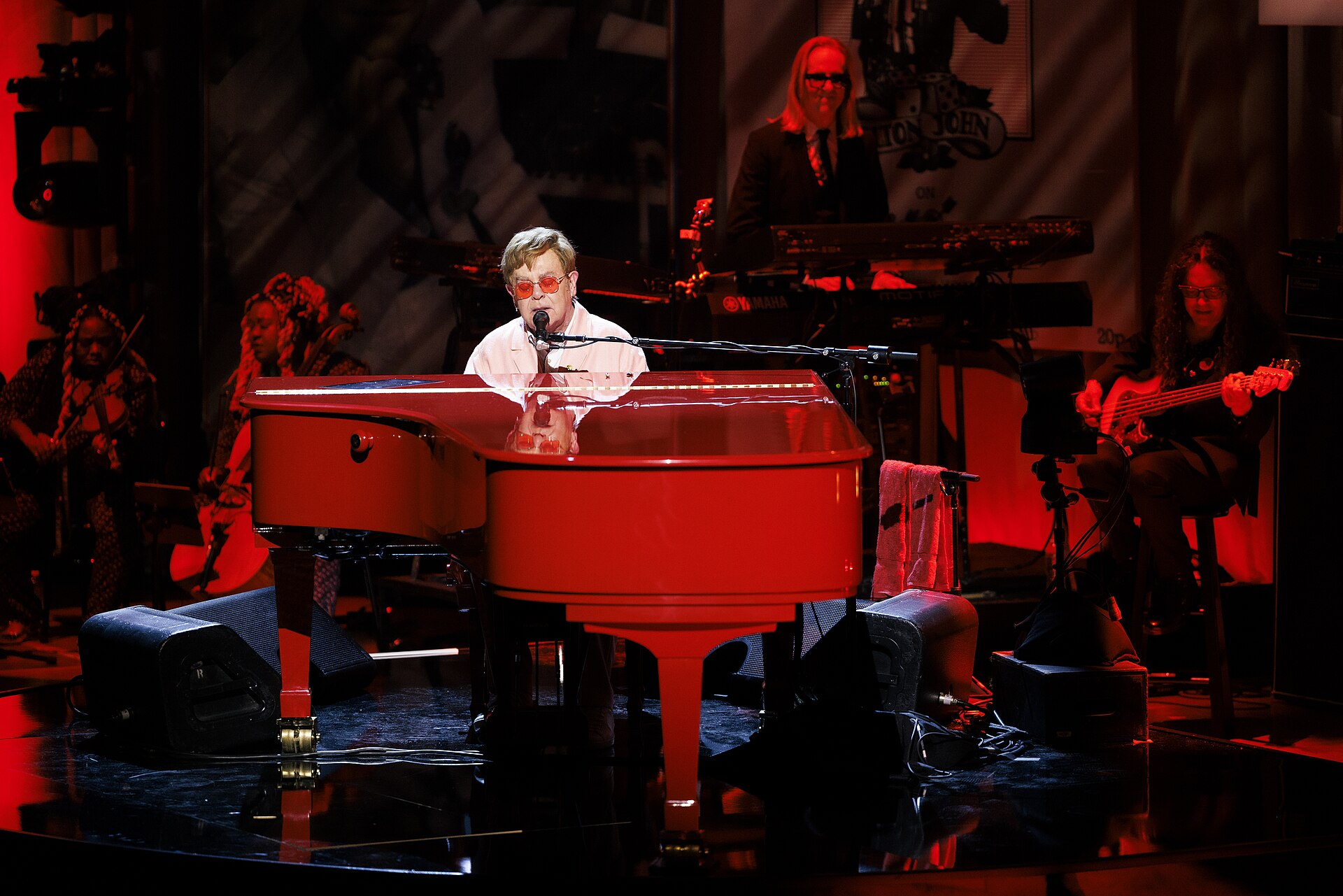
When one of the most recognisable voices in popular music turns up unannounced to speak about artificial intelligence, the industry listens. That is roughly what happened at this year’s ARIA Awards, where Sir Elton John made a surprise appearance to throw his weight behind Australian musicians who are increasingly anxious about what generative AI means for their livelihoods. For a local music sector that has spent much of the past year arguing with policymakers about copyright, consent and fair pay, the cameo landed as both a morale boost and a signal that the fight has gone global.
The context matters. Over the past eighteen months, the music business worldwide has watched generative models learn to mimic voices, compose convincing instrumental backing and spit out tracks in seconds that sound uncannily like the real thing. Those systems are trained on enormous libraries of existing recordings, and much of that training has happened without the knowledge, permission or payment of the artists whose work was fed in. For songwriters and performers who already operate on thin margins, the prospect of machines trained on their catalogues then competing with them for streams and sync deals is not an abstract worry. It is a question about whether a career in music remains viable at all.
A global name on a local stage
Elton John is not a bystander in this debate. He has been one of the most vocal international artists pushing back against governments that want to loosen copyright rules to make life easier for AI developers, and he has been especially scathing about proposals in his native United Kingdom that would let tech companies mine creative works unless rights holders actively opt out. By carrying that message to an Australian audience, he effectively linked the local campaign to a much larger international movement, one that already counts thousands of musicians, authors and visual artists among its signatories. According to The Guardian, his intervention was explicitly framed as solidarity with homegrown talent, a reminder that the structural pressures facing Australian artists are the same ones being fought over in London, Los Angeles and Brussels.
The timing is pointed. The ARIA Awards are the local industry’s biggest night, a showcase of exactly the kind of human creativity that generative systems are now being trained to imitate. Using that platform to talk about AI, rather than simply to celebrate the year’s hits, underlines how quickly the conversation has shifted. A few years ago the technology was a curiosity. Now it is a front-of-mind commercial threat that artists feel compelled to address even in their moment of recognition.
Two ways of seeing it
There is more than one view here, and it would be dishonest to pretend otherwise. On one side sit the artists and their representative bodies, who argue the principle is simple: if a company wants to use someone’s work to build a product, it should ask first and pay fairly. They see opt-out regimes, where material is scraped by default unless a creator formally objects, as unworkable for all but the biggest names, since most musicians lack the legal resources to police how their catalogues are used across hundreds of AI developers.
On the other side are the technology companies and some economists who argue that overly strict rules will simply push AI development offshore, leaving Australia as a consumer of foreign models rather than a builder of its own. They contend that broad access to training data is what makes these systems useful, and that licensing every individual work would be so cumbersome it would strangle innovation before it starts. There is also a middle camp, including parts of the industry itself, that accepts AI is here to stay and would rather negotiate licensing frameworks and revenue-sharing deals than fight an unwinnable war against the technology altogether. The disagreement is less about whether AI will touch music, and more about who controls the terms.
Why this matters for Australia
For Australia specifically, the stakes are sharpened by the policy debate already under way in Canberra. The federal government has been weighing how to treat text and data mining under copyright law, and the creative sector has mounted a sustained campaign against any carve-out that would let AI firms train on Australian works without consent. Musicians have been particularly active, pushing for a permit-style scheme that would require licences and payment rather than blanket exemptions. A high-profile endorsement from an artist of Elton John’s standing gives that campaign a louder voice at precisely the moment decisions are being shaped.
The economics are not trivial either. Australia’s recorded music and live performance industries support tens of thousands of jobs and contribute billions to the economy, and the country has long punched above its weight in exporting talent. If generative AI erodes the value of recorded work, or floods streaming platforms with synthetic tracks that dilute royalty pools, the pain will be felt disproportionately by emerging and mid-tier Australian artists who do not have global touring revenue to fall back on. That is the constituency Elton John appeared to be speaking for, and it is the one with the least leverage in a market dominated by multinational platforms and offshore model developers.
There is a sovereignty angle too. Australia has been talking up its ambitions to build domestic AI capability rather than depend entirely on systems designed overseas. Reconciling that goal with strong protections for creators is the needle policymakers now have to thread. Get it wrong in one direction and you hollow out the creative sector; get it wrong in the other and you discourage the local AI industry the government says it wants.
What happens next
The immediate effect of a moment like this is attention, and attention has a way of hardening political positions. Expect industry groups to seize on the appearance as evidence that the world’s biggest artists are aligned with the Australian campaign, and expect that to feature in submissions to any copyright review. The harder question is whether celebrity advocacy translates into concrete law. Governments everywhere are trying to balance the interests of a globally mobile tech sector against a creative community that votes, lobbies and commands public sympathy.
For now, the contest remains unresolved. What the ARIA Awards made clear is that the fight over AI and creativity is no longer a niche concern for lawyers and lobbyists. It has reached the main stage, carried there by one of the biggest names in the business, and the Australian artists he backed will be watching closely to see whether the applause turns into protection.
Sources: The Guardian.


