



















































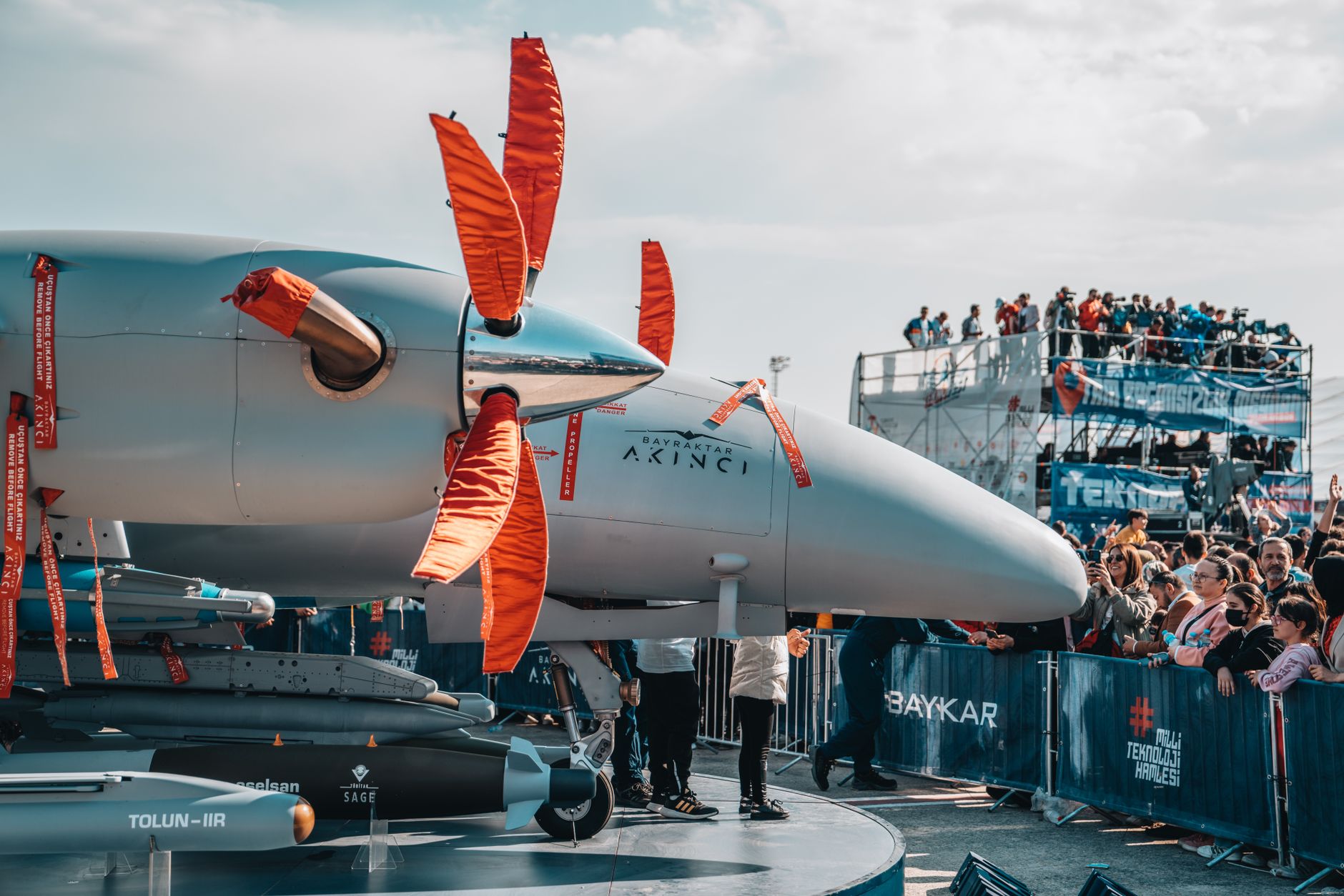
Germany has started putting kamikaze drones and AI-assisted targeting technology through their paces in Lithuania, a decision that says as much about the state of European security as it does about where modern warfare is heading. The trials, carried out on NATO’s exposed eastern flank, bring together two of the most consequential trends in contemporary defence: cheap, expendable loitering munitions that can be produced at scale, and software that helps identify and prioritise what those munitions strike.
The context matters. Since Russia’s full-scale invasion of Ukraine in 2022, the Baltic states have sat at the sharpest edge of the alliance, bordered by Russia and its ally Belarus, and physically separated from the rest of NATO by the narrow Suwalki corridor. Germany has responded by committing to permanently station a full armoured brigade in Lithuania, the first such long-term deployment of German troops abroad since the Second World War. Testing new unmanned systems in that theatre is therefore not an abstract exercise. It is a rehearsal for the kind of conflict European planners now treat as a genuine possibility rather than a remote one.
What is actually being tested
Loitering munitions, often called kamikaze or suicide drones, loiter over a target area before diving into a target and detonating. They have become a defining weapon of the war in Ukraine, where both sides field them in enormous numbers. Their appeal is brutal arithmetic: a drone costing a few thousand dollars can disable a tank or artillery piece worth millions. The AI targeting layer that Germany is reportedly evaluating is designed to help operators cut through the fog of a crowded battlefield, flagging potential targets faster than a human scanning a video feed could manage alone. According to Yahoo News Australia, the trials fold both elements together, testing not just the hardware but the decision-support software that sits behind it.
That combination is precisely where the hard questions live. There is a meaningful difference between a system that recommends a target to a human who then decides whether to fire, and a system that is permitted to close the loop on its own. The phrase defence officials and ethicists keep returning to is “meaningful human control,” and almost every Western military insists it keeps a person in the loop. The pressure, however, runs the other way. In a war where drones swarm and electronic jamming can sever the link between operator and weapon, there is a strong operational incentive to let the machine finish the job when communications drop out.
Two ways to read it
Supporters of faster adoption argue that hesitation is its own risk. Ukraine has shown that the side which iterates quickly on cheap autonomy gains a real advantage, and that an alliance which refuses to field these systems simply cedes ground to adversaries who will not share its scruples. From this view, Germany testing AI targeting in Lithuania is overdue catching up, not a leap into the unknown. Russia and China are investing heavily in the same capabilities, and a NATO that fields only yesterday’s weapons invites exactly the kind of miscalculation deterrence is meant to prevent.
The counter-argument comes from arms control researchers and a bloc of states that have pushed, so far without success, for binding international rules on autonomous weapons. Their concern is not science fiction robots but the quiet erosion of accountability. When a targeting decision is shaped by a model whose training data and failure modes are opaque, it becomes harder to say who is responsible when the system gets it wrong and civilians die. Groups such as the Campaign to Stop Killer Robots have warned for years that the technology is outpacing the law, and that each national trial normalises a capability the world has never agreed on how to govern. Germany, notably, has publicly supported new international regulation even as it tests the systems in question, a tension that captures the whole debate in miniature.
Why this matters for Australia
None of this is happening at a safe distance from Australian interests. Australia is building its own fleet of autonomous and uncrewed systems, from the Boeing-built MQ-28 Ghost Bat aircraft developed with the Royal Australian Air Force to the Ghost Shark undersea drone programme run with local firm Anduril Australia. The Albanese Government’s investment in asymmetric, lower-cost capabilities under the Defence Strategic Review leans hard into exactly the kind of technology Germany is now trialling. What NATO militaries learn in Lithuania about how AI targeting performs, and how it fails, will feed directly into the assumptions Australian planners make about their own systems.
There is also a policy dimension Canberra has not fully resolved. Australia has consistently backed keeping humans in control of the use of force, but it has stopped short of supporting a binding treaty ban on autonomous weapons, aligning itself with the United States and other close partners who prefer non-binding principles. As AUKUS deepens technology sharing across the three partners, including a dedicated pillar for advanced capabilities such as AI and autonomy, the standards one partner adopts tend to become the standards all of them live with. A German trial on NATO’s frontier is, in that sense, a preview of choices Australia will have to make about its own rules of engagement, export controls and the degree of autonomy it is willing to certify.
The commercial stakes are real too. Australian defence-tech start-ups are courting exactly this market, and the local sector has argued that sovereign capability in drones and autonomy is both a security need and an economic opportunity. Every validation of these systems on a live European deployment strengthens the business case for the firms building them here, while sharpening the scrutiny they will face from an increasingly engaged public.
What happens next
Expect the Lithuanian trials to be the first of many as European militaries race to absorb the lessons of Ukraine before the next crisis forces their hand. The harder milestone to watch is not the next test but the next rulebook: whether the long-stalled talks at the United Nations in Geneva produce anything resembling binding limits, or whether national practice simply hardens into a de facto standard that treaties are then written to accommodate. For Australia, the question is whether it shapes those norms as an early mover or inherits them from allies who moved first. Either way, the drones humming over Lithuania are a reminder that the debate about machine-assisted killing is no longer theoretical, and that the decisions being made on NATO’s eastern edge will echo a long way south.
Sources: Yahoo News Australia.


