



















































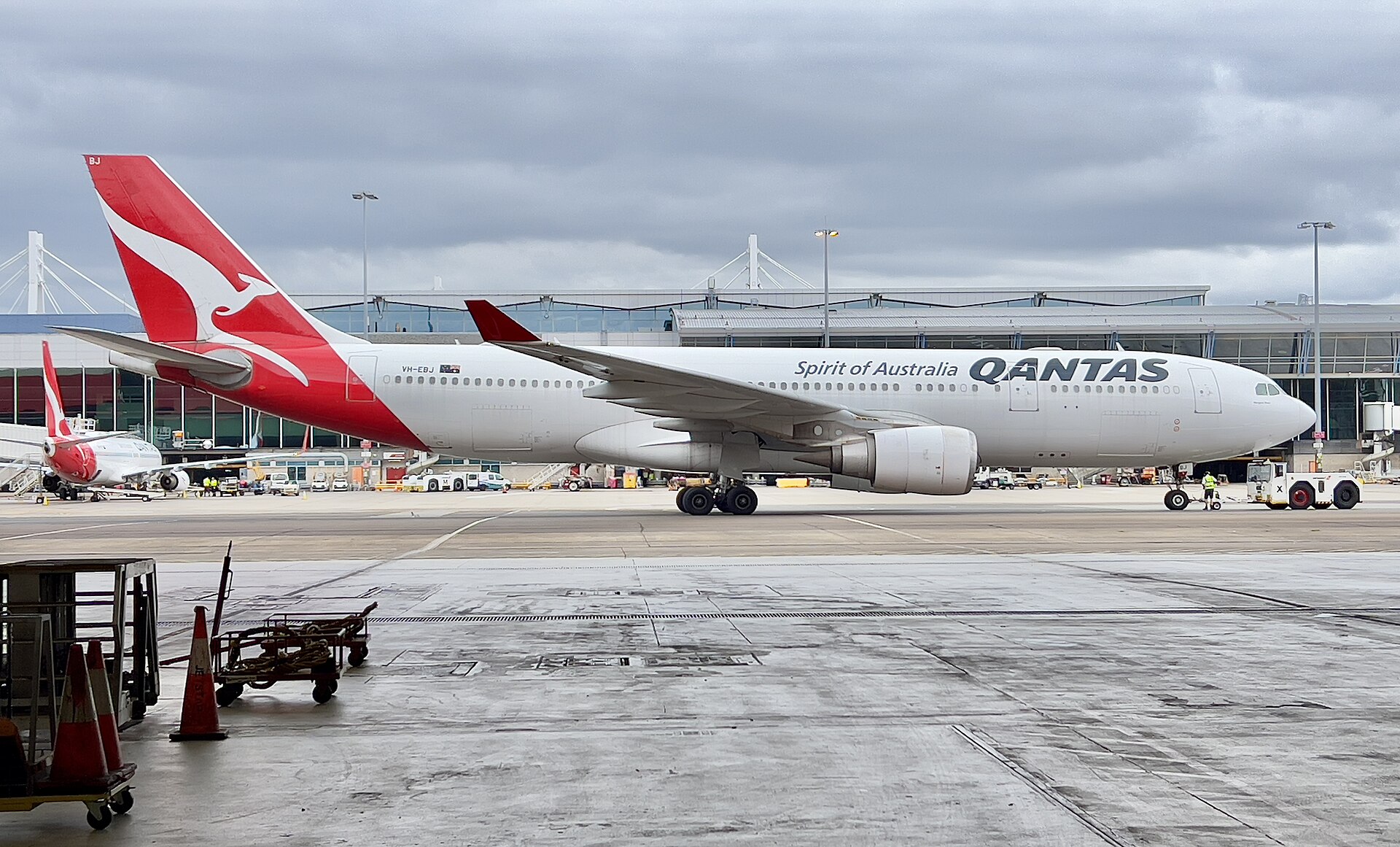
Qantas has put a number on the kind of change many Australian workers have been bracing for. The national carrier plans to cut roughly 850 jobs as it leans harder on artificial intelligence and shifts a chunk of its back-office work offshore to India, a move that lands the airline squarely in the middle of the country’s increasingly tense debate about automation and employment.
The decision, reported this week by ET Infra, centres on corporate and support functions rather than the pilots, cabin crew and ground staff the public most associates with the airline. These are the roles that quietly keep a carrier running, in finance, procurement, scheduling, customer administration and data handling, and they are exactly the sort of repetitive, process-heavy work that AI tools and lower-cost offshore teams are now being asked to absorb.
From pandemic cuts to AI cuts
For Qantas, restructuring the back office is not new territory. The airline shed thousands of jobs during the pandemic and outsourced much of its ground handling, a decision the High Court later found to be unlawful, leaving the company facing a substantial compensation bill. That history matters, because it shapes how unions, staff and the public will read the latest announcement. A round of cuts justified partly by new technology will inevitably be measured against a recent past in which cost-cutting at Qantas became a lightning rod for criticism.
What is different this time is the language. Where earlier reductions were framed around survival and demand collapse, the current changes are being cast as modernisation. Generative AI has matured quickly inside large organisations over the past two years, moving from pilot projects to tools that can draft documents, answer customer queries, reconcile invoices and flag anomalies in data. When an employer says AI is “taking off”, as the reporting around Qantas put it, the implication is that software is now doing work that previously required a salaried person at a desk in Sydney or Melbourne.
Two ways to read the decision
Supporters of the shift argue that it is simply the logical next step for a company operating in a brutally competitive global industry. Airlines run on thin margins, and any operator that can lower its cost base while keeping service standards intact gains breathing room to invest in fleet, routes and the frontline experience passengers actually notice. On this view, automating routine administration and concentrating some functions in India, where Qantas and many other multinationals already run capability centres, frees the business to spend where it counts. The company would also point out that technology-driven change can create new roles in data, engineering and AI oversight even as it removes others.
The opposing view is harder to wave away. Critics see a profitable national icon, one that returned to strong earnings after the pandemic, choosing to export skilled white-collar work and hand routine tasks to machines while the benefits flow to shareholders rather than staff. Unions have consistently argued that offshoring hollows out the local skills base and that “efficiency” is too often a polite word for transferring risk and insecurity onto workers. The Transport Workers’ Union and white-collar bodies have long warned that each wave of restructuring at Qantas chips away at the implicit bargain between a flagship employer and the country it represents.
Qantas chief executive Vanessa Hudson has repeatedly framed the airline’s technology investment as central to its future, and management will likely argue that staying still is not an option when rivals are automating aggressively. How the company handles redeployment, retraining and redundancy terms will do more to shape the reaction than any statement about AI strategy.
Why this matters for Australia
The Qantas announcement is significant well beyond the airline’s own payroll because of what it represents. This is one of the country’s most recognisable employers openly linking job losses to AI adoption and offshoring in the same breath, and it will be read as a signal by boardrooms across the economy. Banking, insurance, telecommunications and retail all run large back offices full of the kind of work now in the firing line. If a company as scrutinised as Qantas feels able to make the case publicly, others watching from the sidelines may feel emboldened to follow.
It also feeds directly into a policy conversation that is already running hot. Commonwealth Bank chief executive Matt Comyn was recently questioned over AI, profits and offshore jobs, and the Albanese government has been weighing how to respond to automation without strangling the productivity gains that AI promises. Treasury and the unions are circling the same question from opposite directions: who captures the upside when software replaces salaried work, and what obligations does a large employer owe the communities it draws its customers and its brand from?
There is a national-identity dimension here too that other corporate restructures lack. Qantas is not just a company; it is the Flying Kangaroo, an airline that has spent decades marketing itself as quintessentially Australian. Cutting local corporate jobs and moving work to India sits uncomfortably against that image, and the political and public reaction will be sharper for it. Expect the decision to be invoked in parliamentary debate and in the ongoing push for clearer rules on AI’s impact on the workforce.
What happens next
The immediate questions are practical. How many of the 850 roles will go through redundancy versus natural attrition, what support affected staff will receive, and how quickly the India transition proceeds. Beyond that, the airline will face pressure to show that service quality and safety-adjacent functions are not degraded by the changes, a sensitive point given its recent reputational wounds.
For the wider economy, the Qantas move is likely to be treated as a test case. If it proceeds smoothly and the company delivers the savings it expects without a backlash that damages the brand, others will take note. If it instead sparks sustained criticism, industrial action or political intervention, it may give pause to boards weighing similar decisions. Either way, the conversation about AI and Australian jobs has just acquired one of its most high-profile examples.
Sources: ET Infra.


