



















































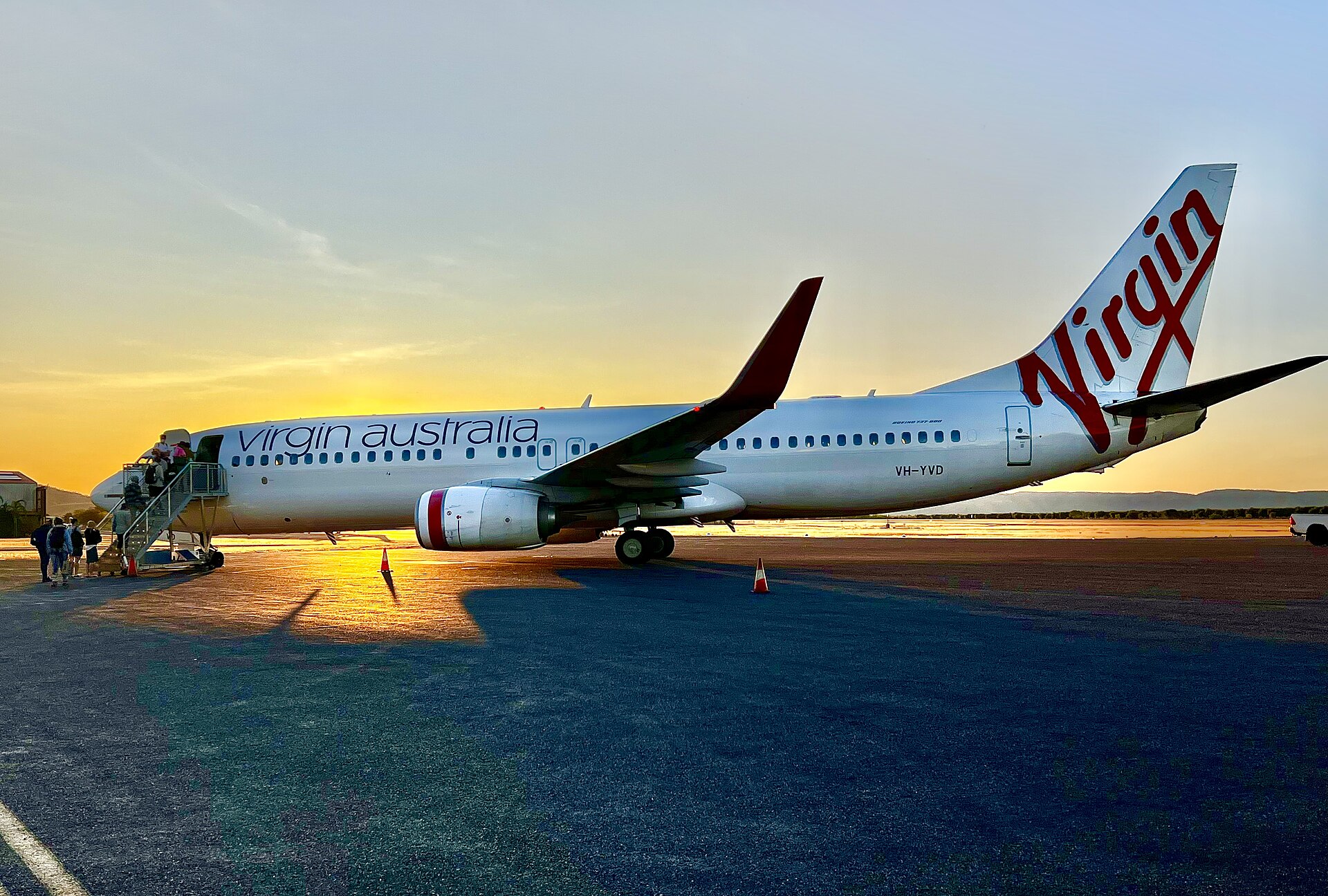
Virgin Australia has started putting artificial intelligence agents to work inside its business, a move that captures how quickly automation is shifting from slideware and small trials into the everyday machinery of large Australian companies. The Brisbane-based carrier, which returned to the ASX in June after years under Bain Capital ownership, is among a growing list of local enterprises experimenting with software that does not just answer questions but takes action on a worker’s behalf.
The development was flagged in a Tech Bytes round-up published by Yahoo Finance Australia, which placed the airline alongside a wave of businesses turning to so-called agentic AI to streamline operations. For an industry that runs on razor-thin margins, complex scheduling and relentless customer contact, the appeal is obvious, but the shift also lands at a sensitive moment for workers and regulators watching how automation changes jobs.
From chatbots to agents that act
The phrase “AI agent” has become one of the most used, and most abused, terms in enterprise technology this year. Unlike the chatbots that dominated the first wave of generative AI, agents are designed to carry out multi-step tasks with a degree of autonomy. In a carrier’s context that might mean reconciling disrupted itineraries, drafting responses to customer complaints, pulling together operational reports, or handling routine back-office processing that once tied up teams of people.
Virgin Australia has not published a detailed breakdown of exactly where its agents are being used, and the company has tended to frame its technology work around improving the guest experience and lifting productivity rather than cutting headcount. What is clear is that the airline sees automation as central to the leaner, more efficient operation it has promised investors since relisting. Aviation is a natural proving ground: the volume of structured data, the repetitive nature of many tasks, and the constant pressure of delays and cancellations all create fertile ground for software that can act quickly and consistently.
The broader trend is unmistakable. Global vendors including Microsoft, Salesforce, Google and OpenAI have spent much of the past year repositioning their products around agents, and Australian firms have been quick to trial them. Banks, insurers, retailers and professional services firms have all begun embedding the technology into customer service, compliance and internal workflows. The question is no longer whether large companies will use agentic AI, but how far they will let it reach into decisions that used to require a human.
Two views on the automation wave
Supporters argue that agents are exactly what Australian business needs to break a long run of weak productivity growth. Treasury and the Productivity Commission have both pointed to sluggish output per worker as a drag on living standards, and technology advocates see automation as one of the few levers capable of shifting the dial. On this view, handing repetitive work to software frees staff for higher-value tasks, improves service during disruptions, and helps capital-intensive businesses like airlines squeeze more from their existing operations.
Critics counter that the enthusiasm is running ahead of the evidence. Many agent deployments remain narrow pilots, and the gap between a slick demonstration and reliable performance across millions of real customer interactions is wide. There are also well-documented risks: agents can act on incorrect information, make commitments a company never intended, or mishandle sensitive data if guardrails are weak. In a customer-facing setting, a single confident but wrong answer can do reputational damage that outweighs the efficiency gains.
Then there is the workforce question, which looms especially large for a unionised industry like aviation. Every announcement of automation inside a major employer invites scrutiny over what it means for jobs, rostering and conditions. Virgin Australia has emphasised productivity and experience rather than job losses, but the trajectory of agentic AI means the conversation about where humans stay in the loop is only going to intensify.
What it means for Australia
Virgin’s move matters beyond the airline because it signals that agentic AI is maturing inside mainstream corporate Australia, not just inside technology startups. The country’s biggest employers are watching one another closely, and a visible deployment at a household-name carrier gives cover to boards still debating how aggressively to adopt the technology. If a business as operationally demanding as an airline can make agents work, others in transport, logistics and retail will feel pressure to follow.
It also sharpens a policy debate that is already running hot in Canberra. The federal government has been weighing how to handle AI adoption in the workplace, with draft guidance on responsible use and ongoing discussion about whether frontier systems need dedicated safety rules. Automation inside critical infrastructure such as aviation adds urgency to those conversations, because the stakes of a malfunctioning agent are higher when they touch safety-adjacent operations, passenger data and essential services.
For Australian workers, the Virgin example is a reminder that the automation story is no longer abstract. Unions and regulators have repeatedly called for transparency about how AI is used and what it means for staff, and deployments at large employers will test whether companies can keep that promise. Getting the balance right, capturing productivity gains while maintaining trust with employees and customers, is shaping up as one of the defining management challenges of the next few years.
What is next
Expect the airline to say more about its technology roadmap as it reports to the market in the months ahead, with investors keen to see automation translate into measurable cost and service improvements. The wider pattern is likely to accelerate: more Australian enterprises will move agents out of innovation labs and into live operations, vendors will keep pushing increasingly capable products, and attention will turn to governance, reliability and the human oversight that keeps these systems accountable.
The real test will not be whether Virgin Australia can deploy an AI agent, but whether it can do so in a way that genuinely improves the experience of flying, protects the people who do the work, and holds up when the inevitable disruption hits. On that measure, the industry is only at the very beginning.
Sources: Yahoo Finance Australia.


