









































An Australian skincare brand that once traded on its association with Kim Kardashian has found itself at the centre of a very modern dispute, one that says as much about the state of generative AI as it does about the manners of online marketing. BodyBlendz, a label that built its following through glossy social media campaigns, stands accused of using artificial intelligence to rework rival companies’ promotional photographs and present the results as its own content.
The claims, reported this week by ABC News, centre on marketing imagery posted to the brand’s social channels. According to the broadcaster, competitors noticed that photographs bearing a striking resemblance to their own carefully produced campaign shots had appeared under BodyBlendz branding, with telltale signs that the images had been passed through AI editing tools to alter products, backgrounds and other identifying details. The allegation is not that the brand lifted a file wholesale, but that it fed existing creative work into generative software and spat out something close enough to be familiar yet different enough to muddy the question of ownership.
It is a scenario that would have been almost unthinkable a few years ago and is now almost mundane. Image generation tools that once produced warped hands and melting text can today take a reference photo and return a polished variation in seconds. For a small marketing team under pressure to feed the relentless appetite of Instagram and TikTok, the temptation to shortcut the expensive, slow work of a professional shoot is obvious. The trouble is that the shortcut may run straight through someone else’s intellectual property.
Why this is a legal grey zone
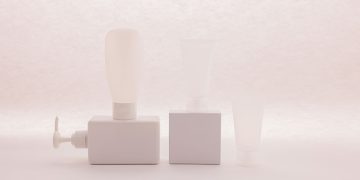
The case lands in a part of the law that remains unsettled. Australian copyright protects original photographs as artistic works, and reproducing a substantial part of one without permission is an infringement. The complication with AI is the word “substantial”. When a model ingests a competitor’s image and generates a new one that shares the composition, lighting and mood but swaps the actual pixels, the legal question becomes whether what survives is the protected expression or merely the unprotectable idea of, say, a serum bottle on a marble bench.
Intellectual property specialists have been warning for some time that this ambiguity is being exploited. Lawyers who spoke to the ABC for its reporting described the practice of running rivals’ creative through AI as a growing problem, precisely because it sits in the gap between obvious theft and legitimate inspiration. A brand accused of it can argue, with a straight face, that the final image was generated by a machine and is therefore new. Proving otherwise can require forensic comparison and expensive litigation that most small businesses cannot afford to pursue.
BodyBlendz is not a household name on the scale of the global beauty giants, but its history gives the story a sharper edge. The brand previously benefited from an association with Kim Kardashian, whose endorsement helped turn a local skincare operation into an internationally visible one. A company that rose on the strength of celebrity marketing and polished visuals now faces accusations that it borrowed the visual work of others to keep that machine running.
Two ways to read it
There are competing views about how seriously to take episodes like this. One camp sees it as a genuine threat to the livelihoods of photographers, stylists, retouchers and the small brands that pay for original creative. If a competitor can regenerate your campaign for the price of a monthly AI subscription, the argument runs, the incentive to invest in quality work collapses, and the market fills with cheap derivatives. For the creative workers whose craft is being automated and, they would say, appropriated, the harm is immediate and personal.
A more sceptical camp notes that marketing has always been imitative. Beauty advertising in particular has long recycled the same visual grammar of soft light, dewy skin and minimalist packaging, and borrowing a look has never by itself been illegal. On this reading, AI has simply made an old habit faster and more visible, and the real test is whether any individual image crosses the line into reproducing protected expression. The answer, frustratingly for everyone involved, is that nobody can be certain until a court or a regulator draws the boundary.
What it means for Australia
For Australian businesses the episode is a warning that the rules they half-remember from the pre-AI era may no longer protect them, or restrain them, in the way they assume. The federal government has spent the past two years consulting on how to handle generative AI, including the vexed questions of copyright and training data, but concrete law reform has been slow. That leaves a vacuum in which disputes like this one are fought out on social media and in demand letters rather than in any settled legal framework.
The stakes are not trivial. Australia’s creative economy, from independent photographers to the design studios that service the retail and beauty sectors, depends on the assumption that original work carries value. If AI-assisted copying becomes normalised and unpunished, the pressure flows downhill to the smallest operators, the sole traders and tiny agencies least able to defend themselves. It also feeds a broader anxiety that has been building across the local market, from Etsy makers worried about copycats to news publishers uneasy about machine-generated journalism. BodyBlendz is one brand in one sector, but the pattern it illustrates is spreading across the economy.
There is also a consumer dimension. Shoppers who buy skincare on the strength of an aspirational image have a reasonable interest in knowing whether that image reflects a real product and a real shoot, or a synthetic composite assembled from someone else’s work. As AI content becomes harder to distinguish from the genuine article, trust in online marketing erodes, and that erosion ultimately costs the honest operators as much as the opportunistic ones.
What happens next
In the near term, much depends on whether the aggrieved competitors choose to pursue the matter formally and whether BodyBlendz responds to the allegations. Social platforms have their own intellectual property complaint mechanisms, which are faster than the courts but blunter, and a takedown does little to resolve the underlying legal question. The more consequential development would be a test case that forces an Australian court to rule on whether AI-regenerated imagery can infringe the original it was derived from.
Until that happens, brands tempted to let a generative tool do their creative heavy lifting are operating on uncertain ground, and the businesses whose work is being recycled are left to police the problem largely on their own. The technology has outrun the rulebook, and stories like this one are the result.
Sources: ABC News, Technology.